Approach Decision-Making Carefully

Grief has a way of making everything feel important. Even a receipt or a worn-out pair of shoes can suddenly seem untouchable. That feeling is real, and it doesn’t mean you’re being irrational. There’s no formula for deciding what to keep and what to get rid of, but asking the right questions can help create clarity when your emotions feel tangled:
Am I keeping this because it mattered to them, or because I feel guilty letting it go?
Grief can create a sense of attachment to certain belongings. But honoring someone’s memory doesn’t require holding onto everything they owned. Guilt often disguises itself as sentimental value. It helps to pause and ask how you truly feel about the item.
Would they want this taking up space in my future?
This question can help you see things from a different perspective. It offers a way to reflect on what your loved one might wish for you and how you want to feel moving forward.
What feeling does this bring up in me?
Rather than starting with practicality, try starting with emotion. Relief, warmth, tension, anxiety — these responses can be more revealing than the object itself.
"...it can help to begin [packing] spaces that carry less emotional weight. The pantry, office, bathrooms, and laundry room don’t usually hold the same kind of memories as the kitchen, living room, and bedrooms."
If it brings you peace, keep it. If it creates heaviness, you may not need it anymore.
Is there a way to remember this without keeping the physical item?
Sometimes a photograph, a digital scan, or a handwritten memory in a journal can preserve what you value most about an object. Letting go becomes easier when the story gets to stay.
Do I want this to be part of my life going forward?
There’s no shame in keeping something because it brings comfort, or letting something go because it doesn’t fit anymore. Framing the decision in terms of your future honors both the memory and your right to move forward.
It’s okay if the answers take time. Some decisions settle in slowly, especially when memories are involved.
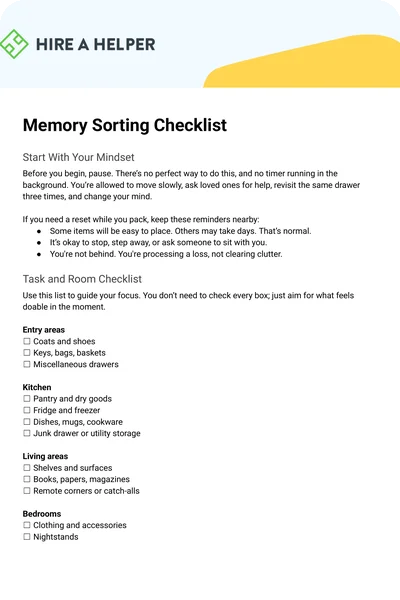
The printable worksheet included in this guide offers space for questions like these, with room to reflect and work through your feelings. Writing your feelings down can help shift the focus from what’s being packed to what’s being honored.






 Karen BodkinJul 23, 2026