The Future of Homeownership 2026
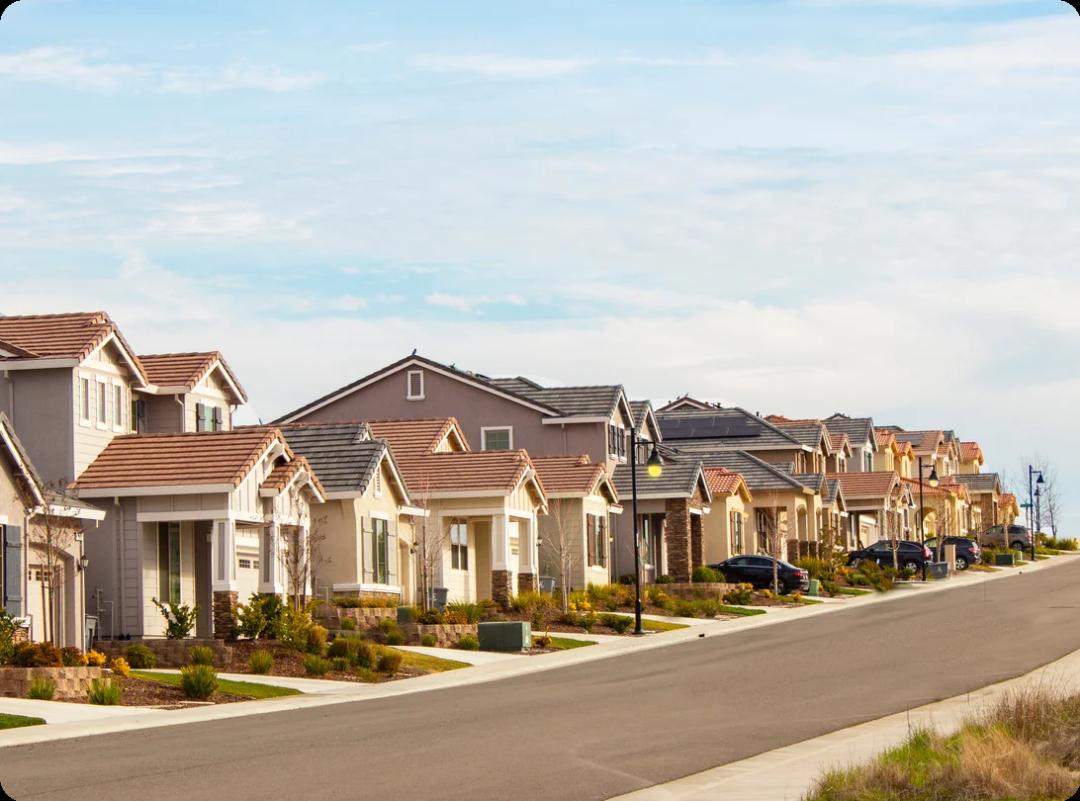
In 2026, the American Dream is facing a reality check. The median U.S. home price has climbed to $390,300 and is projected to reach $527,525 by 2031 - a 35.1% increase in just five years. But incomes aren't keeping up, despite growing minimum wages. Across the country, the gap between what people earn and what it takes to buy a home is widening fast, pushing homeownership further out of reach for millions of Americans.
This is a nationwide affordability crisis with sharp regional divides. In some states, buying a home still aligns with what the average household earns. In others, even an income of $100,000 falls short.
Using median home prices, household incomes, and five-year projections, this report reveals where Americans can still afford to buy today, where affordability is deteriorating fastest, and which markets may become realistic, or completely out of reach, by 2031.

Key Takeaways
- California is the least affordable state in the U.S. Households need to earn 104% more than the median income, effectively double, to afford a home in 2026.
- Only 3 states are affordable today: Louisiana, Minnesota, and Iowa are the only places where median incomes meet or exceed the cost of homeownership.
- Affordability is expected to improve, but unevenly. By 2031, 36 states are projected to become affordable, yet high-cost states like California, New York, Vermont, and Rhode Island are expected to remain out of reach.
- Irvine, CA has the largest affordability gap in the country. Households need an additional $328,111 above the median income to afford a home, the highest of any city analyzed.
- Saving for a home now takes the better part of a decade in expensive states. At a conservative 10% savings rate, it takes 14.1 years in California to afford a down payment, more than double the national median of 6 years.
- Most states are trending in the right direction. Despite today's challenges, 47 out of 51 states are projected to become more affordable by 2031, driven largely by income growth outpacing home price increases.
Lauren Thomas
Lauren Thomas is the PR and Brand Marketing Manager at HireAHelper, where she leads all things brand, storytelling, and data journalism. With 9 years of experience across marketing copywriting, digital PR, and content marketing, she's built a career out of turning data and ideas into narratives people actually want to read.
She draws from years of experience in personal finance, insurance, and home services to help readers make smarter, more confident decisions about life's biggest expenses — moving included.
The Math Behind America's Affordability Crisis
In 2026, homeownership is no longer aligned with what the average American earns, and it's drifting further out of reach.
The median U.S. home price has climbed to $390,300 and is projected to reach $527,525 by 2031. That's a 35.1% increase in just five years. But rising prices are only half of the equation. The other is that incomes aren't keeping up at the same pace.
Today, between a mortgage and property taxes, the median annual cost of homeownership is $25,082, meaning households need to earn at least $75,246 per year to stay within the traditional affordability threshold. In many states, the median household income falls short of that mark, putting homeownership out of reach before savings even begin.
Even that benchmark, which is the widely used rule that housing should consume no more than 30% of income, is becoming less realistic. In high-cost markets, many households exceed the 30% rule out of necessity, leaving less room to save, invest, or handle unexpected expenses.
And saving for a downpayment is where the challenge intensifies.
Saving for a Down Payment
For a household earning the state median income and saving toward a 20% down payment, and assuming income grows 3% each year, the time it takes to save for their 2031 home down payment now looks like this:
- 10.2 years at a conservative (10% of income) rate
- 7.1 years at a moderate (15% of income) savings rate
- 5.5 years even for aggressive (20% of income) savers
But those are national averages. In many parts of the country, the timeline is far longer.
- California: 14.7 years at a conservative savings rate
- Hawaii: 14.1 years
- New York: 12.8 years
- Washington: 11.4 years
By contrast, more affordable states don't take as long to save for:
- Iowa: 7.3 years at a conservative savings rate
- Texas: 8.1 years
The takeaway is clear: where you live now plays a bigger role in homeownership than how much you save.
In lower-cost regions, the relationship between income and home prices still holds. In high-cost states, that relationship has broken down entirely, and no amount of budgeting or incremental wage growth can close the gap.
This marks a fundamental shift: Homeownership is no longer just a function of personal financial discipline. It is increasingly shaped by broader economic forces like housing supply, migration patterns, and wage stagnation.
As a result, affordability is becoming one of the strongest drivers of where Americans choose to live. For many, relocating to a lower-cost region is no longer a preference — it's the only realistic path to owning a home.
Where Americans Are Most Priced Out in 2026
Across much of the U.S., the math for owning a home simply doesn't work.
In the country's least affordable states, even households earning the median income fall dramatically short of what's needed to buy a home, often by tens of thousands of dollars, and in some cases, by more than double their annual income.
The Least Affordable States
In 2026, affordability challenges are most severe in coastal and high-demand markets where the gap between income and home prices has reached unsustainable levels. California ranks as the least affordable state, where the median household would need to earn an additional $103,216, a 104.1% increase above the current median income, to afford homeownership comfortably. Rhode Island (98.9%) follows, while Vermont (88.4%), New York (89.5%), and New Jersey (79.6%) round out the top five most challenging markets.
What makes these markets particularly difficult is the scale of the income gap. In California and Rhode Island, households would need to nearly double their income to reach the affordability threshold. That is not a gap that savings discipline or modest raises can close. This represents a structural misalignment between wages and housing costs that has compounded over years and reinforces the idea that affordability challenges in these regions are not temporary market fluctuations, but long-term structural imbalances.
.webp)
The Least Affordable Cities
At the city level, the affordability crisis becomes even more pronounced. In several major metros, the gap between income and homeownership costs exceeds six figures, pushing ownership firmly out of reach for even middle- and upper-middle-income households.
In Irvine, California, the gap between what a median household earns and what homeownership requires exceeds $328,000, nearly four times the median annual income in many parts of the country. Huntington Beach ($252,786 gap), San Francisco ($258,821), and Garden Grove ($228,858) tell a similar story.
What is striking about these city-level figures is how far the unaffordability extends beyond expected markets. Newark, New Jersey, shows a gap of $156,864, a 331.5% income increase required, reflecting how even historically working-class cities in high-cost states have become unaffordable. Providence, Rhode Island, carries a 339.8% gap, the highest percentage increase of any city in the study.
This suggests that affordability challenges are expanding beyond lower-income households and increasingly affecting middle- and upper-middle-class buyers as well.
Where Homeownership Is Still Within Reach in 2026
While much of the country is struggling with affordability, a small group of markets still offers a path to homeownership, at least for now.
The Only Affordable States in 2026
Just three states meet the affordability threshold where the median cost of homeownership is at or below 30% of median income in 2026: Louisiana, Minnesota, and Iowa. These states typically feature lower home prices relative to income and more stable cost-of-living dynamics. Louisiana leads with a surplus of nearly $6,000 per year, meaning the median household actually earns more than required to comfortably cover homeownership costs. Minnesota and Iowa follow with modest surpluses of approximately $3,200 and $3,100 per year, respectively.
But affordability comes with tradeoffs. Many of these markets have fewer major job centers, slower population growth, and more modest wage gains, which can limit long-term economic opportunity. As a result, buyers are increasingly forced to weigh affordability against access to jobs, amenities, and career growth.
And as more Americans look to these lower-cost regions as a solution, demand could begin to rise, putting pressure on the very affordability that makes them attractive.
The Most Affordable Cities in 2026
At the city level, affordability is concentrated in the Midwest and parts of the South where the gap between income and home prices still works in buyers' favor.
Cities like Louisville, Des Moines, Toledo, and Pittsburgh offer conditions where homeownership is financially sustainable for the average household. In Louisville's case, the surplus is substantial, with median households earning $23,290 more than the homeownership threshold.
Other accessible markets include Tulsa, Detroit, and Birmingham, where homeownership remains financially realistic for the average household.
The balance between income and housing costs is still intact in these cities for now. However, many of these areas share a common characteristic: slower economic and population growth. Lower demand has helped keep home prices in check, but it can also limit job opportunities and long-term upside.
Where Homeownership Becomes Unrealistic by 2031
Affordability is expected to improve nationwide over the next five years, but in some parts of the country, it still won't be enough. Even by 2031, a group of high-cost states and cities will remain firmly out of reach for the average household, despite projected income growth.
The Least Affordable States in 2031
While affordability gaps are shrinking, they don't fully close in the nation's most expensive housing markets.
California remains the least affordable state, with households still needing to earn 29.6% more than the projected median income to afford a home, with Vermont (29.0%) and New York (27.4%) following closely behind. New Jersey (25.0%) and Rhode Island (22.9%) round out the most persistently unaffordable states.
Even after five years of income growth, the gap remains substantial. In these markets, affordability challenges are not cyclical, they are structural. High demand, limited housing supply, and elevated home price baselines continue to outpace wage growth, keeping homeownership out of reach for the typical buyer.
The Least Affordable Cities in 2031
At the city level, the affordability gap is even more pronounced.
Irvine, CA remains the most unaffordable city in the U.S., with a projected $271,419 income gap. Huntington Beach ($188,395), Garden Grove ($171,009), and San Francisco ($170,386) remain among the most inaccessible markets. And Providence, RI (110.7%), Paterson, NJ (148.0%), and Newark, NJ (158.9%) highlight how affordability challenges extend beyond traditional high-income cities.
Even in 2031, many of these cities require income increases of 70% to over 150% just to meet basic affordability thresholds. What's most notable is how widespread the issue remains. Miami and Hialeah, FL continue to require income increases above 70%–80%, while Los Angeles, New York City, and San Diego all remain significantly out of reach. Even smaller or less traditionally expensive cities show persistent gaps.
Where Homeownership is Most Affordable by 2031
Affordability is projected to improve in nearly every state by 2031, but improvement isn't evenly distributed. In the country's most expensive markets, income growth will narrow the gap without closing it, leaving millions of households still priced out. Where you stand in 2031 depends almost entirely on where you live.
The Most Affordable States for Homeownership by 2031
Looking ahead, affordability is expected to be strongest in the Midwest. Louisiana is projected to lead with median incomes needed to afford a home at a surplus of 36.3%, followed closely by Minnesota (34.0%), Iowa (31.0%), and Michigan (30.6%). These four states represent a cluster of affordable markets, where projected income growth is expected to dramatically outpace housing costs over the next five years.
Illinois, Maryland, Indiana, and Missouri round out the top ten most affordable projected states, a largely Midwestern group that continues to benefit from lower home prices and steady income growth.
The Most Affordable Cities for Homeownership by 2031
At the city level, affordability is expected to expand across a wider range of regions. Naperville, Illinois, leads the projections with a surplus of $66,908, followed by Roseville, California, a notable entry given California's current status as the least affordable state overall. Surprise, Arizona, and McKinney, Texas, also appear near the top, reflecting how Sun Belt suburbs with more moderate price growth and rising incomes are positioned to become significantly more accessible.
Pittsburgh and Louisville extend their leads as affordable anchors in the East and South, with projected surpluses of $53,994 and $50,329, respectively, among the most accessible markets in the country for the foreseeable future.
2026 vs 2031 Affordability Comparison By State
Every state in the U.S. is projected to see some level of improvement in affordability between 2026 and 2031. However, the extent of that improvement varies widely, and the gap between the fastest-improving and slowest-improving states tells an important story about the structural forces at play. By 2031, 36 states are expected to cross into affordability, while 15 remain unaffordable.
Affordable States by 2031
Some of the most affordable states by 2031 may come as a surprise. Louisiana, Minnesota, Iowa, and Michigan are all expected to lead the nation, with significant surpluses between projected income and housing costs — a reversal that reflects how income growth in these stable markets is quietly outpacing home price growth. And in general, most of the Midwest and South are projected to become comfortably affordable.
Interestingly, the states showing the greatest improvements are often the ones that are currently the least affordable. Rhode Island narrows its gap by 75.9 percentage points. California by 74.6 points, New York by 62.1 points, and Montana by 61.2 points.
This pattern suggests that income growth in high-cost regions is expected to accelerate meaningfully over the next five years, though even with those gains, many of these markets remain out of reach for the median household.
States with Notable Changes
Montana stands out as a particularly notable case. After experiencing some of the steepest price run-ups during the pandemic migration wave, it is now projected to narrow to just 17.1% by 2031. This dramatic shift from peak unaffordability to near balance reflects how quickly certain pandemic-driven markets are recalibrating.
Alaska, by contrast, shows the smallest improvement of any state, just 21.6 percentage points, despite carrying a moderate 15.9% affordability gap in 2026. Every other state with a comparable gap improves significantly more, suggesting that Alaska's income and housing dynamics are diverging from national trends.
States Remaining Unaffordable by 2031
At the same time, a group of states remains persistently unaffordable. This "stuck" category — California, New York, Vermont, Rhode Island, New Jersey, New Hampshire, Hawaii, and Massachusetts — is almost entirely made up of coastal and high-cost markets, where affordability gaps remain significant even after projected improvements.
California and New York, in particular, continue to stand out as the most challenging long-term markets for prospective homebuyers.
Conclusion
The data makes one thing clear: homeownership in the U.S. is no longer a one-size-fits-all reality.
In 2026, the housing market is defined by extremes. Just three states are affordable today, while 48 are not. In places like California, households need to nearly double their income to buy a home. In states like Iowa, they're already there.
The path to homeownership varies dramatically by location. In high-cost states, even aggressive savers face a decade or more just to afford a down payment. In more accessible Midwestern markets, that same goal can be reached in as little as three to four years.
Looking ahead five years, affordability is projected to improve across the board, but improvement doesn't mean equality. The pace of change varies so widely that two distinct housing markets are emerging: one where homeownership is within reach, and another where it remains a long-term financial stretch.
For buyers, the implication is clear: the question is no longer just "Can I afford a home?" — it's "Where can I afford one?"
Methodology
To project future housing affordability, we analyzed median home sale price and household income data for 174 of the largest U.S. cities, all 50 states, and Washington, D.C., modeling the household income required to afford a median-priced home by March 2031.
Home price data from Redfin was used to calculate the total annual cost of homeownership, which includes the monthly payment on a 30-year fixed mortgage at 6.0% with a 20% down payment, plus state-level effective property tax rates from the Tax Foundation. Please note that the annual figures do not take into account other expenses such as home owners insurance, any debts, or HOA fees. Household income data comes from the U.S. Census Bureau. We applied the 30% rule to establish the threshold of what is considered affordable.
Latest Research

The HireAHelper National Migration Report
Each year, HireAHelper analyzes where Americans are moving, why they’re leaving one place for another, and what that says about the economy, housing, and everyday life. The National Migration Report is our flagship study of U.S. relocation patterns, giving journalists, researchers, and industry professionals a consistent, year-over-year look at how America moves.

2025 Charlotte Moving Report
If it feels like everyone’s moving to Charlotte these days, you’re not imagining it! The Queen City is one of the fastest-growing places in North Carolina and the entire Southeast. According to our 2025 North Carolina Migration Report, 147 people move to Charlotte every day, part of a larger trend that has made North Carolina a top-five destination for movers nationwide. It’s drawing talent from across the state and beyond, reshaping how North Carolina grows and cementing its role as one of the country’s most dynamic cities.
We created this report to show what’s fueling that growth, who’s coming here, and what it means for people who already call Charlotte home.

2023 Study: 3 Million Moves Driven by Extreme Weather Events Last Year
In this study, HireAHelper takes a close look at moves forced by natural disasters in the United States.
Using the most recent data from the Census Bureau’s large-scale Household Pulse Survey and Current Population Survey, we focused on the number of disaster-forced moves over time, their typical destinations, as well as the types of disasters forcing most Americans out of their homes.

Study: How Much Does Moving Cost in 2023?
Driven by record inflation and rising fuel and vehicle costs, U.S. moving costs reached an all-time high in 2022. The average cost that year was $410—peaking at $454 in August—representing a 7% increase from 2021.
Prices have not yet given way; data from the first five months of 2023 shows an average moving cost of $399, which is 4% higher than the same period last year. It remains uncertain whether these costs will stay elevated or decline, which states will experience the sharpest price hikes, and if any areas will become cheaper.

2023 Study: Corporate Relocation at Highest Rate Since 2017
Whether to cut costs, gain a more beneficial tax rate, or be closer to a target market, about 9% of corporations in the United States moved their headquarters within the past fiscal year — the highest percentage since 2016-17, according to Securities and Exchange Commission (SEC) filings.
States like New York and cities like Seattle are seeing corporate headquarters move away, while smaller cities outside large urban centers are becoming new homes to big companies in tech and pharmaceuticals. Our study breaks down where companies are moving to, which states and cities they’re leaving behind, and whether workers are on board with following their employer to their new HQ location.

2023 Study: Where, How and Why Are Americans Moving This Year?
Every year, millions of Americans move, and over half (52%) of those moves take place during what we in the moving business call “moving season” — otherwise known as the summer months of May through August.
So what does the moving season hold for us this year? To get a sense of how many Americans intend to move, when they’re going to move, and what drives their moving decisions, HireAHelper conducted a nationally representative survey of 2,000 adults in the U.S. earlier this month.