How to Change Your Address Everywhere Before You Move

A change-of-address checklist and a USPS envelope next to a laptop showing the official USPS address-change form

Changing your address means tracking down dozens of places that have it on file, from your bank and insurance company to the DMV and your children’s school. It’s easy to worry that one missed update could send an important bill, tax form, or account notice to your old home.

HireAHelper has helped with more than 1 million moves over nearly two decades in the moving industry, so we know how overwhelming this particular task can be. We put this guide together to show you who to notify, which updates to handle first, and when to make each change so important mail, bills, and account notices don’t end up at your old home.


Last updated: Aug 14, 202614 min read
Karen Bodkin
Written byKaren Bodkin

Key Takeaways

  • Start changing your address two to four weeks before moving, beginning with USPS, utilities, insurance, employers, and schools.
  • USPS mail forwarding is a useful tool, but it doesn’t actually update your address with the organizations that send you mail.
  • DMV deadlines vary by state. An out-of-state move usually requires more than a simple address change.
  • Update financial, insurance, tax, and healthcare accounts early so important documents don’t end up at your old home.
  • Use the forwarding period to catch any accounts you missed, and update each sender directly when forwarded mail arrives.
Casey Bond
Author

Casey Bond

Casey Bond is a reporter covering money, home, and living. Her work has appeared on HuffPost, U.S. News & World Report, Yahoo Finance, MSN, Business Insider, Forbes, and others.

She brings years of personal finance and consumer reporting experience to HireAHelper, helping readers make smart, informed decisions about the costs and logistics of moving.

Why Trust HireAHelper

HireAHelper has helped facilitate more than 1 million moves, which means we’ve seen how easily small administrative tasks can disappear behind packing, scheduling, and moving-day plans.

This checklist covers more than 30 accounts and organizations and was reviewed and updated for 2026. That’s more comprehensive than the typical list of 12 to 24 places. Because HireAHelper is a moving marketplace, the information applies whether you’re booking moving labor, hiring full-service movers, renting a truck, using a moving container, or handling the entire move yourself.

When Do I Need To Change My Address?

Start changing your address about two to four weeks before you move. That gives utilities, insurers, schools, and service providers time to process the update without disconnecting anything too early.

Some changes must wait until you’ve actually moved, while others have legal deadlines. USPS says forwarded mail may take seven to 10 postal business days to begin arriving, and most noncitizens who are required to report an address change to USCIS must do so within 10 days. DMV deadlines vary by state.

Change-of-Address Timeline

WhenAddresses and accounts to update
Two to four weeks before movingUSPS, electricity, gas, water, internet, insurance providers, employers, schools, and recurring home services
During move weekBanks, credit cards, loan providers, shopping accounts, subscriptions, doctors, pharmacies, veterinarians, pet microchip registries, family, and friends
Within 10 days after movingUSCIS, if you’re subject to its address-reporting requirement
Within your state’s deadlineDriver’s license, state ID, vehicle title, and registration. Deadlines often fall within the first 10 to 30 days, but some states give more or less time
During the forwarding periodUpdate any company that sends mail carrying the yellow USPS forwarding label

The Ultimate Checklist of Where to Change Your Address

This checklist starts with mail forwarding, government records, and important categories like work and utilities, before moving onto things like memberships and shopping accounts. This way, you can easily handle the highest-priority items first, then work through the accounts that won’t cause an immediate problem if they take another week or two.

Mail Forwarding With USPS

You can submit a USPS change-of-address request online or complete PS Form 3575 at a Post Office. USPS charges a $1.25 identity-verification fee for an online request. The in-person form doesn’t have that online fee, although you’ll need acceptable identification.

Mail forwarding is a helpful safety net because it sends eligible mail from your old address to your new one, usually for up to 12 months. But it doesn’t actually update your address with your bank, insurance company, government agencies, or anyone else who sends you mail. When something arrives with a forwarding label, use it as a reminder to update that account directly.

Government Agencies

Government agencies don’t automatically share every address update with one another. It’s a good idea to work through each agency that applies to you as soon as you can, especially those responsible for your license, taxes, benefits, immigration records, and voter registration.

Department of Motor Vehicles (DMV)

Update your driver’s license or state ID and vehicle registration by your state’s deadline, which may be anywhere from a few days to several weeks after you move. Missing the deadline can lead to fines, late fees, renewal problems, or important notices going to your former address.

For a local move, you may be able to change the address online without ordering a new card. An out-of-state move usually requires a new license and vehicle registration, along with documents showing your identity, insurance, and new residency. Some states divide licensing and vehicle registration between different agencies.

Use the official state links below to confirm the deadline and process that apply to your move. These links were checked against official state motor vehicle agency websites, using the current USA.gov motor vehicle directory as a cross-reference.

Official State Motor Vehicle Agencies

StateOfficial agency or portal
AlabamaDriver licenses and vehicle registration
AlaskaAlaska Division of Motor Vehicles
ArizonaArizona Motor Vehicle Division
ArkansasDriver Services and Motor Vehicle
CaliforniaCalifornia DMV
ColoradoColorado Division of Motor Vehicles
ConnecticutConnecticut DMV
DelawareDelaware Division of Motor Vehicles
District of ColumbiaDC DMV
FloridaFlorida Highway Safety and Motor Vehicles
GeorgiaDriver Services and Motor Vehicles
HawaiiHawaii Driver Licensing
IdahoIdaho Division of Motor Vehicles
IllinoisIllinois Vehicle Services
IndianaIndiana Bureau of Motor Vehicles
IowaIowa DMV Services
KansasKansas Division of Vehicles
KentuckyKentucky Drive
LouisianaLouisiana Office of Motor Vehicles
MaineMaine Bureau of Motor Vehicles
MarylandMaryland Motor Vehicle Administration
MassachusettsMassachusetts Registry of Motor Vehicles
MichiganMichigan Secretary of State
MinnesotaMinnesota Driver and Vehicle Services
MississippiDriver Service Bureau and Motor Vehicle Services
MissouriMissouri Motor Vehicle Services
MontanaMontana Motor Vehicle Division
NebraskaNebraska Department of Motor Vehicles
NevadaNevada DMV
New HampshireNew Hampshire Division of Motor Vehicles
New JerseyNew Jersey Motor Vehicle Commission
New MexicoNew Mexico Motor Vehicle Division
New YorkNew York DMV
North CarolinaNorth Carolina DMV
North DakotaNorth Dakota Department of Transportation
OhioOhio Bureau of Motor Vehicles
OklahomaOklahoma Department of Public Safety
OregonOregon Driver and Motor Vehicle Services
PennsylvaniaPennsylvania Driver and Vehicle Services
Rhode IslandRhode Island Division of Motor Vehicles
South CarolinaSouth Carolina DMV
South DakotaSouth Dakota Motor Vehicle Division
TennesseeTennessee Driver Services
TexasDriver License Services and Texas DMV
UtahUtah Division of Motor Vehicles
VermontVermont Department of Motor Vehicles
VirginiaVirginia Department of Motor Vehicles
WashingtonWashington Department of Licensing
West VirginiaWest Virginia Division of Motor Vehicles
WisconsinWisconsin Division of Motor Vehicles
WyomingWyoming Driver Services

Internal Revenue Service (IRS)

You can update your address with the IRS by using your new address on your next tax return. To change it sooner, submit Form 8822 or send the IRS a signed written statement with the required information.

Keeping your address current helps tax notices, refund checks, identity-verification letters, and other documents reach you. A USPS change-of-address request may update the IRS through the National Change of Address database, but the IRS says this isn’t guaranteed. Form 8822 is the more reliable option.

Social Security Administration (SSA)

Update your mailing address with the Social Security Administration if you receive Social Security benefits, Supplemental Security Income, or Medicare. You can usually make the change through your my Social Security account, although SSI recipients may need to contact SSA directly.

You should still update the address when benefits are deposited electronically because SSA may mail notices about your eligibility, payment amount, Medicare enrollment, or tax documents. People who aren’t receiving Social Security, SSI, or Medicare do not need to report a residential address change to SSA.

Veteran Affairs (VA)

Whether you're a veteran, service member, or family member, log into your VA account online to change your contact information. This ensures correspondence related to benefits, medical care, and loans gets to you promptly.

TSA PreCheck and Trusted Traveler Programs

The government needs your current address for identification verification if you have travel privileges through TSA PreCheck and Trusted Traveler.

U.S. Citizenship and Immigration Services (USCIS)

Most noncitizens living in the United States must report a new address to USCIS within 10 days of moving, even when they don’t currently have a pending application. The fastest option is the USCIS online change-of-address tool. You can also file Form AR-11.

"Moving to a different ZIP code or county may also qualify you for a Marketplace Special Enrollment Period, but eligibility rules apply. You might need to show that you had qualifying coverage for at least one day during the 60 days before the move..."

Keeping the address current helps prevent immigration notices, appointment letters, work permits, green cards, and other documents from going to the wrong home. Failing to report a required change can have serious legal consequences. Certain visa holders and protected cases follow different procedures, so check the USCIS instructions for your status. Sponsors with an active affidavit of support may also need to file Form I-865 within 30 days.

Voter Registration

In some states, the DMV can update your voter registration when you change your driver's license information. Otherwise, the National Association of Secretaries of State can connect you to your state election office.

Work and School

While there's no official deadline for it, you want to be as proactive as possible when updating your new address with any jobs or schools. Those institutions often send important paperwork through the mail, especially around tax season, enrollment, or the start of a new semester.

Employers

Your boss needs a heads-up about your new address for tax and payroll forms. Some employers also base salary and benefits on location. Contact your HR department as soon as you're able so they can get the process started for you.

Educational Institutions

Update your address with your college, university, training program, or your children’s schools. If the move changes school districts, request a transfer of academic records so the new school has enough time to review them before enrollment.

For children in kindergarten through Grade 12, contact the current school’s registrar, guidance office, or main office. You may also need to speak with the new district’s enrollment office about proof of residency, immunization records, transcripts, transportation, and any individualized education or accommodation plans.

Household Utilities and Services

You don’t want to spend your first night in your new home without power, water, or internet. Be sure to contact your utility providers ahead of time so service ends at your old home after you leave and starts at the new one when you need it.

You’ll also want to keep your old utilities active through the end of moving day unless your provider recommends a different date.

Electricity, Gas & Water

Contact electricity, gas, and water providers about two to three weeks before moving. If the new home is in the same service area, you may be able to transfer the account. Otherwise, schedule the old account to close and open a new one using your move-in date.

Internet, Cable & Phone

Contact your internet, cable or satellite, and home phone providers two to four weeks before moving. Installation appointments can fill up quickly, especially near the end of the month, and your current provider may not serve the new address.

While you’re arranging the transfer, it’s worth asking about any fees, equipment that needs to be returned, and promotions available at your new address. You may qualify for a better rate even if you’re staying with the same company. If the new price seems high, you can also see what other providers serve the area before deciding.

Trash and Other Home Services

Update or cancel trash, recycling, sewer, home security, lawn care, pest control, cleaning, pool maintenance, and other recurring home services.

Some municipal services transfer automatically through property or utility records, while privately billed services usually don’t. Schedule the last visit at your old home, return any bins or equipment that belong to the provider, and arrange new service only when you know you’ll need it.

Financial & Legal

Your bank, lenders, investment companies, and legal advisors all need to know where you’ve moved. Keeping your address current helps make sure all the private documents involved in your finances don’t end up at your old home.

Work through your everyday bank accounts first, then update cards, loans, investments, retirement plans, and professional advisors.

Banks & Credit Unions

Update the address attached to checking and savings accounts, certificates of deposit, safety deposit box records, and any smaller accounts you still hold with a local bank or credit union.

Most institutions let you make the change through online banking or a mobile app. Check each account separately instead of assuming one update covers every product, especially when a loan, investment account, or credit card is managed by a different division.

Credit Cards & Loan Providers

Notify every credit card issuer and loan servicer so replacement cards, statements, tax documents, and account notices reach the right address.

Don’t forget any mortgages, home equity loans, auto loans, student loans, personal loans, and buy-now-pay-later accounts. Your billing address may also be used to verify payments, so leaving the old one on file can lead to declined transactions.

Investment & Retirement Accounts

Update the address connected to your 401(k), pension, IRA, brokerage, stock plan, and other investment accounts. Even when you use paperless delivery, these companies may mail tax forms, legal notices, voting materials, or account-verification documents.

Tax & Legal Advisors

Give your new address to your accountant, tax preparer, financial planner, attorney, estate planner, and anyone holding important records on your behalf. This is also a sensible time to check whether your estate documents, business registrations, or other legal records need an address update.

Insurance

Your address can affect eligibility, rates, provider networks, and the property or vehicle covered by a policy, so you should update your address with all insurance companies as soon as you can.

Auto Insurance

Tell your auto insurer about the move as soon as you know the new address and effective date. Your premium may change based on where the vehicle will be kept, and an out-of-state move may require a policy issued in the new state before you can register the vehicle.

Ask your agent when the new address should take effect so the policy matches where the car is actually garaged.

Health, Dental & Vision Insurance

Update your mailing and billing address with health, dental, and vision insurers, then confirm that your doctors, pharmacies, dentists, and specialists will still be in network. An out-of-state move can change the provider network entirely.

Moving to a different ZIP code or county may also qualify you for a Marketplace Special Enrollment Period, but eligibility rules apply. You might need to show that you had qualifying coverage for at least one day during the 60 days before the move, and you generally have 60 days to select a new plan.

Home, Renters & Life Insurance

Your homeowners or renters insurance needs to follow you to the new address. Your insurer can help time the new policy and the end of the old one so your belongings stay covered during the move and you’re not left with an unexpected gap.

Life insurance works a little differently because it isn’t tied to the home itself, but the company still needs your current address for statements, payment notices, and other important account information.

Health and Wellness

In addition to updating your address with healthcare providers, you should request record transfers when you’re moving beyond the area they serve. This helps bills, appointment reminders, test results, prescriptions, and other correspondence reach you.

Start with the providers you see regularly, then update your pharmacy, specialists, veterinarian, and pet identification records.

Doctors, Dentists & Specialists

Update your address with your family doctor, dentist, orthodontist, optometrist, therapist, physiotherapist, and other specialists. When you’re leaving the area, ask how to transfer records to your new providers and whether you need copies of recent imaging, test results, or treatment plans.

Update your pharmacy as well, even if you usually pick up prescriptions in person. Your address may be used for insurance billing, medication deliveries, refill notices, and identity verification.

Veterinarian & Pet Microchip Registry

Update your address with both your veterinarian and your pet’s microchip registry. Your vet may send bills, vaccination reminders, or other important records, while current microchip information can help reunite you with your pet if they get lost during or soon after the move.

Use your pet’s microchip number to sign in to the registry that holds the record. If you don’t know the company, the AAHA Microchip Registry Lookup Tool can identify it. If you’re moving out of the area, ask the current vet to transfer vaccination and medical records to the new clinic.

Memberships and Subscriptions

Your subscriptions and memberships need a quick address update, too. Plus, moving is a handy time to cancel the ones you’ve stopped using.

Start with anything scheduled to arrive around move week, then work through the digital subscriptions and memberships you want to keep.

Streaming & Subscription Boxes

Change the delivery address for meal kits, pet boxes, beauty boxes, household auto-ship orders, magazines, and newspapers. You can also pause upcoming shipments if there’s a chance they’ll arrive while you’re between homes.

Streaming and digital services may also use your billing address to process payments or confirm your household location. Update Netflix, Hulu, Spotify, Apple Music, and similar accounts when you change the billing address on the attached card.

Retail Clubs & Memberships

Update warehouse clubs, gyms, roadside assistance plans, professional associations, licensing organizations, alumni groups, and loyalty or rewards programs.

Some memberships are location-specific, so check whether the new area has a participating gym, club, or service provider. Cancel memberships you won’t use rather than continuing to pay for access that’s no longer practical.

Shopping and Services

Shopping sites and delivery apps are easy places for an old address to hang around. Take a quick look at accounts like Amazon, Walmart, Target, grocery delivery, food delivery, rideshare, and travel sites so future orders and receipts go to the right place.

It’s also worth deleting the old address instead of just adding the new one. That can help prevent a rushed checkout from sending something back to your former home.

Online Retailers

Change both the default shipping address and the billing address stored by online retailers. Also check one-click checkout settings, wish lists, gift registries, recurring orders, and marketplace seller accounts.

For the first few orders after moving, slow down at checkout and confirm the delivery address before submitting the purchase.

Payment Apps

Update the billing address connected to PayPal, Venmo, Apple Pay, Google Wallet, Cash App, and any other payment platform you use. The address may be used to verify your identity, process card payments, or prepare tax documents.

Check the cards and bank accounts linked to each app as well. Remove old accounts and update any card number that changed during the move.

Family and Friends

Share your new address with close family, friends, and anyone who may send invitations, gifts, holiday cards, or care packages. A group message or email works well, although you may prefer to contact people individually when you don’t want everyone seeing the full recipient list.

Introduce yourself to your new neighbors when you get the chance. They may be able to help if mail or a package lands at the wrong home, and it’s a simple first step toward building a local support network.

"Mail forwarding is a helpful safety net because it sends eligible mail from your old address to your new one, usually for up to 12 months. But it doesn’t actually update your address [with anyone]..."

You can also ask your former landlord, property manager, or the new occupants to contact you about any important mail that slips through after USPS forwarding ends. Don’t depend on them for routine mail, but exchanging contact information can help with the occasional straggler.

What Happens If You Forget to Change an Address?

If you forget to update an address, you may miss bills, legal notices, tax documents, insurance information, replacement cards, prescriptions, or deliveries. USPS forwarding can catch some mail, but it doesn’t cover every mail class or last forever.

Relying on forwarding for too long can lead to:

  • Missed bills or late fees: A paper statement may not reach you before its due date.
  • Sensitive mail going to your old home: Bank statements, tax forms, medical bills, and financial documents may contain information you don’t want someone else opening.
  • Insurance problems: A policy may be priced or issued based on where you live, keep your vehicle, or store the property being insured.
  • Lost refunds or government notices: Some official correspondence may not be forwarded.
  • Orders sent to the wrong address: Saved shipping details can stay attached to apps long after the move.
  • Expired forwarding: Standard forwarding generally lasts up to 12 months, depending on the type of mail.
  • Delayed account verification: Banks, lenders, and other companies may have trouble confirming your identity when your records don’t match.

Whenever forwarded mail arrives, treat the yellow label as a reminder to update that sender directly. You can also download the checklist below and work through it a few accounts at a time so fewer things slip through.

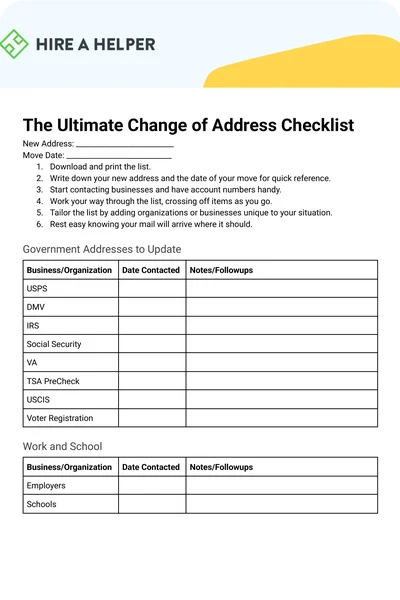
Download Our Free Change-of-Address Checklist


A checklist for changing address with instructions and a table of government agencies like USPS, DMV, IRS, and Social Security.

Frequently Asked Questions

Recent Articles