30 Places to Get Free Moving Boxes

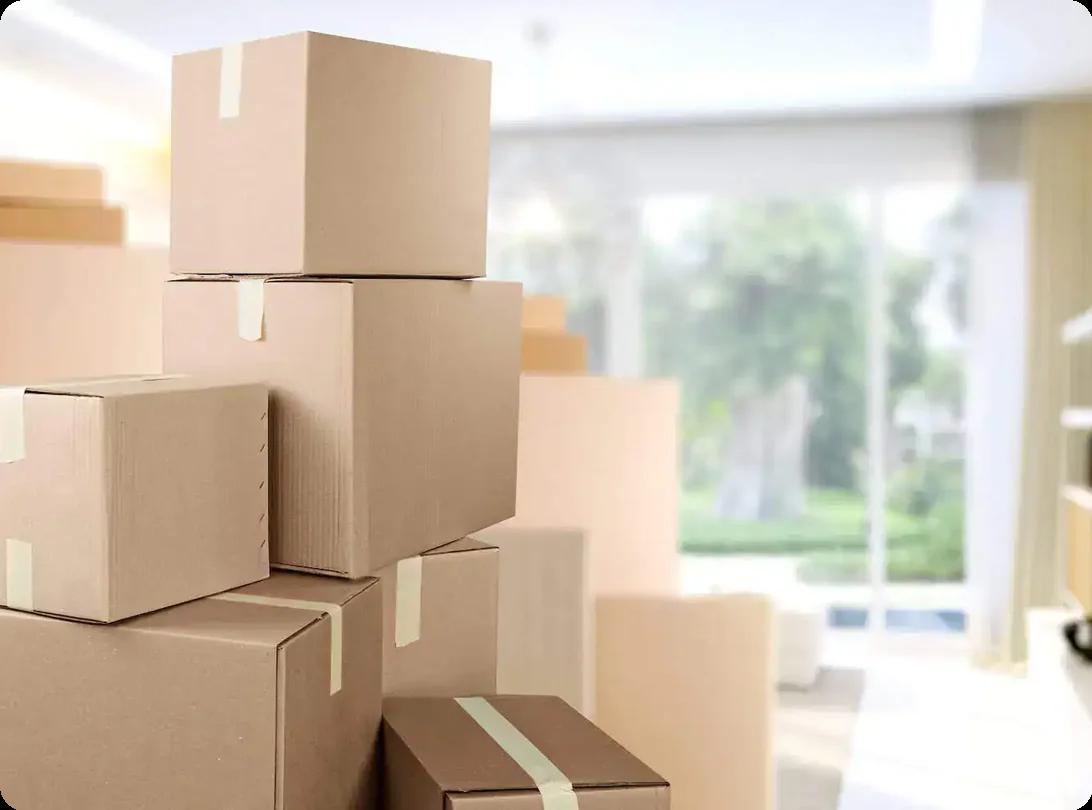
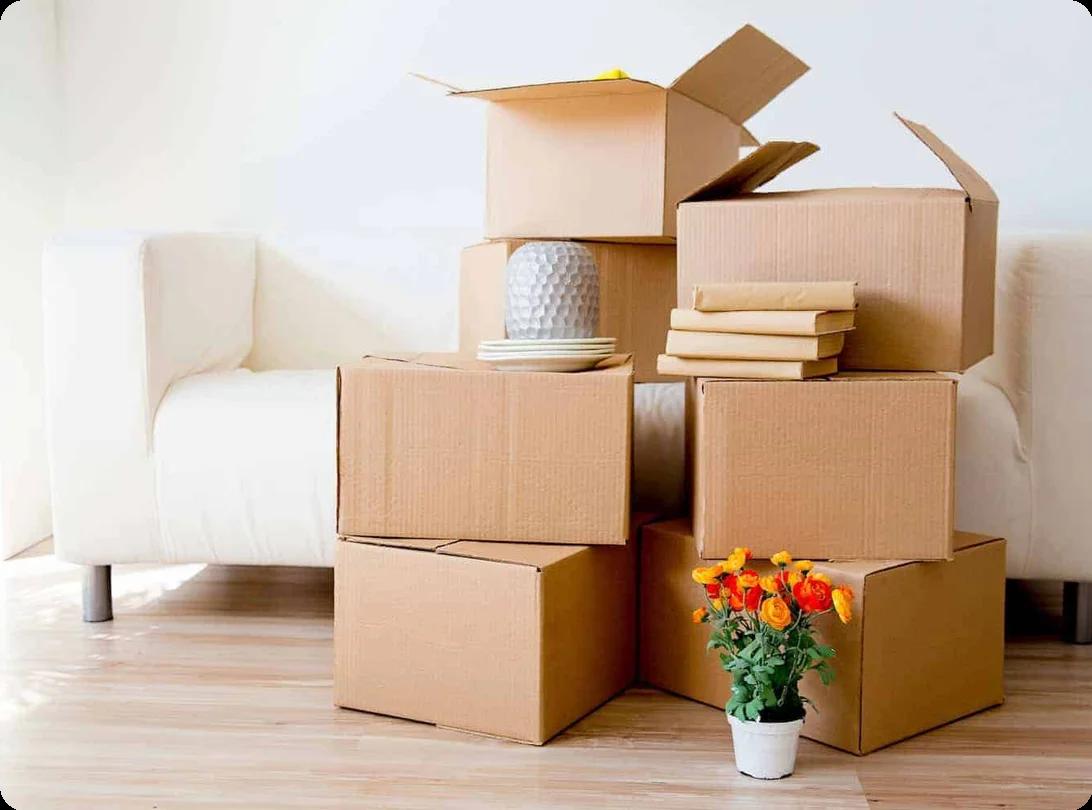
a living room packed with various cardboard moving boxes

You can pack a surprising amount of your move without paying for boxes at all. Grocery stores, liquor stores, neighbors, community groups, and even moving businesses regularly have sturdy cardboard boxes that they’re happy to pass along for free. The trick is knowing where to ask, when to ask, and which boxes are actually strong and good enough for moving your belongings safely.

HireAHelper has helped people book more than 1 million moves through a network of 1,700+ vetted moving providers, so we’ve seen what holds up on moving day and what doesn’t. Here’s where to look, what to ask for, and which free boxes are actually worth bringing home.


Last updated: Sep 1, 202614 min read
Kevin The Mover
Written byKevin The Mover

Key Takeaways

  • Start with grocery, liquor, and local retail stores, since they go through cardboard regularly, and a quick call can tell you when good boxes are usually available.
  • People in your neighborhood or community who just finished moving often give away full stacks of moving-grade boxes at once.
  • Skip anything damp, stained, smelly, pest-damaged, badly crushed, or missing the flaps you need to close it securely.
  • A mix usually works best. Free boxes are great for much of the house, while new specialty boxes make more sense for TVs, mirrors, dishes, and other fragile belongings.
Kevin The Mover
Author

Kevin The Mover

Kevin Kato is a travel and home services writer with over 20 years of experience as a professional mover.

Having been both a professional mover and a crew leader, Kevin has seen it all in the world of moving: hectic moves, unique packing, bizarre accident claims, truck mishaps, or just run-of-the-mill moves as advertised; there is virtually no situation Kevin hasn't managed. Today, Kevin provides his insights as Kevin The Mover for professional movers and "movees" everywhere.

How To Find Free Moving Boxes Near You

The fastest way to build up a free box supply is usually to combine a few nearby businesses with one or two local community platforms. That gives you steady access to more specialized retail shipping cartons while also putting you in touch with people trying to get rid of moving boxes in bulk.

You’ll have better luck if you start a few weeks before packing and spread the search over several days rather than trying to find 60 boxes in one afternoon. It also gives you room to turn down boxes that aren’t clean or sturdy enough.

Which Stores To Call Near You and What To Ask

If you want boxes today or within the next few days, start with businesses that receive frequent shipments of relatively clean, dry goods. Grocery stores, liquor stores, bookstores, and smaller retailers are particularly useful because they cycle through cartons quickly.

These are good places to look first:

  • Grocery stores and pharmacies
  • Liquor and wine stores
  • Big-box retailers and warehouse clubs
  • Home improvement stores
  • Restaurants, cafes, and coffee shops
  • Bookstores, libraries, and print shops

When you do call, you can ask something as simple as, “I’m moving soon. Do you ever have clean shipping boxes available before they’re broken down for recycling?” This usually gets you farther than asking vaguely for “free boxes.”

If the answer is no, it’s worth asking when the next shipment is unpacked or whether there’s another department that gets better boxes. You can also ask if staff are allowed to hold a stack until a specific pickup window.

Be mindful that you shouldn’t wander around behind a store and help yourself to boxes. This can not only go against store policy and get you or employees in trouble, but some retailers use cardboard compactors. OSHA warns that this cardboard baling equipment can cause catastrophic injuries.

How To Search Your Local Community Platforms

To find boxes locally, the quickest method is to search online. Try queries like “moving boxes,” “free boxes,” and “packing boxes” within the smallest practical location radius, then check any dedicated free or giveaway section.

These platforms are worth searching:

  • Craigslist and OfferUp
  • Facebook Marketplace and neighborhood groups
  • Buy Nothing groups
  • Nextdoor
  • Freecycle and Trash Nothing

If nobody has posted boxes yet, you can make your own request. Mention roughly how many you need, the sizes you’re hoping for, and how far you’re able to travel. Someone with 40 flattened moving boxes in the garage may be very happy to hear from you.

When To Ask: Restock, Move-Out, and Move-In Timing

The best time to ask a store for boxes is when its next shipment will be unpacked, not at a particular hour or on a universally “best” day. Restock schedules vary, so asking an employee is a much better idea than guessing.

Other useful box-hunting windows follow the moving and shopping calendar:

  • Retail stores: Around shipment and restocking cycles
  • Apartment buildings: Around periods with several move-outs or move-ins
  • Colleges: At the end of a semester or during major dorm move-outs
  • Neighborhoods: Shortly after someone moves into a nearby home
  • Delivery boxes: In the weeks after major gift-giving holidays, when households may have extra shipping cartons

If your timing happens to line up with one of those periods, you may find several boxes at once instead of collecting them one by one.

What Types of Moving Boxes Should You Look For?

The best free moving boxes are clean, dry, fully closable, and sturdy enough for what you plan to put inside. You’ll want a mix of sizes, but the majority should be small and medium boxes. You don’t need as many larger cartons reserved for lightweight items.

As moving expert Kevin Kato puts it, *“It’s best to have a general idea of what types of boxes you need, mainly to avoid getting boxes that are too small or too big for most of your things.”*

Here are some useful sizes and places you may find them:

  • Small boxes, around 16 x 12 x 12 inches: Great for books, canned goods, tools, dishes, and other dense items. Try bookstores, liquor stores, pharmacies, banks, or print shops.
  • Medium boxes, around 18 x 18 x 16 inches: The all-purpose option for decor, toys, kitchenware, shoes, folded clothes, and office supplies. Grocery stores and general retailers are good sources.
  • Large boxes, around 18 x 18 x 24 inches: Better for bedding, pillows, curtains, lampshades, and other bulky but light items. Furniture stores, warehouse clubs, appliance stores, and home improvement stores may have them.
  • Divided cartons: Liquor and wine stores sometimes have boxes with cardboard inserts that can work well for mugs, glasses, or other small items.
  • Specialty moving boxes: Dish boxes, TV boxes, wardrobe boxes, and mirror cartons are harder to find free in good condition. Moving companies, storage facilities, and someone who just finished moving are your best bets.

You can find large moving boxes for free, but bigger isn’t automatically better. A huge appliance or furniture carton can become almost impossible to lift if it’s filled with books, dishes, or anything else heavy. HireAHelper recommends keeping the weight of packed boxes manageable (40 pounds or under) rather than using the box’s maximum capacity all the time.

Boxes with produce residue, grease, moisture damage, missing top flaps, bad odors, or obvious structural damage aren’t worth taking to save a couple of dollars, either. You’ll just end up with damaged belongings or pests.

How Many Boxes Will You Need?

The number of boxes you need depends mostly on your home size and how much stuff you own. Your storage spaces, the number of people who live in your home, and how much you declutter before packing can change the total quite a bit.

HireAHelper’s moving box size guide and moving box calculator can give you a more personalized estimate. As a starting point, here’s what HireAHelper’s 2026 calculations suggest for how many boxes you need.

Number of Box Sizes According to Home Size
Home SizeSmall BoxesMedium BoxesLarge Boxes
Studio or 1-bedroom15 – 3010 – 205 – 15
2-bedroom30 – 4025 – 3015 – 20
3-bedroomAbout 50About 40About 25
4-bedroom+70 – 90+50 – 70+30 – 40+

Start collecting a few weeks before you expect to pack. Free boxes can be flattened and stacked against a wall, under a bed, or in another dry indoor space until you need them. That makes it much easier to collect gradually without creating a cardboard obstacle course in the middle of your house.

How To Tell If a Free Box Is Safe To Use

A free box is generally fine for moving if it’s clean, dry, sturdy, and still closes properly. Give each one a quick inspection before it joins your pile.

Skip a box if you notice:

  • Water stains, dampness, or soft cardboard
  • Grease, food residue, or sticky spots
  • Musty, chemical, or other strong odors
  • Droppings, eggs, chewed cardboard, or other signs of pests
  • Crushed corners or badly creased sides
  • Torn handholds or a weakened bottom
  • Missing top or bottom flaps that prevent it from closing
  • Oil, automotive fluids, paint, or other questionable residue

A box doesn’t have to look brand new, but it should still feel solid when you open it up and press gently on the sides and bottom.

Stores, Businesses, and Institutions That Give Away Boxes

Businesses go through a lot of cardboard, but your odds of getting boxes from them depend on what they sell and how they handle recycling. Smaller stores may be able to hand you intact cartons directly, while some national retailers flatten or bale boxes almost as soon as merchandise hits the shelf.

The best approach is usually to ask what types of boxes they receive and when they’re available. That gets you useful cartons instead of whatever happens to be lying around.

Grocery Stores & Pharmacies

Grocery stores and pharmacies are some of the most consistent places to ask because new products arrive regularly and most of the shipping boxes have a very short life inside the store.

Dry-goods cartons, specifically, are the ones worth looking for. Kevin Kato recommends skipping produce boxes and asking instead about cartons that held things like paper towels, diapers, tissues, cereal, or other packaged goods:

"You’ll want to stay away from produce boxes, which usually have holes and bits of leftover organic matter in them. Instead, look for the big cardboard cartons used for paper towels, diapers, Kleenex, toilet paper, and dry foods like cereal."

Rather than trying to guess when boxes will appear, ask an employee when shipments are normally unpacked and whether clean cartons can be set aside before they’re flattened.

Liquor & Wine Stores

Liquor and wine boxes are especially useful for glasses, mugs, bottles, small kitchen items, and other dense belongings because they’re designed to carry considerable weight in a relatively compact space.

Kato notes, *“Boxes for wine and liquor are not only very sturdy but may come with cardboard divider inserts that help with packing things like mugs and glassware.”*

Ask whether they have closed cartons with intact top flaps and whether any divider inserts are available. Open-top wine cases can still be useful for carrying items to your car, but they’re harder to stack safely in a moving truck.

Big-Box Retailers & Warehouse Clubs (Walmart, Target, Costco, Sam's Club, BJ's)

Big-box retailers and warehouse clubs may have free shipping cartons available, but it depends heavily on the individual location and how that store handles its recycling. Customer service, a floor manager, or someone working near the department you want boxes from is a good place to ask. Cartons from household paper products, packaged home goods, toys, or dry foods tend to be more useful than anything that carried fresh produce, liquids, or cleaning chemicals.

You can also ask when the location works its larger freight shipments and whether employees are allowed to hold a few intact cartons. If the answer is an overall “no”, keep in mind that policy can be store-specific. A second store may have a different process, so one refusal doesn’t mean the entire chain is off the list.

And skip the back-of-store scavenger hunt. Dumpsters, loading areas, compactors, and balers are not safe places to search for boxes without permission.

Home Improvement Stores (Home Depot, Lowe's)

Home improvement stores may have shipping cartons available, but they also sell a large range of moving boxes, so discarded cartons aren’t guaranteed to be offered to customers. HireAHelper’s current moving-box guidance notes that individual locations may have discarded product cartons even when there’s no companywide free-box program.

If you ask, look for cartons that carried lighting, small appliances, home decor, plastic household goods, or other clean merchandise. These can be useful for kitchen items, decor, bedding, or lightweight household goods.

"When posting [on neighborhood groups], specificity helps. ‘Looking for 20 to 30 clean moving boxes, especially small and medium sizes, within 5 miles of downtown’ gives people much more to work with than ‘Anyone have boxes?’"

And remember that a giant carton isn’t necessarily a strong carton. A large box designed for a lightweight product can buckle quickly if it’s packed with books or dishes. Match the box size to what you’re packing rather than filling every big box to the top.

Restaurants, Cafes & Coffee Shops

Restaurants and cafes receive a steady flow of supplies, so they can be surprisingly useful if you ask for the right boxes.

Cartons that held cups, napkins, packaged condiments, frozen foods, coffee supplies, or other sealed products are usually better bets than anything exposed to grease, raw food, or moisture. Kevin Kato recommends sturdy frozen-food cartons from fast-food restaurants because the food itself was packaged before it went into the box.

The main catch is contamination. A box that smells like fryer oil or has food residue on the bottom may attract pests and isn’t worth bringing into your house. Check how to tell whether a free box is safe before loading up your car.

Bookstores, Libraries & Print Shops

Bookstores, libraries, and printing businesses tend to get smaller, sturdy cartons built to carry dense products, which makes them useful for books, files, records, office supplies, small kitchen items, and decor.

You can ask about book shipment cartons, paper boxes, or office-supply boxes that still have lids or intact flaps. Paper cartons are particularly handy because they’re usually clean and relatively uniform.

Deliveries may be less frequent than at a grocery or big-box store, so asking when stock or paper shipments arrive can save you an unnecessary trip.

Schools, Colleges & Dorms

Schools and colleges can produce a lot of boxes at predictable times. Office-supply deliveries happen throughout the year, while dorm move-in and move-out periods can create a sudden supply of shipping and moving cartons.

Office paper boxes work well for books, files, desk supplies, and other dense items. Boxes left after dorm moves may give you a better range of sizes because students often arrive with regular moving and shipping cartons.

Access rules vary by campus, and some residence or waste areas aren’t open to the public. Asking housing, facilities staff, or administration offices where reusable boxes are collected can save you from ending up somewhere you’re not supposed to be.

Apartment Complexes, Leasing Offices & Your Workplace

These can be some of the easiest free-box sources simply because you may already have legitimate access to them.

Apartment leasing staff may know when residents have recently moved in or out and whether reusable boxes are ever left in a designated area. Your workplace may receive paper, office supplies, equipment, or online orders in cartons that are perfect for packing.

Ask about clean boxes headed for recycling and whether there’s a particular person who handles incoming shipments.

If your apartment or office building has shared recycling, check before taking cardboard from it. Some properties are happy to see reusable boxes get another life, while others have rules about removing anything once it has been placed in the recycling stream.

Military Bases & Commissaries

Commissaries and exchanges can be useful free-box sources for people who already have authorized installation and shopping access. Commissary access is a military benefit, and authorized patrons generally need appropriate military or family identification.

If you’re eligible, it’s worth asking commissary or exchange staff about clean cartons from paper products, dry groceries, household goods, or other packaged merchandise. Ask when shipments are normally unpacked and whether available boxes can be set aside.

Military families also have another particularly good source: other families who have recently completed a permanent change of station. PCS moves can leave behind a large supply of actual moving boxes in multiple sizes, so installation community groups and personal contacts may be more productive than the commissary itself.

Other Local Businesses Worth Asking

These businesses usually won’t produce boxes in grocery-store quantities, but they can be lower-competition sources because fewer people think to ask them. Even a quick call may turn up a few boxes in exactly the size you need.

Here are some options and the boxes they’re most likely to have:

  • Furniture and appliance stores: Large furniture, lamp, decor, and appliance cartons. Best for lightweight bulky items rather than dense loads.
  • Pet supply stores: Sturdy cartons from packaged pet food, litter, toys, and supplies. Skip anything with spills or strong odors.
  • Craft and hobby stores: Small and medium cartons from decor, frames, yarn, paper goods, and craft supplies.
  • Car dealerships and auto shops: Heavy-duty boxes from parts shipments, sometimes with cardboard inserts. Check carefully for oil, grease, or chemical residue.
  • Banks: Compact paper and office-supply cartons that work well for books, documents, and heavier household items.
  • Farmers markets and produce stands: Sturdy cartons can be available after vendors unpack, but food residue, moisture, and ventilation holes make these more hit-or-miss.
  • Event venues and convention centers: Display, promotional, merchandise, and equipment cartons may be available after an event or trade show.
  • Local theaters: Boxes from posters, concessions supplies, programs, merchandise, or equipment tend to be small to medium in size.

Pretty much every business has to deal with incoming packaging somehow. If you pass one regularly, it takes very little effort to ask what happens to the clean boxes.

Community and Peer-to-Peer Sources

People who just finished moving are one of the best sources for free boxes because they may be getting rid of an entire set at once. Meaning instead of collecting a few cartons here and there from stores, you might find 30 matching boxes from someone in your neighborhood who needs to unload them all. Plus, their cartons were chosen for moving, survived at least one trip, and may include specialty sizes you won’t get from a grocery store.

Search local free listings, but remember you can also post a request for boxes yourself on the same platforms. This often catches people who haven’t bothered to post their leftover boxes yet.

Craigslist & OfferUp: Free Listings

On Craigslist, start with the Free section and search terms like “moving boxes,” “packing boxes,” and “cardboard boxes.” On OfferUp, search the same terms and narrow the results to your local area.

Check regularly while you’re collecting because good moving-box lots can pop up and then disappear quickly. Posting your own request can also work, especially if you mention the sizes or quantity you need.

Before driving across town, confirm that the boxes are still available and roughly what condition they’re in. For person-to-person pickups, use whatever meeting arrangement feels safe and practical, and arrive when you said you would.

Facebook Marketplace & Neighborhood Groups

Neighborhood Facebook groups can be even better than Marketplace for free boxes because you can actively ask nearby residents instead of waiting for a listing to appear.

When posting, specificity helps. “Looking for 20 to 30 clean moving boxes, especially small and medium sizes, within 5 miles of downtown” gives people much more to work with than “Anyone have boxes?”

You can also search Marketplace with the price filtered to free, then check local buy/sell, community, moving, reuse, or neighborhood groups.

Join useful groups early. Some require administrator approval before you can participate, and it’s frustrating to discover that when you need boxes tonight.

Buy Nothing Groups

Buy Nothing is built around neighbors giving and requesting items for free, which makes leftover moving supplies a natural fit. Members can participate through the Buy Nothing app or local Facebook groups, and the platform specifically supports both *Gives* and *Asks*.

Once you’re in, you can post an Ask for moving boxes and include the quantity, general sizes, and pickup area that work for you. You can also search existing Gives before posting.

Joining a few weeks before your move gives you more time for good offers to appear. And once you’ve unpacked, the same group gives you an easy way to pass your boxes to the next person instead of filling your recycling bin.

Nextdoor

Nextdoor is particularly useful because members must verify their residential address to participate, so you can be sure the box pickups are much closer than a citywide marketplace search.

Search for “moving boxes” or “free boxes,” check nearby listings, and post a request asking whether anyone has recently unpacked.

Joining before you start packing gives you time to see how active your neighborhood is. Some areas have plenty of giveaway activity, and others are fairly quiet. If you’re getting nowhere, a Buy Nothing or neighborhood Facebook group may have a larger pool of people.

Freecycle & Trash Nothing

Freecycle is a network of local groups specifically built around giving and receiving items for free, rather than buying and selling them. It has more than 5,000 local groups worldwide, and members can post both offers and requests.

Trash Nothing is another free-stuff platform that makes it easy to browse or give away reusable household items in local communities.

Join early enough to watch for several listings rather than relying on an immediate response. In a busy local group, you may find moving boxes quickly; in a quieter community, posting your own request gives people a reason to check the garage.

Neighbors, Friends, Family & Anyone Who Just Moved

The closest source is usually the best one. Ask friends, relatives, coworkers, neighbors, or your neighborhood group whether anyone has recently moved. Online shoppers are worth asking too, even if they haven’t moved.

But if you notice a nearby moving truck one weekend, you don’t need to knock on the door while everyone is carrying furniture. A friendly conversation later can be enough to find out whether they’ll have boxes to give away once they unpack.

Recycling Centers & Municipal Transfer Stations

Recycling centers and transfer stations may have usable cardboard, but this is one source where local rules matter a lot. Some facilities don’t allow people to remove material once it has been dropped off, while others have dedicated reuse, swap, or salvage areas.

"Saving boxes that already arrive at your house is one of the easiest ways to build a free supply because there’s no searching or pickup involved. Start setting aside useful cartons several weeks before your move, or earlier if you know you order online frequently."

Search your city or county website for recycling, transfer, reuse, or drop-off facilities, then call before making the trip. Ask, “Do you have a reuse area, or do you ever set aside clean cardboard boxes for reuse?” That makes it clearer that you’re looking for boxes people are allowed to take, not trying to pull cardboard out of a recycling container.

You can also ask whether access is restricted to local residents and whether there’s a particular collection period when reusable cardboard tends to be most plentiful.

Yard, Estate & Garage Sales

The best time to ask a yard, estate, or garage sale about boxes is when the seller is starting to pack up, because leftover merchandise often has to go back into boxes anyway.

You can ask whether they have empty cartons they no longer need or whether any boxes will be available once sold items are cleared out. Sellers may also have packing paper, bubble wrap, or other materials left over from setting up the sale.

If you visit earlier, you can ask whether they’d be willing to save empty boxes for you to pick up later.

Moving-Industry Sources

Moving businesses are worth checking because the boxes you find there are more likely to be actual moving cartons with useful sizes, intact flaps, and enough strength to stack.

The catch is that these businesses also sell boxes, so free supplies can be less predictable than at a grocery store or in a neighborhood group.

U-Haul is the big exception. It currently offers two programs specifically intended to keep used moving boxes in circulation.

U-Haul's "Take a Box, Leave a Box" Bins

U-Haul says every company-owned location has a Take a Box, Leave a Box bin where customers can leave reusable boxes for someone else to take for free. The boxes come from other customers, so the amount and selection at any one store can change from day to day.

Ask an associate where the free-box area is when you arrive. Because these are leftover moving boxes, you may find standard small, medium, and large cartons rather than random retail packaging.

If you need a substantial number, calling your local company-owned center first can save a trip. Neighborhood dealer locations aren’t the same as company-owned centers, so the program isn’t necessarily available at every business displaying a U-Haul sign.

U-Haul Box Exchange

The U-Haul Box Exchange is an online marketplace where people can give away, sell, or find used boxes and moving supplies in their area. Despite being hosted by a national company, the results depend on what other people near you have posted.

Here’s how to use it:

  1. Go to U-Haul’s Box Exchange.
  2. Search your area for available boxes and moving supplies.
  3. Look for listings offering boxes free rather than for sale.
  4. Contact the person who posted the listing and confirm what’s still available.
  5. Arrange pickup directly with the person giving them away.

Supply tends to follow local moving activity, so checking several times over a week or two may produce better results than one search.

Moving Companies & Van Lines

Some local moving companies and van-line agencies give away or cheaply resell used moving boxes, but it isn’t guaranteed. Boxes are a product for many movers, so a company may prefer to sell its cartons or may not keep boxes returned by customers.

Kevin Kato, who spent years working as a professional mover and crew leader, suggests checking anyway:

"I am willing to bet that the most extensive supply of used boxes anywhere will be at your local agency for one of the big van lines. United, Atlas, North American, Allied, Mayflower: any of them will very likely have stacks and stacks of used boxes, in all sizes and in decent, usable condition."

Ask specifically about used moving cartons, customer box-return areas, or boxes from completed moves rather than simply asking whether the company has boxes.

It’s also worth searching community platforms for “moving boxes,” since moving businesses and their customers sometimes use local giveaway listings rather than storing used cardboard.

Self-Storage Facilities

Self-storage facilities may have free boxes when customers leave good cartons behind after moving out, although the supply depends entirely on the location.

Call the office and ask whether there’s a customer free-box area, a reuse shelf, or leftover move-out boxes available. Since many storage customers use proper moving cartons, this can be a good place to find sturdier and more uniform boxes.

Availability may increase around busy move-out periods, but storage contracts don’t all end on one universal date. The staff at your local facility will know whether there’s a better time to check.

Save Your Own Delivery & Shipping Boxes

Saving boxes that already arrive at your house is one of the easiest ways to build a free supply because there’s no searching or pickup involved. Start setting aside useful cartons several weeks before your move, or earlier if you know you order online frequently.

Keep boxes that are clean, dry, sturdy, fully closable, and reasonably sized. It’s also worth saving air pillows, clean packing paper, bubble wrap, and other cushioning materials that arrive inside them.

Shipping boxes vary in strength, so match the carton to the job. Smaller sturdy boxes can handle books or pantry items, while lighter-duty boxes are better for clothes, towels, toys, and linens.

When Free Boxes Aren't Worth It

Free boxes can handle a large part of a typical move, but there are situations where saving a couple of dollars isn’t worth making packing harder or putting something expensive at risk.

Buying new boxes may make more sense when:

  • You’re packing fragile dishes or glassware: A new dish box and dividers give you more structure than a random grocery carton.
  • You’re moving a TV, mirror, artwork, or another awkward item: Specialty boxes fit these items much more closely.
  • You’re packing expensive or sentimental belongings: A clean, undamaged box of the right size is easier to protect and stack.
  • Your belongings will stay boxed in storage: New cardboard or plastic bins hold up better when boxes may sit for months.
  • Most of the free boxes you found are wildly different sizes: Uniform cartons are easier to stack securely.
  • You’re running out of time: Driving to six stores to save $30 in cardboard can stop being a bargain pretty quickly.

If you do need to buy boxes, the cheapest approach is generally to stick with standard cardboard sizes, compare the per-box price, and buy in multipacks when the bulk price is actually lower. HireAHelper’s 2026 comparison found standard moving boxes at about $1.12 to $4.18 each, depending on size and retailer. Specialty boxes cost substantially more.

If you’re trying to figure out where professional help fits into the budget, HireAHelper’s Moving Cost Calculator lets you compare moving labor, full-service moving, containers, and other options. You can keep the inexpensive parts DIY and pay for help where it matters more.

Free Boxes vs. Cheap Boxes vs. Rented Plastic Bins

Free boxes win on price, purchased cardboard wins on variety, and rented plastic bins win on durability and weather resistance.

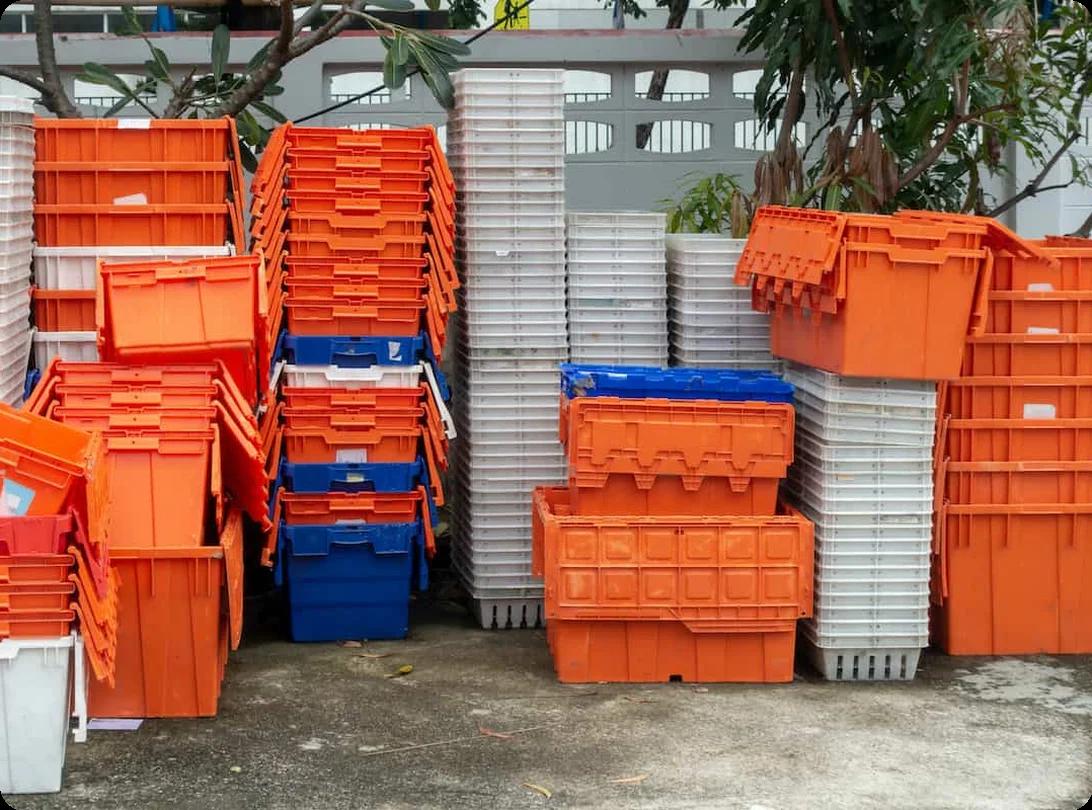
For most budget moves, a combination works better than choosing only one. Free cartons can handle clothing, linens, toys, pantry goods, and plenty of everyday items. A few new boxes are worth buying for fragile belongings or those that need specialty containers. Plastic bins can make sense when weather, repeated handling, or temporary storage is a bigger concern.

Free Boxes vs. Bought Boxes vs. Rented Plastic Bins
FactorFree CardboardBought BoxesRented Plastic Bins
Cost$0About $1.12 – $4.18 per standard boxAbout $2.50 – $3.50 per bin/week at one major national program
DurabilityVariesConsistentHigh
Sizing consistencyLowHighHigh, but fewer sizes
When to start acquiringSeveral weeks before movingWhenever you're ready to packReserve before packing, especially in busy periods
ReusabilityDepends on conditionUsually several uses if kept dryDesigned for repeated rental use
Best use casesEveryday household goodsFragile, dense, or specialty itemsLocal moves, wet weather, repeated handling

*Sources: HireAHelper proprietary moving-box pricing research, 2026; current U-Haul plastic-bin rental pricing. *

The main downside to free boxes is the time it takes to collect and inspect. New boxes cost more but give you consistent sizes and strength, while plastic rentals let you skip assembly, but you have to work within the rental period and return them when you’re finished.

What To Do With Your Boxes After the Move

Once you’re unpacked, it’s time to decide what to do with all the boxes you carefully collected or bought. Throwing cardboard out should be the last option, especially when another mover may be looking for exactly what you have.

Here’s what you can do instead:

  • Keep a few useful boxes: Clean moving boxes flatten down to almost nothing, so saving several good small and medium cartons can be useful for shipping, storage, donations, holiday decor, or your next decluttering project.
  • Pass the rest along: A Buy Nothing group, Nextdoor post, Facebook neighborhood group, Craigslist listing, Freecycle, or Trash Nothing can put the same boxes straight into another move. If you got them from one of these communities in the first place, giving them back keeps the cycle going. Buy Nothing explicitly supports giving items within local communities, while Freecycle is built around keeping usable goods out of landfills.
  • Try a box-reuse program: U-Haul’s company-owned stores have Take a Box, Leave a Box areas, and its online Box Exchange also lets people offer reusable moving supplies to others.
  • Recycle boxes that are past their prime: Flatten dry cardboard and follow your local recycling program’s rules about tape, labels, staples, and acceptable box sizes. Wet, greasy, or food-contaminated cardboard may not be recyclable in the same way, so check your local program if you’re unsure.

A box that survives another move is usually more useful than one that goes straight into the recycling stream. If yours are still solid, there’s a very good chance somebody nearby wants them.

Why Trust HireAHelper

HireAHelper is a moving marketplace that has helped people book more than 1 million moves through a nationwide network of 1,700+ vetted moving providers. That gives us a close look at the boxes, packing materials, and supplies that actually make it through moving day.

For this update, we also checked current information in August 2026 from HireAHelper’s moving-box research and calculator, U-Haul’s box-sharing programs, Buy Nothing, Freecycle, Trash Nothing, Nextdoor, and official military commissary resources. The goal isn’t just to find cardboard. It’s to help you find boxes that are free and worth packing your stuff in.

Frequently Asked Questions

Recent Articles