2024-2025 Retirement Study: Where and Why Retirees Moved This Year

Each year, our Retirement Study analyzes where and why Americans choose to move during retirement. Using the latest data from the U.S. Census Bureau, we track shifts in migration patterns, uncover the top destinations and origins, and explore the evolving motivations behind retiree moves.

Key Takeaways
- Less than 260,000 Americans moved to retire in 2024, a decrease of 23.8% compared to 2023
- Massachusetts takes the top destination spot for retirees moving across state lines to retire, with 1 out of 5 choosing the state in 2024
- Florida (20%) and Minnesota (7%) have the highest share of all retirees moving to new states
- 13% of retirees who moved in 2024 stated health reasons as their primary motivation for moving.
Melanie Morris
Melanie Morris is an editor, writer, and one of the sharpest moving experts at HireAHelper. Seven years spent answering readers' toughest questions and demystifying a process most people dread has made her an authority on what movers actually need to know — and how to explain it without the jargon. Her own relocations around the Southwest and up and down the West Coast give her the firsthand experience to back it up. Whether you're crossing the country or just moving down the block, Melanie makes sure the advice you get is accurate, trustworthy, and easy to act on.
Year After Year: 2024's Moving Trends Compared to 2023
Retirement Moves in 2024 Decline After 2023’s Three-Year High
In 2024, 258,000 Americans relocated for retirement, a steep 23.8% drop from 2023.
Number of Retirement Moves By Year
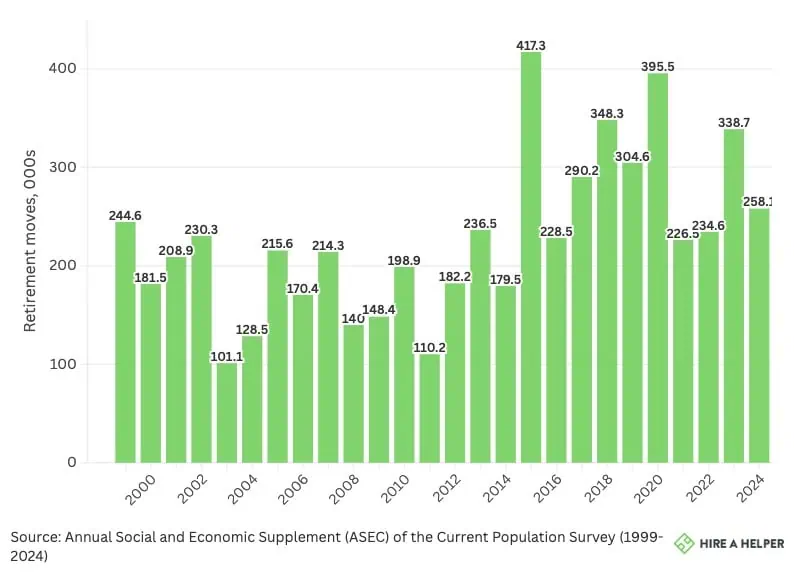
While fewer people moved specifically to retire in 2024, 32.2% of those who did move relocated to a different state — nearly twice the rate of the average American mover, only 16.2% of whom moved out of state. However, moves across state lines for retirement dropped considerably from 2023, when 41.9% of those moving to retire relocated to another state, which accounts for a 41.6% decrease year-over-year. Additionally, 22.7% of all retirees (new and existing) moved in 2024 — down slightly from 2023’s high of 25.3%.
Retirement Moves Continue to Recover from the Pandemic
The rolling two-year average of retirement moves shows a steady recovery from the disruptions caused by COVID-19. After dropping to 230,500 moves in 2021-2022, the average increased by 29.4% to 298,400 moves in 2023-2024.
The number of retirement moves in 2024 aligns with the rolling two-year average of 259,300 moves recorded in 2016-2017. While the past few years have seen ups and downs due to external factors like COVID-19 and shifting economic conditions, 2024 suggests a return to more typical moving patterns for retirees.
2-Year Rolling Average of Retirement Moves
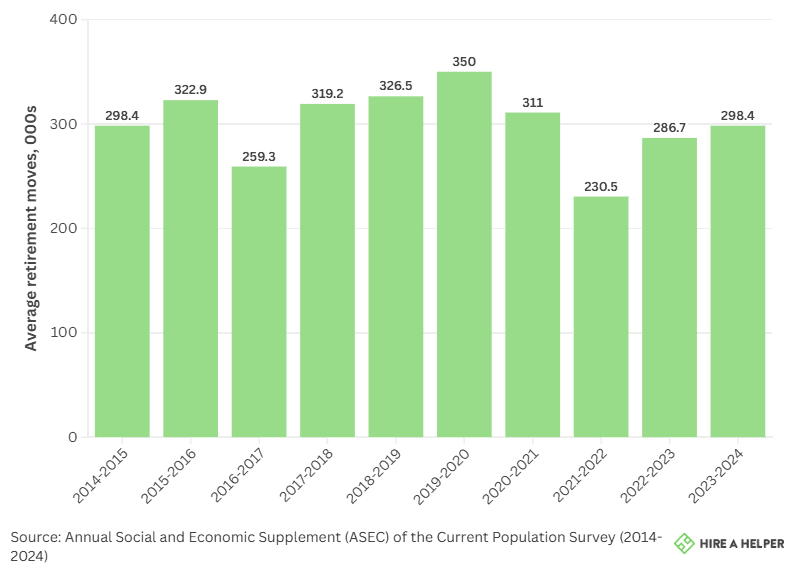
The pronounced drop in the average following 2020 reflects how the pandemic (which posed heightened risks to older populations) disrupted retiree plans. Many older adults postponed major decisions like relocating due to safety concerns and uncertainty, but the rebound in the 2023-2024 average shows that retirees are regaining confidence.
Where Retirees Moved in 2024: Florida and Massachusetts Both Winners
When analyzing retirement moves in 2024, we focused on two distinct groups of retirees:
- All retirees who relocated to a new state: This group includes all retirees who moved to a new state in 2024, regardless of their reasons for relocating. This encompasses the full U.S. retirement population, whether they are newly retired or have been retired for years.
- Retirees who moved to a new state specifically to retire: This group only includes retirees whose primary reason for moving was to retire.
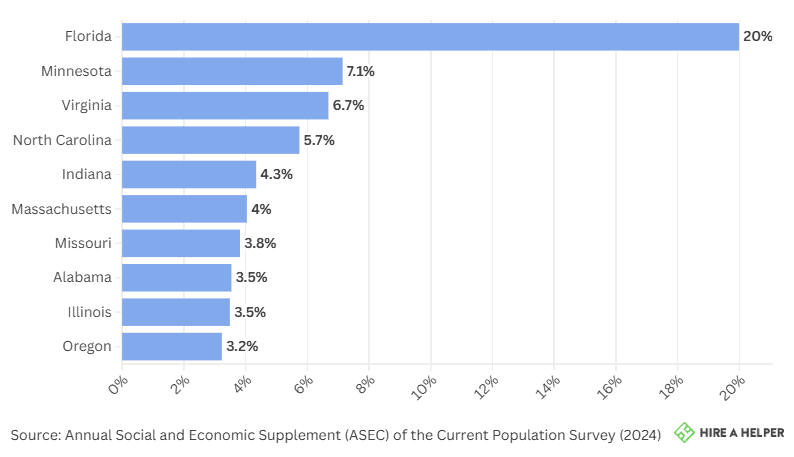
Among all retirees who moved to a new state, Florida remained the most popular, attracting 20% of this demographic. No other state came close to matching its appeal. Minnesota sits at a very distant second, attracting 7.1% of all retirees who moved across state lines. Minnesota ranked second, attracting 7.1% of retirees who moved to a new state, followed by Virginia (6.7%) and North Carolina (5.7%). While these states have grown in popularity, they still trail significantly behind Florida’s dominance.
Top States for All Retirement Moves
For retirees who moved specifically to retire, Massachusetts claimed the top spot for moves out of state, attracting 20.4% of all such moves. Florida, still a favorite in this category, followed closely with 19.9%, reflecting a competitive shift in retiree relocation patterns.
Moves Specifically For Retirement by State
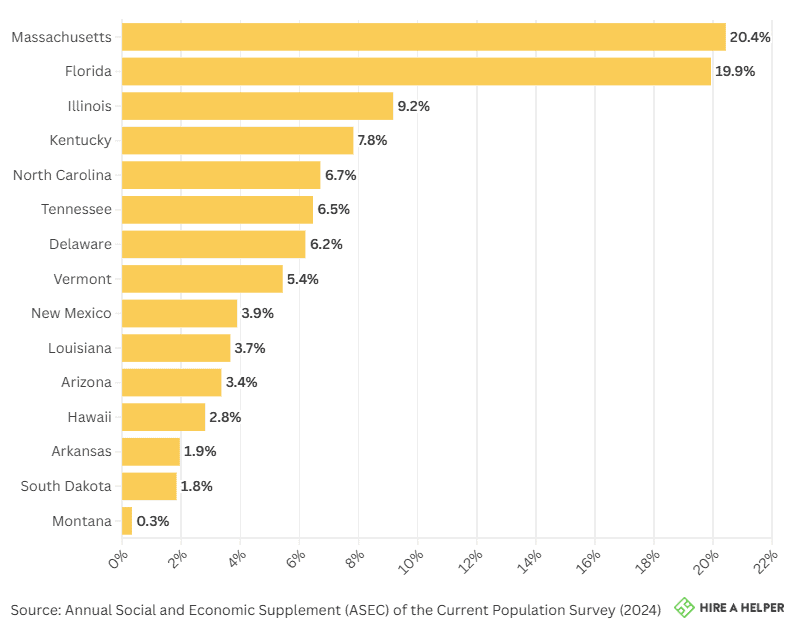
Massachusetts’ popularity among those moving to retire could be linked to its access to top-tier healthcare, cultural opportunities, and scenic living, offering a distinct retirement experience compared to warmer states like Florida.
Top States Retirees Relocated From in 2024: California and Virginia Lose Out
Among all retirees who moved to a new state, California was once again the most common state left behind in 2024, with 10.6% of all retiree moves originating there.
Top States All Retirees Moved Away From
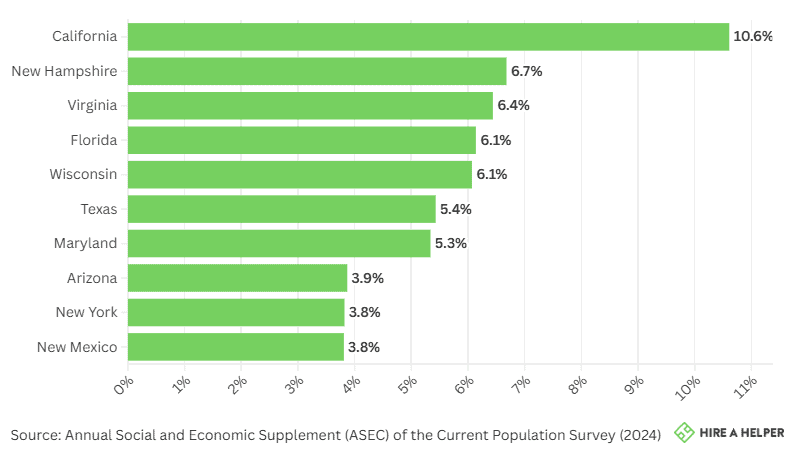
The state’s high cost of living and housing prices likely pushed many retirees to relocate to more affordable and retirement-friendly states. For retirees who moved specifically to retire, nearly one in four left Virginia, making it the state with the highest proportion of "move-to-retire" departures.
Top States Those Moving Specifically To Retire Left
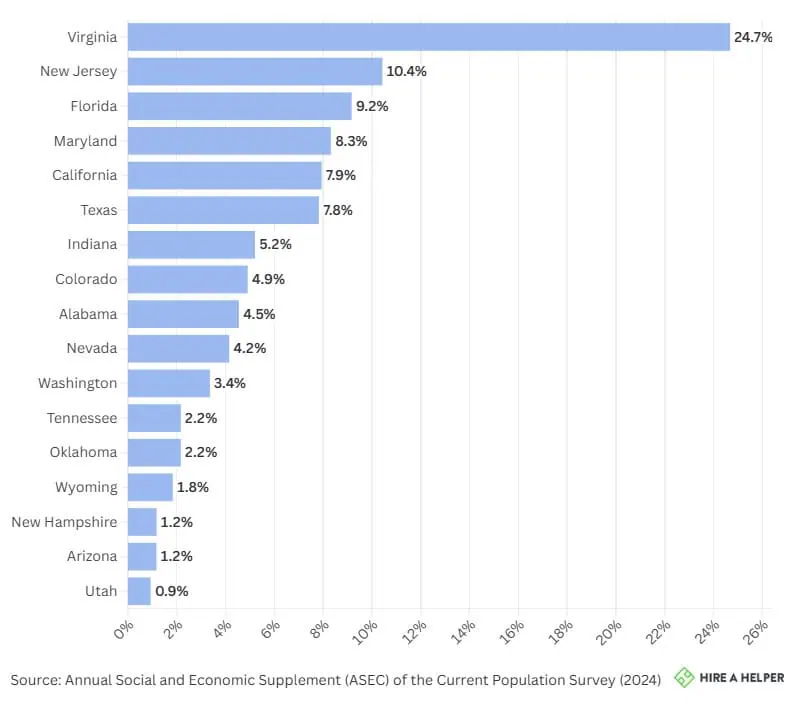
Virginia’s top ranking may be due to its status as a major work hub, particularly in areas like Northern Virginia and the greater Washington, D.C., metro region. This means it’s attractive to working professionals, but once those people decide to step down from their long careers in government, defense, or tech, they might be looking to move somewhere very different to Virginia.
Reasons Retirees Moved in 2024: Health and Family Take the Lead
“Moving to retire” was the top reason retirees relocated in 2024, though the percentage dropped to 13.9% from 20.4% in 2023. When excluding retirement, health reasons became the leading motivation, followed closely by family reasons, swapping places from the previous year. Housing-related factors also played a role, with 8.3% moving for cheaper housing and 7.2% seeking new or better housing. Other reasons included changes in marital status (5.2%) and climate preferences (4.5%).
Top Reasons Retirees Moved in 2024
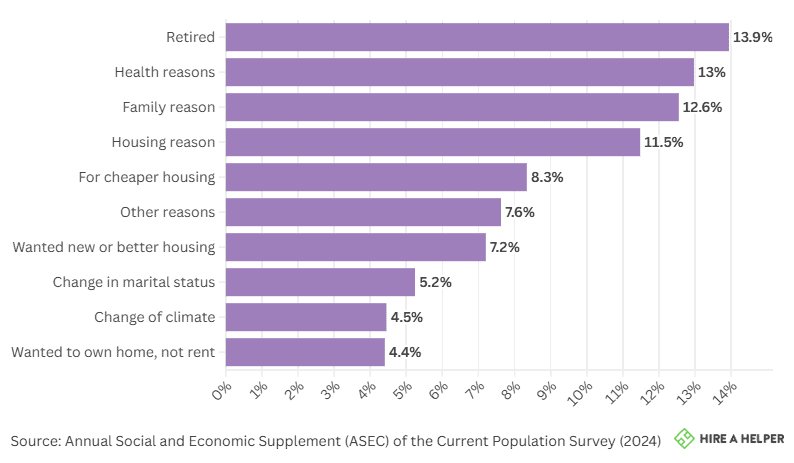
These trends show that while retirement remains a major driver, health, family, and financial considerations are shaping how and where retirees choose to move.
Sources and Methodology
Unless otherwise stated, all the data behind the charts in this study were taken from the U.S. Census Bureau’s Current Population Survey and its Annual Social and Economic Supplements for 2024. To calculate the most moved-in and moved-out states, we took the percentage of all retirees in 2024 who moved or left a state.
Latest Research

2025 Charlotte Moving Report
If it feels like everyone’s moving to Charlotte these days, you’re not imagining it! The Queen City is one of the fastest-growing places in North Carolina and the entire Southeast. According to our 2025 North Carolina Migration Report, 147 people move to Charlotte every day, part of a larger trend that has made North Carolina a top-five destination for movers nationwide. It’s drawing talent from across the state and beyond, reshaping how North Carolina grows and cementing its role as one of the country’s most dynamic cities.
We created this report to show what’s fueling that growth, who’s coming here, and what it means for people who already call Charlotte home.

The Future of Homeownership 2026
In 2026, the American Dream is facing a reality check. The median U.S. home price has climbed to $390,300 and is projected to reach $527,525 by 2031 - a 35.1% increase in just five years. But incomes aren't keeping up, despite growing minimum wages. Across the country, the gap between what people earn and what it takes to buy a home is widening fast, pushing homeownership further out of reach for millions of Americans.
This is a nationwide affordability crisis with sharp regional divides. In some states, buying a home still aligns with what the average household earns. In others, even an income of $100,000 falls short.
Using median home prices, household incomes, and five-year projections, this report reveals where Americans can still afford to buy today, where affordability is deteriorating fastest, and which markets may become realistic, or completely out of reach, by 2031.

2023 Study: 3 Million Moves Driven by Extreme Weather Events Last Year
In this study, HireAHelper takes a close look at moves forced by natural disasters in the United States.
Using the most recent data from the Census Bureau’s large-scale Household Pulse Survey and Current Population Survey, we focused on the number of disaster-forced moves over time, their typical destinations, as well as the types of disasters forcing most Americans out of their homes.

Study: How Much Does Moving Cost in 2023?
Driven by record inflation and rising fuel and vehicle costs, U.S. moving costs reached an all-time high in 2022. The average cost that year was $410—peaking at $454 in August—representing a 7% increase from 2021.
Prices have not yet given way; data from the first five months of 2023 shows an average moving cost of $399, which is 4% higher than the same period last year. It remains uncertain whether these costs will stay elevated or decline, which states will experience the sharpest price hikes, and if any areas will become cheaper.

2023 Study: Corporate Relocation at Highest Rate Since 2017
Whether to cut costs, gain a more beneficial tax rate, or be closer to a target market, about 9% of corporations in the United States moved their headquarters within the past fiscal year — the highest percentage since 2016-17, according to Securities and Exchange Commission (SEC) filings.
States like New York and cities like Seattle are seeing corporate headquarters move away, while smaller cities outside large urban centers are becoming new homes to big companies in tech and pharmaceuticals. Our study breaks down where companies are moving to, which states and cities they’re leaving behind, and whether workers are on board with following their employer to their new HQ location.

2023 Study: Where, How and Why Are Americans Moving This Year?
Every year, millions of Americans move, and over half (52%) of those moves take place during what we in the moving business call “moving season” — otherwise known as the summer months of May through August.
So what does the moving season hold for us this year? To get a sense of how many Americans intend to move, when they’re going to move, and what drives their moving decisions, HireAHelper conducted a nationally representative survey of 2,000 adults in the U.S. earlier this month.