How-To Guide for Getting the Best Rental Truck For You

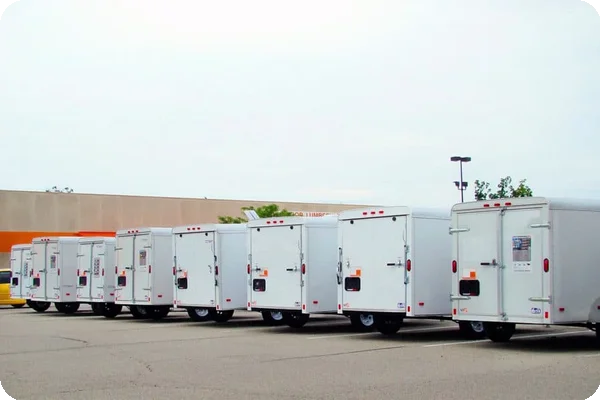
A row of rental moving trucks of different sizes lined up at a rental facility ready for booking

The easiest way to get the best rental truck is to know a few things ahead of time: what size you need, what your budget is, and which company you want to use. Few people would argue that moving is a huge undertaking, especially if you’re DIY-ing it all. And undoubtedly, the most important part of planning is renting the truck that's going to transport you and your stuff to your new home.

The process of renting a truck is pretty easy, but finding a good deal on a truck that's both reliable and big enough to hold all your belongings is the challenge.

Read on to find out how to snag a rental truck that fits your needs, preferences, budget, and — most importantly — your stuff, no matter if you’re hiring labor-only movers or doing a full DIY move.


Last updated: Jan 30, 202611 min read
Melanie Morris
Written byMelanie Morris

Key Takeaways

  • Three things determine the right rental truck: size needed, budget, and which company has the best deal in your area
  • Size matters: too small means multiple trips; too large means wasted fuel and harder driving; match truck size to home size
  • Compare top companies: U-Haul (largest network), Penske (newer fleet), Budget (often cheapest), Enterprise (cleaner trucks)
  • True cost breakdown: daily rate + mileage + fuel + insurance + equipment add-ons (dolly, blankets, pads)
  • Urban moves: check parking permits, low-clearance routes, and HOA truck rules — they can disrupt the day if you don't plan
Thomas O'Sullivan
Author

Thomas O'Sullivan

Thomas O'Sullivan is the Senior Manager of Service Operations at Porch Moving Group, where he oversees the post-booking customer experience for HireAHelper. His expertise is the part of a move most people never see — the logistics, coordination, and accountability that turn a booking into a finished move.

Thomas has spent six years in the moving and relocation industry, starting in corporate relocation and long-distance logistics before stepping into his current role. He's supported more than 130,000 moves across local labor, full-service, commercial, and long-distance work — experience he draws on to make sure HireAHelper content reflects how moves actually go.

Figuring Out What Size Truck You Need

Before you book, figure out exactly how much space you need in the truck to haul all of your belongings. Finding out your stuff won’t fit in your U-Haul is a huge hassle and a bigger expense if you end up having to take two trips.

Rental trucks come in certain sizes, and they’re usually tied to how many rooms your home has. For example, studio apartments can fit in a 10-truck, while 4 or 5 bedrooms could require 26. And it’s not just the size of your home that matters. If you live a minimalist lifestyle, you might be able to get away with a smaller truck, but if you have an attic/basement and a ton of furniture, you may need a size up.

Here's a look at standard moving truck sizes and approximately how many boxes and furniture items they can hold:

Small truck (10-13 feet)

  • Studio apartment
  • 120 boxes
  • 1-5 medium furniture items

Medium truck (14-17 feet)

  • 1-3 bedroom home or apartment
  • 250 boxes
  • 1-10 medium furniture items

Large truck (18-24 feet)

  • 3-4 bedroom home
  • 450 boxes
  • 1-15 medium furniture items

Extra-large truck (26+ feet)

  • 4+ bedroom home
  • 550 boxes
  • 1-20 medium furniture items

For specifics, check out our moving truck rental guide.

If you find yourself waffling between sizes, always go with the bigger one. Thedifference in price is negligible compared to what a second trip would cost, and will more than compensate for the stress of not knowing if all your stuff will fit.

Local vs. Long-Distance Moves

The distance of your move can affect the truck size you choose. If you're moving locally and you accidentally get a truck that's too small, you can make another trip (although that gets expensive). That's not an option for long-distance moves.

Some contracts include unlimited miles, while others charge by the mile. Figure out how far you'll be driving, and run the price calculations before making a final choice.

“Most providers require you to be at least 18 to rent a moving truck, though some may limit truck rentals to people aged 21+. You'll also need a valid driver's license.”

For long-distance moves, it's also important to book your moving truck in advance. Aim for 2-3 months out, especially if you're moving in the peak summer season. You're more likely to get the size you want, and you won't need to rush to find a last-minute rental.


Comparing Rental Truck Companies

Some of the top truck-rental companies in the U.S. are U-Haul, Penske, Budget, and Enterprise. Each one has a nationwide presence, which means it's pretty easy to find a branch in most areas. You can also consider Ryder for business moves.

All major rental truck companies offer a variety of truck sizes, and many offer both local and long-distance moves. Enterprise, however, doesn't allow one-way truck rentals.

As you're choosing a provider, consider the fleet condition, mileage policy, and additional fees. Mileage is especially important if you're moving long-distance.

Comparing Major Nationwide Truck Rental Companies

 U-HaulPenskeBudgetEnterprise
Fleet QualityGoodExcellentGoodGood
Mileage PolicyBase mileage allowance plus a fee for extra miles — $1.19 for one-way rentals and variable for local moves (usually $0.50 - $1.50 per mile)Unlimited miles for one-way rentals, $0.99-$1.49 per mile for local milesOne-way moves include base mileage plus a fee for additional miles — $0.80 per mile if purchased in advance or $1.00 per mile otherwise. For local moves, fees are usually $0.79 - $0.99 per mile.Local moves incur a per-mile fee ranging from $0.29 to $0.79.
FeesEnvironmental feeEnvironmental fee, recovery feeRecovery fee, fleet management feeSecurity fee, recovery fee
Best Use CasesLocal moves, one-way movesLong-distance movesLocal and regional movesLocal moves

Whose Trucks Are the Most Reliable?

Overall, Penske seems to have the best reputation for clean, reliable trucks. Their fleet is the newest, and their trucks are fuel-efficient and high-quality.

But you can find good and bad reviews on every rental company, so it's important to do your research. And keep in mind that a lot of reviews are heavily tied to the region. A truck company might have a stellar reputation overall, but the branches near you have poor reviews and customer service.

Reliability matters for the company, too. Forbes recently conducted a comprehensive survey of five nationwide rental companies, and Penske came out on top there, too.

Again, your results may differ! There’s also availability to consider, as well as other company rules or services that could make a specific truck rental less than ideal for your move.


Rental Truck Cost Breakdown
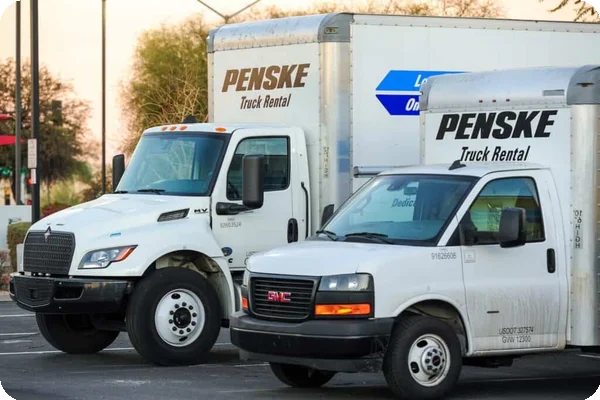
Two white Penske rental cargo trucks parked in a lot, displaying the brand's name and logo

Rental truck prices vary considerably based on the type of move, location, and distance. Every company has its own pricing structure, and things like mileage and base fees can vary by location.

The typical breakdown of a standard rental truck cost goes like this: Total cost = Base rate + mileage + fuel + one-way fees + surcharges.

But if things like base rate and mileage are different between companies, how much does a moving truck really cost? Should you go with Penske or choose between Budget and U-Haul?

We've broken down the costs for each moving company. This data comes from our proprietary internal Rental Truck Cost Database, which includes more than 10,000 real rental truck transactions from HireAHelper customers.

Comparing Costs and Truck Types for Major Nationwide Rental Companies

CompaniesBudgetPenskeU-HaulEnterprise
Reviews4.5/54.8/54.8/54.77/5
Local Moves$79$149$131$92
Regional Moves$472$884$777$550
Long Distance$928$1,741$1,530$1,083
Truck SizesPickup, cargo van, 12 ft, 16 ft, 26 ftCargo van, 12 ft, 16 ft, 22 ft, 26 ftPickup, cargo van, 10 ft, 15 ft, 17 ft, 20 ft, 26 ft16 ft cabover, 24 ft box, 26 ft box
Gas MileageUp to 10 to 19 MPGUp to 12 to 13 MPGUp to 6 to 14 MPGUp to 12 to 24 MPG
Locations2,800+2,500+21,000+460+

Which Company is the Cheapest?

Mileage costs make a difference, and even the cheapest moving trucks can get pretty expensive if you're going a long way.

For example, take U-Haul and Penske. We did a side-by-side comparison of the two by performing the same move. For a short local move, U-Haul will most often be the cheaper option. Penske, with its fuel-efficient trucks and unlimited mileage for one-way moves, can prove the more economical choice for longer moves.

You can also check out our cost comparison of Penske, U-Haul, Budget, Enterprise, and Ryder.

Keep in mind that your final quote may depend on a few additional factors:

  • Number and quality of trucks available
  • Where you live (prices may be higher in high-demand cities or regions)
  • Where you will be dropping your truck off (for one-way moves)
  • Your scheduling flexibility

Ways to Get a Better Deal on Your Rental Truck

When it comes to renting moving trucks, prices aren't set in stone. Here are a few ways to save:

  • Pick your moving day wisely. When demand rises, so do costs. Off-peak weekday and mid-month rental can save you both stress and money. For more, check out our guide on the best time to move.
  • Find a dealer somewhere out of town. Smaller branchesout of majors town might be eager to have your business and make a deal.
  • Consider a round-trip rental. You might be able to score a deal by leaving your car behind, moving, returning your rental, and driving back. Your savings may be offset by the extra time and gas, however, so weigh your options carefully.
  • Ask about high-priority locations. If you can return the truck to a location convenient for them, the company might give you a good deal. For example, if you’re moving to Eugene, Oregon, you could save by dropping your truck off in Portland.
  • Make phone calls. Call and ask about deals that don’t show up online. Be friendly and persistent — you never know what could happen.

Urban Moves: Permits, Parking, and Clearances

Truck parking is limited in cities, so check to see if you need permits to block off parking spaces. If you live in an apartment, you might also need to reserve the loading dock or elevator. Always avoid blocking driveways and roads, and respect other residents by loading efficiently.

Check the rules if you’re moving in or out of an HOA, since many of them restrict where you can park and when you can move.

Before you hit the road, know the clearance height of your moving truck. Then, map your route using a tool like Low Clearance Map or the U-Haul app to check for low bridges to avoid.


Equipment and Add-On Checklist

Whether you're hiring movers or doing everything yourself, you'll probably need some moving supplies. After all, the right equipment can make your moving day run a lot smoother.

Here are some supplies to consider:

  • Dollies: These wheeled platforms are ideal for heavy boxes or furniture
  • Furniture pads: Use these to wrap furniture and prevent scratches and nicks
  • Straps: Useful for holding down furniture pads and securing heavy loads inside your moving truck
  • Ramps: These make it easier to move heavy items in and out of the truck box

Your rental company may be able to include some supplies with your truck. Alternatively, check with local moving and home stores.


Safety and Driving Tips

If you're new to big trucks, driving one can feel intimidating. To feel more confident on the road, think about practicing in an empty parking lot.

You can also learn the best practices for driving one before you get behind the wheel. Here are some skills you'll need:

  • Turns: Trucks have a big turning radius, so give yourself plenty of clearance.
  • Braking: It takes longer for loaded trucks to stop, so drive slower, keep a larger following distance, and brake early and gradually.
  • Fueling: Verify your truck's fuel type and fuel cap location before you get moving.
  • Height and weight limits: Write your truck's height and gross vehicle weight rating (GVWR) on a sticky note, and keep it in the cab for quick reference.

Take time to adjust your seat and mirrors and get familiar with the controls before you start. And remember that driving a moving truck can be tiring, so make sure to take plenty of breaks.


Towing Options Overview

A small utility trailer hitched to a vehicle, offering a towing alternative to renting a full-size moving truck

If you're moving with a personal vehicle, you might want to tow it with your moving truck. This can be a great option if you're doing a long-distance move alone, or if you have more vehicles than drivers.

For small, front-wheel drive vehicles, a car dolly might be a good option. It lifts the front wheels off the road. A flatbed car trailer lifts all four wheels, making it a good option for pretty much any vehicle.

To tow a car, your moving truck will need a hitch that can handle the weight. Ask the moving company which trucks are compatible with your specific vehicle. Keep in mind that your trip will probably take longer — many companies recommend a maximum speed of 55 MPH for car trailers and dollies.


Requirements and Policies Primer

Most providers require you to be at least 18 to rent a moving truck, though some may limit truck rentals to people aged 21+. You'll also need a valid driver's license.

Plan to reserve your rental with a credit or debit card, and expect an additional hold of about $100 to $500 for a security deposit. Some companies will accept cash, but you may need to make a larger deposit.

“For a short local move, U-Haul will most often be the cheaper option. Penske, with its fuel-efficient trucks and unlimited mileage for one-way moves, can prove the more economical choice for longer moves.”

In general, you'll need to return the truck with the same amount of fuel it had at pickup. Otherwise, you'll pay a fee. Companies may also charge a cleaning fee if the truck is returned dirty.

Many truck rentals require proof of insurance. Your regular car insurance might cover smaller vehicles, but you'll probably need supplemental insurance for bigger trucks. You can purchase several types from the company:

  • Collision damage waiver (CDW): Covers damage to the truck
  • Cargo protection: Reimburses you if your stuff is damaged
  • Medical insurance: Provides extra medical coverage if you're hurt

Planning Your Best Rental Truck Experience

To make your rental process go smoothly, make sure youcompare quotes from a few different providers, and think about booking an off-peak moving day to save money. And no matter what type of move you're planning, try to book early to get the best deals and availability.

When you pick up the truck, inspect it carefully. Report and document any damage to the company — this simple step can protect you from future claims. Trucks are expensive, and a little legwork up front can save you a lot of money down the road.


Frequently Asked Questions

Recent Articles

Penske

Penske Truck Rental Prices and Reviews

Moving Trucks

Penske is a national leader in truck rentals, known for high-quality, newer trucks and offering unlimited miles on one-way trips. In 2026, a Penske truck typically costs between $1,200 and $1,700 for a two-bedroom,... Read More

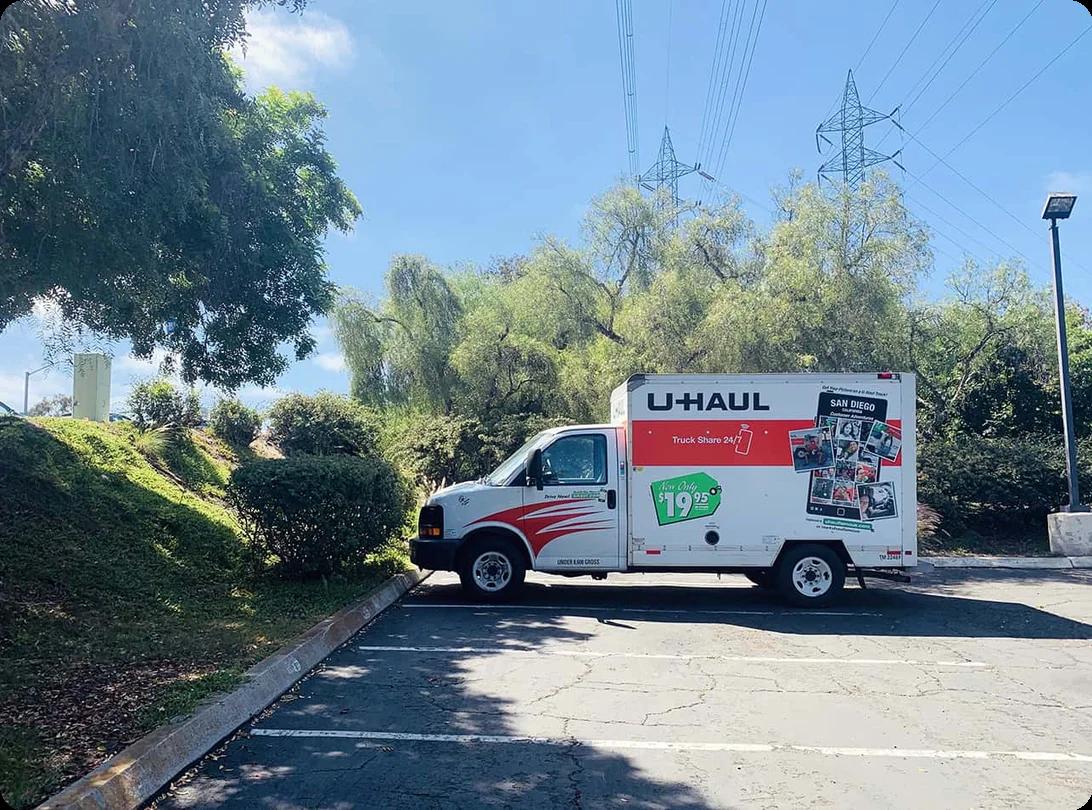
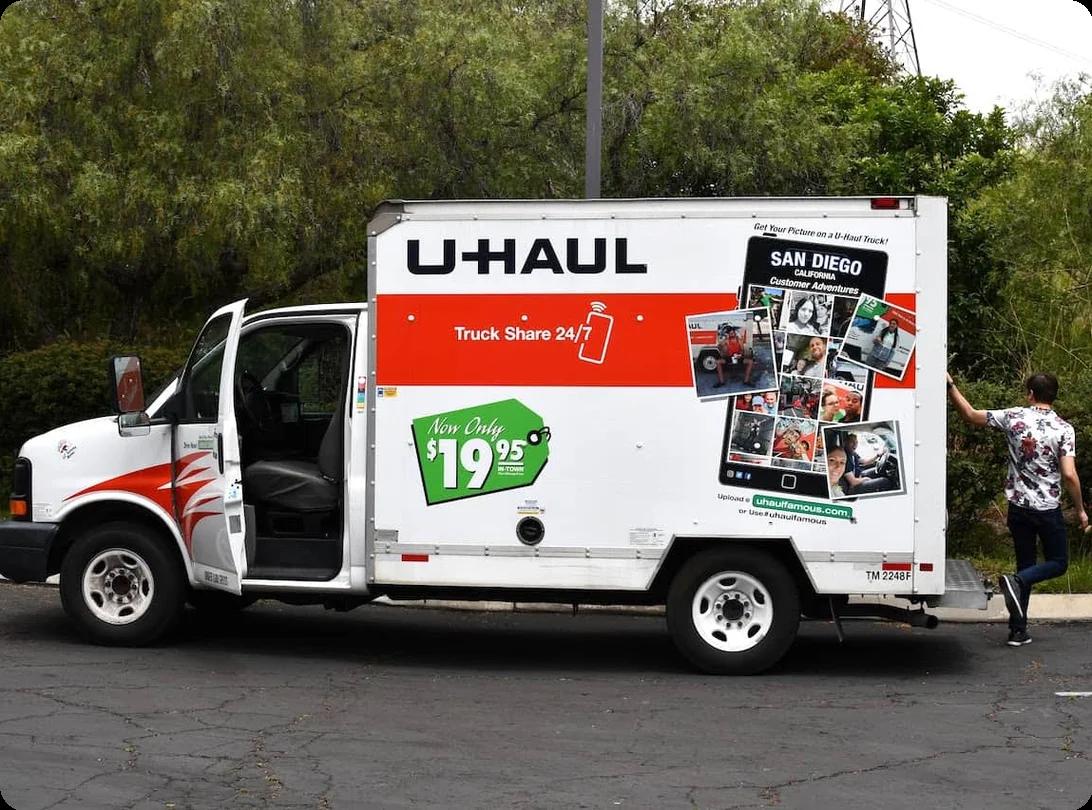
A U-Haul moving truck parked outside displaying the classic $19.95 rental sign

Paying for U-Hauls: How It Works and How to Save

Moving Trucks

U-Hauls can be found just about anywhere, creating a wide network of easily accessible moving trucks across the nation. You can pick one up in California and drive it all the way to New York, then return it to your... Read More

A couple happily walks up the stairs carrying boxes and plants into their new city apartment

What to Know Before Moving Into a City Apartment

Moving Trucks

Moving to a new apartment isn't always easy. Tight spaces, unclear rules, and even hidden fees can quickly derail your carefully laid plans.

To help you avoid any moving-day surprises, we’ve put together this guide... Read More

U-Haul truck parked

U-Haul vs. Hiring Movers: Do You Need Both?

Moving Trucks

For most people, planning a move means deciding between renting a U-Haul and hiring full-service movers. The choice typically comes down to time vs. money. While renting a U-Haul and DIYing your move is a lot of... Read More

A red gasoline can sits on a lawn next to packed moving boxes – an example of what not to load

Things Not Allowed on a Moving Truck (and Why)

Moving Trucks

Packing for a move is already a big job without the need for last-minute surprises, which is why it helps to know what is not allowed on a moving truck before you accidentally pack a prohibited item. Some banned... Read More

weigh station truck

Rental Trucks and Weigh Stations: Do You Need To Pull Over in a U-Haul?

Moving Trucks

If you’re driving a rental truck for your move, you may have a question crop up as you're planning your route down the highway: Do U-Hauls have to stop at weigh stations? The answer to your question depends on what... Read More