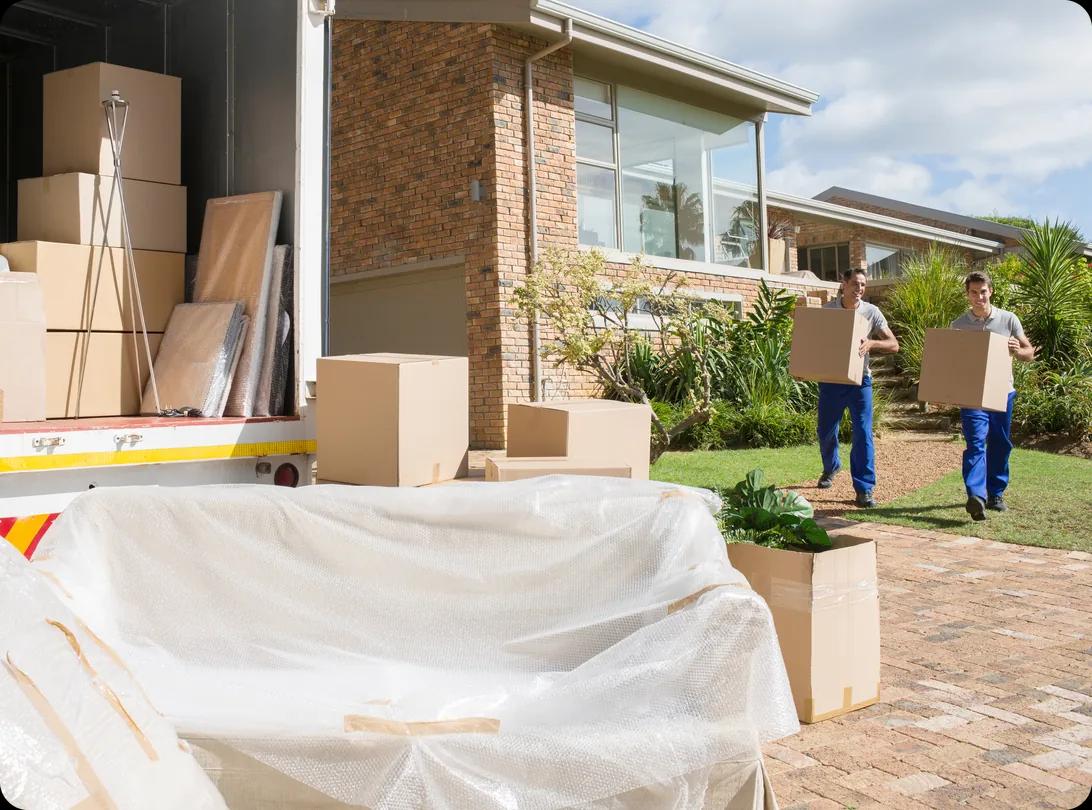
How To Move Different Table Materials (Wood, Glass, and Marble)
The material matters because the biggest risk isn't the same for every table. Wood finishes are vulnerable to scratches and adhesive damage, while large glass and stone tops can crack or break if they're unsupported or carried incorrectly.
Here’s a quick overview of how each material should be protected and transported:
Table Material Protection Overview| Material | Main Risk | Materials / Packing Technique | Transport Position |
|---|
| Wood / Veneer | Scratches, adhesive damage, moisture | Moving blanket first, then stretch wrap; protect edges | Flat and well-supported |
| Glass / Mirror | Cracking, shattering | Soft padding with protected edges and corners; rigid cardboard for large tops | Upright on its edge |
| Stone / Marble | Cracking or fracturing | Substantial padding underneath and around edges | Upright on its edge |
Wood and Veneer Tables
Wood and veneer just need to be wrapped with a clean moving blanket or furniture pad before adding stretch wrap, tape, or other plastic packing material. Where you should be a little more cautious is to make sure you k~~eep~~ tape off the finish entirely. Veneer edges can be especially vulnerable, so add cardboard or foam protection anywhere the thin finished edge could be bumped.
Don't leave a tightly wrapped wood table sitting outside or in a damp garage longer than necessary. Once it reaches the new home, bring it indoors and remove the outer wrapping.
If the table has an antique, waxed, painted, lacquered, or otherwise unusual finish, check the manufacturer's care instructions before placing any plastic or adhesive material near it.
Glass Tabletops
Glass can break easily, so it needs to be carefully wrapped with soft padding first, then the edges and corners protected with foam or cardboard. For a large top, adding rigid cardboard to both faces creates another barrier against bumps and pressure.
Once wrapped, carry and transport the glass upright on its edge, with the bottom edge cushioned and the entire panel supported. Avoid transporting a large glass top flat in the moving truck. A flat panel can flex as the truck moves, and anything placed on top adds pressure across the face of the glass.
Don't lean it loosely against the truck wall, either. It needs padding and secure tie-downs so it can't tip or slide.
Stone and Marble Tables
Stone and marble tops should also travel vertically on their edge, with substantial padding underneath and around the sides. Natural Stone Institute safety guidance warns against carrying stone slabs horizontally because the unsupported slab can break. It recommends keeping slabs on end in a vertical position.
Don't stack boxes, furniture, or other belongings against the broad face of the stone. A stone top may feel almost indestructible when it's sitting on its base, but that's because the base supports it. Once the top is removed, the slab becomes much more vulnerable to stress and impact.
Large marble, granite, quartzite, or other stone tops are excellent candidates for professional loading, as they tend to be extremely heavy and can require specialized techniques and equipment to move.


 Karen BodkinJul 27, 2026


.png&w=64&q=75)