How To Move Heavy Furniture Down Stairs Safely

two movers in blue shirts and baseball caps move a white couch down a set of stairs

Figuring out how to navigate a steep flight of stairs with a heavy couch or dresser can quickly become the most stressful part of your move. To carry these items down stairs safely, you need to measure your stairwell, clear away any obstacles, use tools such as hand trucks or lifting straps, and always work with a partner.

HireAHelper’s platform connects people with local moving labor companies that deal with tricky stairwells and heavy items every single day, so we know everything it takes to do it simply and safely. In this guide, we’ll cover preparation, tools, and step-by-step techniques so you know exactly how to move heavy furniture down stairs safely.


Last updated: Jul 13, 202614 min read
Kevin The Mover
Written byKevin The Mover
Melanie Morris
Reviewed byMelanie Morris

Key Takeaways

  • Choose the right tools for the job, such as a hand truck for heavy items or lifting straps for carrying furniture between two people.
  • Measure your furniture and staircase before you lift anything to avoid getting stuck.
  • Empty all loose drawers to drop the weight, and clear your walking path completely.
  • Put the taller or stronger person on the lower end, and go down one step at a time.
  • Call professional movers for specialty items like pianos or safes, or if your stairs are extremely narrow or steep.
Kevin The Mover
Author

Kevin The Mover

Kevin Kato is a travel and home services writer with over 20 years of experience as a professional mover.

Having been both a professional mover and a crew leader, Kevin has seen it all in the world of moving: hectic moves, unique packing, bizarre accident claims, truck mishaps, or just run-of-the-mill moves as advertised; there is virtually no situation Kevin hasn't managed. Today, Kevin provides his insights as Kevin The Mover for professional movers and "movees" everywhere.

Prepare Before You Start

Heavy furniture like a couch can crack wooden railings, gouge your walls, harm your floors if dropped, and cause injuries. However, if you take the time to prepare before you lift, you’ll reduce your risk of getting hurt or damaging your home.

Measure Your Furniture and Staircase

First, grab a tape measure. For straight stairs, check the width from wall to wall, and subtract space for any handrails or banisters that stick out. If the stairs turn, measure the distance from the corner steps straight up to the ceiling.

Next, measure the height, width, and depth of your furniture piece. This tells you if the item can slide down upright or if you have to tilt it. For angled stairs, check the item’s total length so you can clear the ceiling when you stand the piece upright to make the turn.

Clear the Path and Protect Your Home

You need an empty walkway before you start moving heavy items. Take down hanging light fixtures and remove all pictures or decorations from the walls. You should also pick up any loose floor rugs that could cause you to trip. If you have carpet on your stairs, tape down any loose edges securely.

Once your path is clear, you can protect your home against dents and scratches. Tape heavy cardboard or moving blankets around tight corners and along the walls. You can also lay blankets over the stair treads to protect the wood or carpet from scuffs as you carry your items down.

Tools and Equipment for Moving Furniture on Stairs

Using the right gear helps keep you safe during difficult moves and reduces the risk of accidental drops. Here are the most common options:

  • Hand trucks and dollies for heavy, boxy items like dressers and appliances
  • Furniture moving straps for 2-person lifts of long items like couches
  • Furniture sliders for pushing items across carpeted stairs

Hand Trucks and Dollies

A stair-climbing dolly features 3 wheels on each side that rotate over the edge of each step as you move. You should use them for heavy, compact items like solid wood dressers or kitchen appliances. The wheels support the weight as you lower the load, reducing the physical strain on your body.

Hand trucks with stair sliders use built-in back tracks to glide smoothly over steps without scratching the wood. They work well for tall, sturdy pieces. Stair rollers act like loose rolling pins that you place under your items. We advise against using them because they require a third helper to constantly swap the rollers, which makes it difficult to control the weight of what you’re carrying.

Furniture Moving Straps

Moving straps are padded loops that form a supportive lifting harness. You and a partner wear them to lift heavy objects together. This setup shifts the weight of the load away from your lower back and places it onto your stronger leg and shoulder muscles.

Common types of moving straps include:

  • Shoulder straps: These cross over your back and shoulders and use your torso strength to lift tall objects.
  • Forearm straps: These fit over your arms and work well for shorter lifts or items with open bases.
  • Shoulder-dolly style straps: Two people wear separate harnesses connected by a shared strap under the furniture.

Add lifting straps to your list of moving supplies if you need to carry bulky items like couches or large dressers. Be sure to adjust the straps so they fit snugly against your body before you lift. Loose straps can slip and cause you to lose your balance on the steps.

Furniture Sliders

Furniture sliders are flat disks that reduce friction between heavy objects and the ground. You can choose felt pads to protect hard surfaces like wood, tile, or laminate, while smooth plastic sliders let furniture glide easily across carpeted surfaces.

To use sliders on stairs:

  1. Tilt the furniture backward slightly to lift the legs off the ground.
  2. Place one slider underneath each corner of the item.
  3. Lower the furniture down onto the sliders and test the grip to ensure they stay in place.
  4. Guide the item slowly down the steps from above while a partner assists from below.

Sliders work best on fully carpeted straight stairs for heavy, flat-bottomed items like bookshelves and desks.

How To Use a Hand Truck Going Down Stairs

Hand trucks work best for taller pieces, and if your staircase is wide and straight. If it has turns, a larger dolly could get stuck.

If your staircase and what you want to move are both good fits for a hand truck, here are the 6 steps to take to move your furniture safely and easily.

Step 1: Find a Hand Truck Big Enough for the Job

Focus on getting a hand truck with a tall upright back. The bottom plate size matters less than having a frame long enough to reach the handles once you load your heavy sofa or dresser. If the hand truck is too short, you risk hitting your face against the furniture on the way down.

Step 2: Avoid Scratching Your Stuff

Heavy items bounce and shift with every step you take. Protect your furniture from scratches by covering the upright metal frame of the hand truck with moving blankets. Taping these blankets or pads to the uprights will not only keep them in place but also add a helpful layer of non-slip grip to the setup.

Step 3: Strap in Your Furniture

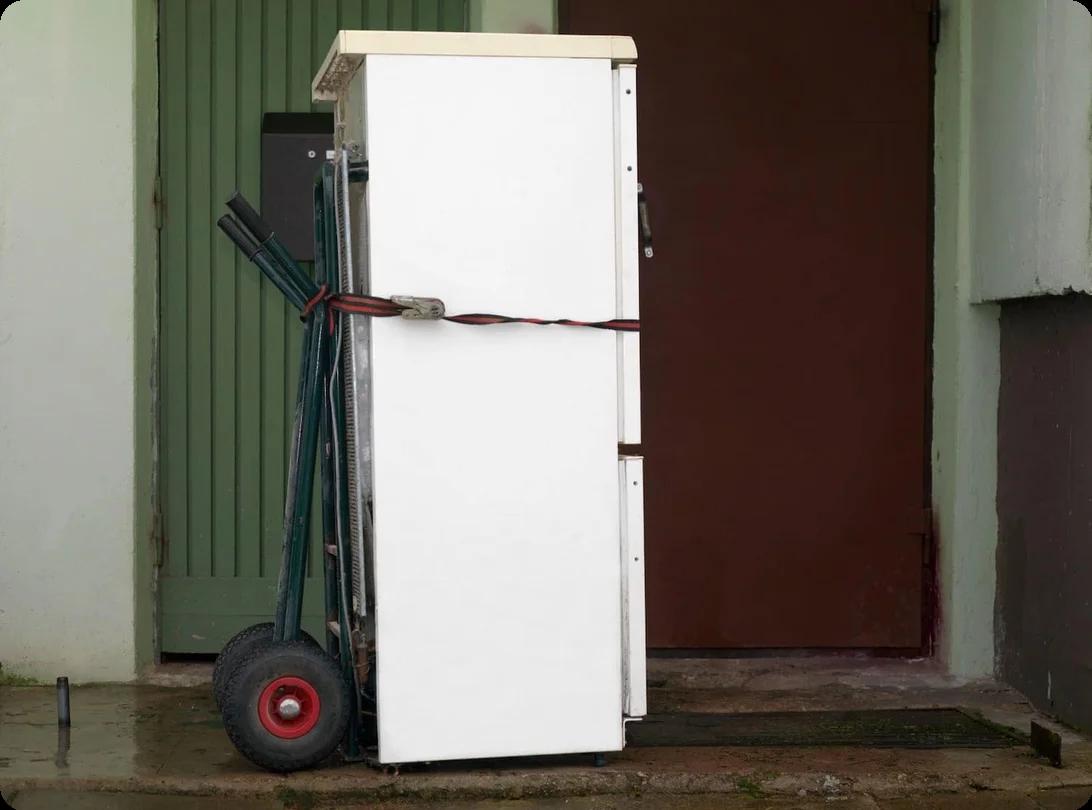
Strap your furniture securely to the truck before you approach the stairs. The heavier the item you’re carrying, the more it will bounce and shift down each step, so the more security you’ll need. Use the built-in straps on the hand truck if available. If your truck doesn’t have them, secure the load tightly using stout rope or tie-down straps.

Step 4: Opt for a Hand Truck With Sliders on the Back

Sliders are handle-like attachments that sit on the back of the frame, near the bottom wheels. They’re often covered in a soft, carpet-like material, which cushions the metal frame and allows it to glide smoothly over the edge of each stair tread without causing damage. If you can, opt for a hand truck that has these built into the back.

Step 5: Get Some Help

Working with another person below to guide and support the dolly as you descend the stairs is also a good idea. Even a small amount of unwanted momentum can cause you to lose control if you’re working completely on your own. A second set of hands keeps the hand truck steady and helps manage the weight safely.

Step 6: Take It One Stair at a Time

Grip the handles firmly, face the truck straight forward, and ease down one stair at a time. After every single step, bring the truck to a full stop, and communicate constantly with your helper below. Also, make sure you check your grip and adjust your angle during these stops before you attempt to roll down the next step.

Note that going down the stairs is the last step in the process. Safety and success come from being properly prepared, with the right equipment and enough hands for the job.

How To Carry Furniture Down Stairs by Hand

Carrying your furniture down stairs by hand is a little harder without tools to help, but it’s not impossible. You simply have to lighten the weight as much as you can and take things even more carefully.

Here’s a step-by-step guide on how to move heavy furniture down stairs without using any special equipment.

Step 1: Measure Your Staircase

For a straight staircase, measure the total width from wall to wall. If your staircase turns at an angle, you also need to measure the vertical height. Don’t forget to subtract the space taken up by handrails and banisters along the walls.

Step 2: Measure the Height and Depth of Your Furniture

Since you already know the width of your staircase, you’ll be able to tell right away whether you can carry the furniture upright or on its back. If it’s too wide either way, you may have to tilt it at a 45-degree angle.

If your staircase is angled, measure your furniture’s length as well. You’ll be placing it on its side as you turn the corner, so make sure it can stand upright without hitting the ceiling.

Step 3: Make Your Furniture Manageable

For couches, take off any unattached cushions to make the piece as light as possible. If you’re moving a sofa bed, remove the inner mattress completely. You can also unscrew the legs from the frame by turning them counterclockwise to clear tight doorways.

For dressers, armoires, and similar items, remove all of the drawers and secure any doors. If the legs come off these pieces, remove those too.

Pro Tip: Shrink wrap compresses couch cushions and pillowy armrests, which might give you those extra inches you need while also making the sofa easier to grip. Just remember to never apply shrink wrap directly to leather furniture.

Step 4: Get a Grip

If the item has sturdy legs, leave them attached to use as solid handholds. This helps the person at the top maintain control. While the bottom mover pushes against gravity, the top mover needs to hold on tightly to keep the item from slipping downward.

Wear heavy-duty moving gloves to maintain a secure grip, especially on hot days when your hands get sweaty. Also, pay close attention to your knuckles while moving. Slamming them into a doorjamb or scraping them against the wall can hurt enough to make you drop whatever you’re carrying.

Step 5: Taller Person Below, Shorter Person Above

As you go down, keep the furniture angle parallel to the stairs. Also, you and your helper should be arranged by height. The person at the bottom stands lower, so the object will reach near their chest. The person above stands higher, placing their end near their knees. Putting the taller person at the bottom balances this height gap.

Step 6: Descend One Step at a Time

This is the key to safety any time you’re navigating stairs. Pause after each step to make sure everything is balanced and to give yourself a chance to glance down at the next step your feet will need to find.

For an angled staircase, you’ll need to stand the furniture on end, and coax it around the corner and down each step. If you’re moving a couch, this means you’ll want to carry it with the back facing down, and for dressers and armoires, with the legs facing forward. This way, when you stand it on end and slide it off the edge of each corner step, the legs won’t bear the full weight of the piece.

Pro Tip: Place a furniture pad on the first corner step and set the end of the furniture on top. This will protect it while allowing you to slide it toward the edge of each step without scraping or scratching the floor.

Moving Specific Items Down Stairs

Since furniture comes in a wide variety of shapes, you have to adapt your strategy to each piece. For example, couches present unique challenges due to their irregular shapes. Below, we explain exactly how to manage a bulky sofa on a staircase and what to do when your large furniture seems too big for the space.

How To Get a Couch Down the Stairs

For a straight staircase, carry the couch upright or on its back with a partner. If the fit is tight, tilt the couch forward at a 45-degree angle to make it as narrow as possible. This means:

  • The front bottom edge of the couch is pointed toward the floor
  • The back bottom edge is facing one wall
  • The open seat cushion side facing the other wall

Turning an angled staircase requires a slightly different approach. Stand the couch completely upright on one end. As you reach the landing, keep the open seat side facing toward the inside corner of the wall. This angle allows you to wrap the couch around the tight bend without scraping your walls.

We strongly advise against moving a heavy couch by yourself. If you have no choice but to do it alone, position the sofa upright and push it down step by step. Be sure to stand only on the steps located above the sofa, because if you lose your grip, the couch will slide down instead of falling on top of you with its full weight.

You don’t have to risk your safety to save money. If you feel unsure about carrying a large sofa, you can use HireAHelper’s marketplace to find affordable, local movers in just a few clicks.

What If Your Furniture Won’t Fit?

If a piece of furniture made it up the stairs, it should theoretically be able to come back down. The exception is when you assemble the item inside the room. First, try taking it apart by removing the legs or unbolting the sections. If that doesn’t work, try turning the piece 45 degrees forward to narrow its profile.

Another option is using a large window. This requires a strong rope or straps long enough to reach the ground with some slack. You can lower your furniture slowly and carefully, but this method requires professionals or multiple strong helpers at both the top and bottom to guide the item. You risk damaging your home or breaking the window if you’re not careful.

If none of these is an option, you might have to leave the furniture exactly where it is. Be sure to get permission from your landlord or the home’s new owner before doing this. If they refuse, your final option is to break the piece down into smaller sections and dispose of it properly.

When To Hire Professional Movers

While moving furniture yourself saves money, some staircases are too dangerous to tackle alone. Consider hiring professional help if you face any of these situations:

  • Specialty heavy items: Moving a large piano, a gun safe, or a commercial appliance requires specific training and moving tools.
  • Narrow or steep steps: Tight angles and vertical drops leave no room for error and can easily trap bulky objects.
  • Multiple flights of stairs: Carrying items down several floors causes physical fatigue, which increases the chance of dropping your furniture.
  • No available helpers: Moving objects down steps without a reliable second person guiding the bottom end is dangerous and could result in someone getting hurt.
  • High risk of damage: If you’re worried about ruining your expensive hardwood floors or leaving marks on your apartment walls, experts know how to protect the space.

Moving a massive couch down a steep, curved staircase rarely ends well for a beginner. HireAHelper’s marketplace lets you hire local labor-only movers to handle the heavy lifting for you. Since you can check prices in advance and read real customer reviews, you’ll be able to find trusted helpers quickly.

Frequently Asked Questions

Recent Articles

A homeowner unpacking moving boxes in a new living room with furniture being arranged on moving-in day

How to Unpack After Moving Like the Pros

Loading & Unloading

Unpacking can take anywhere from a few days to several weeks. Without a strategy, it's easy to lose motivation or end up living among half-emptied boxes and chaos for months. The best way to unpack after moving is... Read More

Family unpacking moving boxes from a removal truck

What Order Should You Load a Moving Truck?

Loading & Unloading

The best way to load a moving truck is to load the heaviest items first and save light or fragile items for last. That order gives your belongings a stronger base, helps prevent shifting in transit, and makes the... Read More

Movers carrying cardboard boxes from a house to a moving van

Does It Take Longer to Load or Unload a Moving Truck?

Loading & Unloading

In general, loading takes about 1.5 – 2 times longer than unloading, or about 60% to 75% of the total hours. This is because when loading, you need to take the time to distribute weight carefully, secure items, and... Read More

Spacious backyard with a swing set on a spring day

Will Movers Move a Swing Set

Loading & Unloading

Yes, professional movers can move a swing set. Most will need it taken apart first, and there might be extra charges for things like size, weight, or putting it back together. If you have a solid wooden playset,... Read More

a wooden outdoor barrel sauna

How to Move a Sauna: A Step-by-Step Guide

Loading & Unloading

Figuring out how to move a sauna can feel pretty daunting when you’re looking at such a heavy wooden structure with multiple parts attached to it. However, moving a sauna simply requires disassembling it in reverse... Read More

Home gym equipment being prepared for a move

Will Movers Move a Gym?

Loading & Unloading

Yes, most movers will move home gym equipment, including weights, exercise bikes, treadmills, benches, and squat racks. However, large commercial machines or equipment with complex wiring or cabling may require a... Read More