How to Move a Piano
How you move a piano varies based on the type of instrument. Moving a concert grand piano is a lot different than moving a compact upright. One is shaped like a box and ships as-is, while the other is oddly shaped, very large, and needs disassembly just to get it out the door. Here are the major differences, and how to tackle them so your piano is safe during the move, no matter the type.
Shape and size
An upright piano is basically a box. It's tall and very heavy at the back, but it will fit through most doorways and hallways, even if they're narrow.
Grand pianos, on the other hand, are wide. They have large legs that can get in the way and a lid, which means they're wide from every angle. Taking off the legs and removing the pedal assembly makes a much more compact package, but you'll need to be cautious about narrow spaces, since these instruments don't turn corners well.
Weight distribution
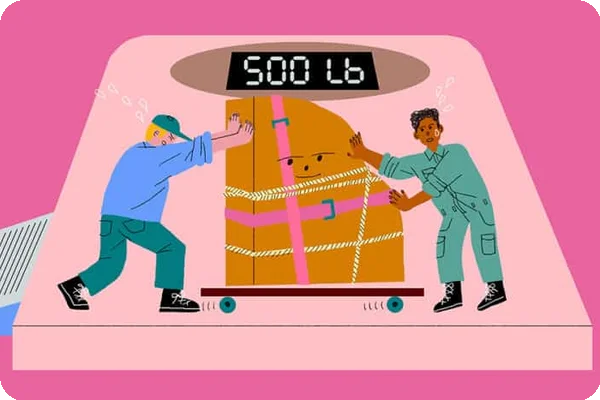
Pay attention to where the weight is in your piano. You want to pack it heavy side down when moving. So, with an upright, you lean the back of the instrument against the dolly or hand truck.
Grand pianos are heavier toward the keyboard, so that's where you want most of your crew when maneuvering it onto the piano board.
Disassembly
When moving a piano, some disassembly is usually required. Sometimes, if you have enough helping hands and your hallways and doorways are wide enough, you can leave an upright piano in one piece for transport.
A grand piano of any size is different. You'll usually need to take off the legs, lyre, and pedals, at a minimum. You may also need to pop the lid off and take out the music rack.
Moving equipment
Some models weigh in at 500 pounds or less, so with a dolly and straps, 4 people can usually handle the load, even if they don't spend a lot of time at the gym.
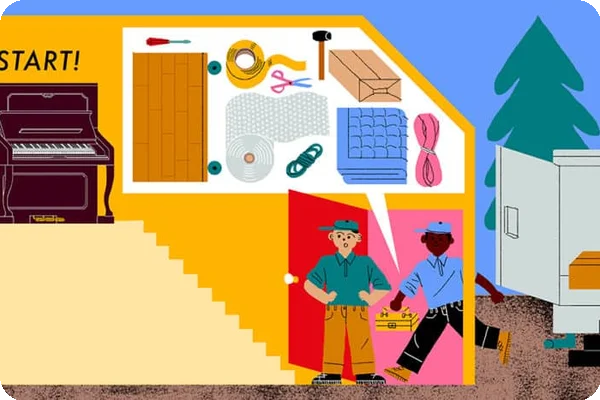
Most people have a baby grand, not a full-size grand piano, at home. These are often lighter than uprights, so you might only need 3 people to maneuver it, along with a special piano skid board, a sturdy dolly, blankets, and heavy-duty straps.
Stairs and tight turns
You must keep an upright piano upright while moving it, which can add a level of difficulty when navigating turns and stairs, but it's usually doable with enough elbow grease.
Stairs and turns are much harder with a grand piano, because the long case doesn't fit easily around narrow corners. You may have to settle for a first-floor installation if there isn't enough clearance.
Upright vs. Grand piano moving differences:
| | Upright piano | Grand piano |
| Shape and size | Tall and vertical with a compact frame | Wide and horizontal with protruding legs and a lid |
| Weight distribution | Weight is located toward the back | Distributed weight, but the keyboard side is heavier |
| Disassembly | Little to no disassembly | Remove legs, lyre, and pedals |
| Moving equipment | Dolly or hand truck, blankets, straps, and 2-4 movers | Piano skid board, dolly, blankets, straps, and 3 or more movers |
| Stairs and tight turns | Challenging but possible | Very difficult due to the piano's size |
How to Move an Upright Piano
Follow these steps to move an upright piano:
- Use plastic stretch wrap to close the lid and protect the pedals, and secure the wrap with tape.
- Wrap the piano in moving blankets, and hold them in place with straps or tape.
- Tip the piano carefully (heaviest part down) onto a dolly or hand truck.
- Roll the piano out of the house and up the ramp of your moving truck.
- Lift the piano up and down stairs with multiple people, if necessary.
- Tie down the piano inside the truck using ratchet straps.
- Slip moving pads or blankets around the piano to prevent damage.
Even with careful handling, you risk cracks and tuning issues due to impacts or environmental changes. If your instrument is valuable, think about hiring professional single-item movers. They can provide a safe, controlled process and get your piano to your new home in one piece easily.
How to Move a Baby Grand or Grand Piano
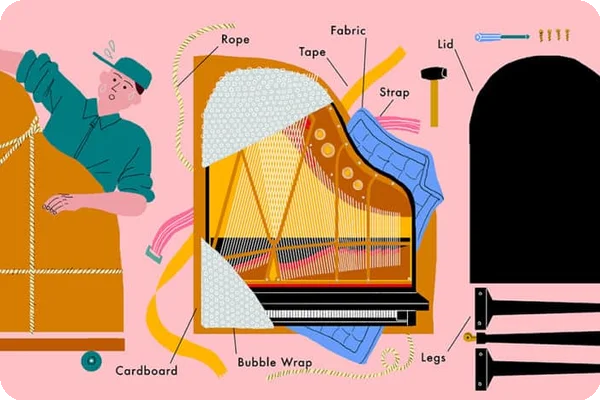
Follow these steps to move a baby grand or grand piano:
- Wrap a thin moving blanket around the keyboard lid, and close it.
- Cover the top of the piano with a moving pad, and secure the pad and lid with straps or large rubber bands.
- Remove the front piano leg that's next to the hinge of the piano lid.
- With the help of multiple people, tilt the case onto the piano board.
- Remove the remaining 2 legs, the lyre, and the pedals.
- Wrap the piano case in moving pads, and secure gently with straps.
- Fasten the case to the piano board with the manufacturer's recommended straps.
- Lift the piano board onto a dolly, and ensure that the weight is evenly distributed.
- Roll the case into your moving truck, and anchor it with straps.
Moving a baby grand or grand piano is challenging — the instruments are extremely heavy and famously fragile. With replacement costs anywhere from $3,000 to more than $80,000, a misstep can be very expensive. For these pianos, a professional mover is often the safest way to protect your investment.



 Karen BodkinAug 28, 2026