How To Move When You're Pregnant

A pregnant woman cradles her belly in a room filled with cardboard boxes and moving supplies

Moving brings plenty of challenges, and organizing a relocation with a baby on the way adds a whole new layer of exhaustion. To move safely while pregnant, you need to focus on your health, delegate physical tasks to others, and give yourself much more time to prepare.

HireAHelper has helped hundreds of thousands of families transition to their new homes safely. We used our expertise to put together this guide that walks you through planning your move safely, packing without straining your back, and knowing when to call in professional help. Here are all the best ways to protect your health and keep your stress levels low during your transition.


Last updated: Jun 25, 202611 min read
Karen Bodkin
Written byKaren Bodkin

Key Takeaways

  • Consult your healthcare provider before you start packing to discuss limits and safety.
  • Pack a hospital essentials bag well before moving day so you are always prepared.
  • Avoid lifting large furniture and let professional movers handle the physical strain.
  • Take frequent breaks, drink plenty of water, and listen to your body.
Karen Bodkin
Author

Karen Bodkin

Karen Bodkin is a writer at HireAHelper who's passionate about helping people navigate their moves with less stress and more confidence. She empowers readers by turning the many overwhelming parts of moving into clear, actionable guidance.

Karen draws from a broad writing portfolio that includes home improvement, health, and travel. Her work reflects a deep understanding of life's transitions and a genuine drive to make moving feel more manageable for everyone.

Moving When Pregnant: A Step-by-Step Guide

Physical overexertion and elevated stress levels can negatively affect your pregnancy and your baby, so preserving your health and avoiding stress need to be your top priority when moving.

This step-by-step process helps you organize your relocation to prioritize your health and keep your stress low. You will learn how to take it slow, avoid overexerting yourself, and manage your timeline effectively. And check out our moving checklist to start organizing your tasks early.

Step 1: Plan Ahead And Talk To Your Doctor

You'll need to consult your doctor before making moving plans. Ask your healthcare provider about your lifting limits and any medical restrictions you need to follow. You also need to discuss warning symptoms to watch for during the move, like dizziness or cramping.

"High-risk moving advice always centers on total rest…If you must relocate during a high-risk pregnancy, you need to hire full-service professionals who will pack, load, and unpack everything for you."

Doctors usually advise pregnant women to avoid demanding lifting and climbing ladders to prevent falls and overexertion. Knowing what your boundaries are, depending on what stage of your pregnancy you're in, helps you delegate the right tasks to friends or professionals.

Step 2: Prepare an Essentials Bag

You need to pack an essentials bag for the hospital and a separate one for moving day. Having both of these accessible ensures you are ready for anything.

What to pack in a hospital bag when moving:

  • Medical records and health insurance cards.
  • Comfortable clothes and a robe.
  • Phone chargers and important contacts.

What essentials to keep during a move while pregnant:

  • Prenatal vitamins and daily medications.
  • Plenty of bottled water and healthy snacks.
  • Comfortable shoes with good arch support.
  • Toiletries like toothbrushes and soap.

Step 3: Create a Moving Plan Early

Moving while pregnant means you have a lot more to plan, so you should start organizing your move at least 8 weeks in advance. Creating a solid plan early reduces anxiety and gives you plenty of time to tackle small tasks each day.

Here is a helpful timeline counting down to your big day:

  • 8 weeks out: Start packing non-essentials and out-of-season clothing.
  • 6 weeks out: Hire your moving company and clear out clutter.
  • 4 weeks out: Pack your hospital bag and gather important medical files.
  • 2 weeks out: Pack your everyday items and confirm your moving day help.
  • Moving day: Keep your essentials bag in your car and direct the movers.

Step 4: Pack Safely and Strategically
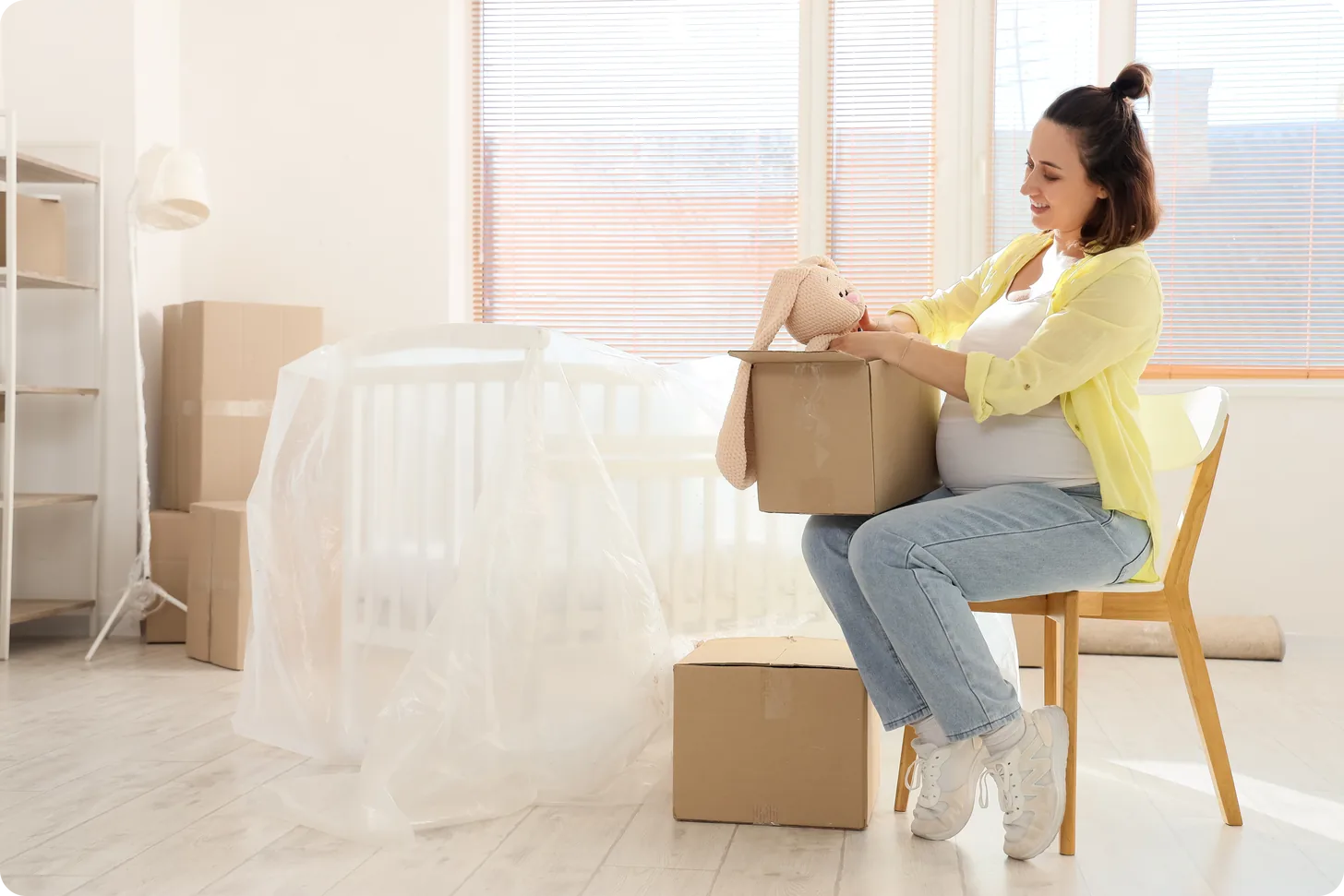
A young pregnant woman takes a toy from a box in a child's bedroom on moving day

Packing boxes is generally safe if you avoid lifting large items and don't spend hours bending over. You can pack boxes while pregnant by sitting comfortably in a chair and bringing items up to your level, or by creating a packing zone at counter height so you aren't bending as often.

Lifting large things is dangerous during pregnancy because it strains your changing joints and increases your risk of injury. Always ask your doctor how much weight you can safely lift.

Here are some safe packing tips during pregnancy:

  • Use small boxes to keep the overall weight low.
  • Let someone else lift and stack the packed boxes.
  • Sit on a sturdy chair while wrapping fragile items.
  • Slide boxes across the floor instead of picking them up.

Learn more about how to properly take care of your back while you pack.

Step 5: Ask for Help or Hire Movers

Naturally, it's better to hire professional movers during pregnancy for safety's sake. Movers can handle all the demanding lifting, navigate stairs, and load the truck safely. Leaving the strenuous physical tasks to the pros protects your health and keeps your stress low.

You should also think outside the box for extra help. Ask your partner, family, or friends to watch your other children or pets on moving day. Hiring cleaners to scrub your old place and your new home saves you from bending and kneeling. And if you do a little cleaning yourself, don't forget to use safe cleaning products to keep harmful fumes away from you and your baby.

In addition, when pregnant and moving:

  • Do not climb ladders or step stools.
  • Avoid using harsh cleaning chemicals.
  • Skip lifting any large furniture or full boxes.

In general, you should try as much as you can to have friends, family, and professionals do all the demanding activities. You can also find the right help by checking out who are the best moving companies.

Step 6: Rest Often and Avoid Exhaustion

To avoid fatigue while moving, pace yourself, take breaks every hour, and stay off your feet whenever possible. Overexertion can harm your pregnancy, so listening to your body is critical.

Here is how you prevent exhaustion and stay safe:

  • Drink plenty of water throughout the day to stay hydrated.
  • Set a timer to remind yourself to sit down and rest.
  • Eat nutritious snacks to keep your energy levels steady.
  • Stop working immediately if you feel dizzy or out of breath.
  • Do not push yourself to stay on a rigid schedule.
  • Let your helpers do the majority of the work.

Step 7: Unpack at Your Own Pace

To safely settle into your new home, you shouldn't try to unpack everything at once. Only unpack the essentials to begin with. Set up your bed, stock the bathroom with toilet paper, and organize a few kitchen items so you can eat comfortably.

After that, you can unpack everything else slowly over the next few weeks. Let your partner or helpers assemble the baby crib and arrange the large furniture. Settle into your new space by resting on the couch and directing the unpacking process. If you need more advice on what to do after moving day, check out our guide on how to unpack for a smooth transition.



How to Move Long Distance While Pregnant

You can usually travel long distances, but sitting in a car or flying requires extra precautions. Always ask your doctor if flying or long road trips are safe for your stage of pregnancy, because sitting for too long can cause dangerous blood clots. Relocating out of state involves extra medical and logistical planning to keep you and your baby safe.

Here is how planning a long-distance transition differs from a local one:

  1. Medical planning: You need to request all your medical records from your current doctor before you leave town.
  2. Transferring doctors: Ask your current OB-GYN for recommendations in your new city before you relocate.
  3. Finding a new OB-GYN: Research local hospitals and read patient reviews to find the best care in your new state.
  4. Timing your move: Try to complete your relocation well before your third trimester when travel becomes more uncomfortable.
  5. Travel safety: Stop every hour or two during a long drive to stretch your legs and keep your blood circulating. Know the signs of blood clots: keep an eye out for unusual swelling, redness, or tenderness in your legs, and just give your doctor a quick call if you notice anything out of the ordinary.

Moving While Pregnant by Trimester

Your experience will change depending on how far along you are in your pregnancy. These tips offer a general guide to help you plan, but your most important job is to listen to your body, follow your doctor's advice, and avoid pushing yourself too hard. Remember that only your healthcare provider can give you advice on what is best for you.

First Trimester

Your energy levels during the first trimester are often very low. Many women experience morning sickness, extreme fatigue, and dizziness. The main risks right now include pushing yourself too hard when your body is adjusting to major hormonal changes.

If you feel safe, this is the time to sort through your belongings, pack light boxes while seated, and organize your timeline. You can also handle all the phone calls required to set up your new utilities and book your moving company.

You need to avoid lifting large objects, climbing step stools, and handling harsh cleaning chemicals. Since exhaustion hits quickly during these early weeks, don't plan to pack your entire house in one weekend. Take frequent breaks and let others handle the physical labor.

Second Trimester

Many women consider the second trimester the best time to relocate. Your energy levels usually return, and morning sickness usually fades away. The risks decrease slightly, but your growing belly shifts your center of gravity, making balance a bit trickier.

"You can pack boxes while pregnant by sitting comfortably in a chair and bringing items up to your level, or by creating a packing zone at counter height so you aren't bending as often."

It is safe to do more active packing, run errands, and travel longer distances. You can comfortably direct the movers and help unbox lighter items in your new home. This is a great time to set up the nursery and get the house organized.

You must still avoid lifting large furniture or awkwardly shaped items. Do not stand on chairs to reach high cabinets, as your balance is not as steady as it used to be. Even with more energy, remember to sit down and rest often.

Third Trimester

Movers carry boxes and furniture into a new house

Moving during the third trimester is the most physically challenging. Your energy levels will likely drop again as your due date approaches. The risks now include early labor, severe back strain, and extreme fatigue.

It is safe to pack your hospital bag, fold baby clothes, and sit comfortably while telling your helpers where to put the furniture. Focus on resting and keeping your stress levels as low as possible.

You need to avoid all lifting, bending over repeatedly, and spending long hours on your feet. Long-distance travel is often discouraged late in the third trimester, so consult your doctor before a long car ride or flight. Delegate all the physical work to professional movers and your family.

When Is It Unsafe to Move During Pregnancy?

Moving becomes unsafe if you have a high-risk pregnancy or if your doctor places you on bed rest. When you face complications like preterm labor risks, preeclampsia, or severe anemia, you should not exert yourself. Anyone with a history of pregnancy complications should avoid the physical strain of packing and lifting.

High-risk moving advice always centers on total rest. In these scenarios, physical exertion and high stress might trigger early labor or other medical emergencies, making the process dangerous. If you must relocate during a high-risk pregnancy, you need to hire full-service professionals who will pack, load, and unpack everything for you. You should sit in a comfortable chair and only offer verbal directions to keep yourself and your baby safe.


Frequently Asked Questions

Recent Articles

Two dirt-bike motorcycles secured on the back of a truck

How to Move a Motorcycle: Options, Costs, and Tips

General Moving Advice

Most motorcycles weigh less than 1,000 pounds, so you can typically move them yourself. Before you make the decision, however, it's important to understand what's involved. You can move a motorcycle in a pickup,... Read More