How to Pack Your Dishes for a Move: Step-by-Step Guide

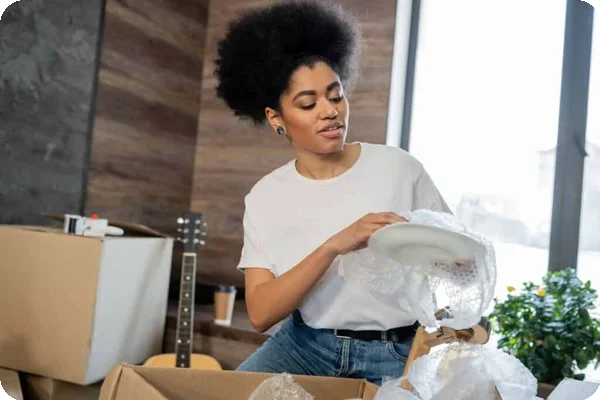
a young woman smiles as she packs dishes into a box

When you're preparing for a move, packing your inherited heirloom china or a beloved set of pasta bowls can be challenging. Fragile dishes require careful handling, so simply tossing them in a box isn't an option.

Keep reading to learn how to pack your dishes for a move and ensure they arrive safely and chip-free at your new destination.

Last updated: May 16, 20255 min read
Melanie Morris
Written byMelanie Morris

Key Takeaways

  • Dishes pack better vertically, on their edges like records — they're stronger that way and survive shifts in transit
  • Supplies: dish-pack boxes, plain packing paper (newsprint stains), bubble wrap, and corrugated dividers
  • Step-by-step: line the box with padding, wrap each plate individually, stack on edge, pad gaps, and finish with a soft top layer
  • Limit weight per box: dish boxes max out around 40-45 lbs even when packed tightly
  • Transport in a stable spot: in the truck, label "FRAGILE — DISHES," and avoid stacking heavy boxes on top
Melanie Morris
Author

Melanie Morris

Melanie Morris is an editor and writer at HireAHelper, where she uses observational skills honed from over 7 years of experience (and too much detective fiction) to demystify moving and make sure typos remain at a minimum.

Moving from the southwest up and down the west coast and back again has also given her plenty of firsthand moving experience. Now, she makes sure that even if you're just moving down the block, you have the accurate tips and know-how to make your relocation a breeze.

Supplies Needed to Pack Dishes Safely

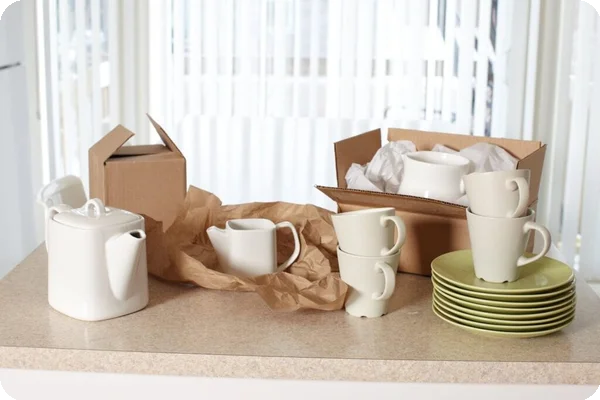
an assortment of dishes and kitchenware sits on a table full of boxes and packing paper

Secure packing starts with reliable supplies. Because dishes are often made of fragile materials, they should be prepped before packing. Here are some essential packing supplies you'll need to keep everything secure and safe:

  • Boxes: You can find boxes specifically designed for packing dishes at moving supply stores. However, you can also use regular moving boxes and add extra padding or dividers. Choose boxes that are sturdy enough to handle the weight of your dishes. Double-walled boxes are better than single-walled ones because they absorb shock more efficiently.
  • Packing paper: This is used to wrap and pack dishes for transport. It provides reliable protection from scratches and cracks while remaining compact and lightweight. It also creates protective air pockets when you crumple it. Some people use newspapers, but it may leave ink residue on your dishes.
  • Bubble wrap: An alternative to packing paper is bubble wrap. It offers a dependable buffer from shocks, especially when using rolls with large bubbles that provide extra cushioning.
  • Packing peanuts: For cushioning the bottom, sides, and top of the box, packing peanuts are another option. They’re also great for filling in any gaps between items in a box. Biodegradable packing peanuts are available if you're looking for an eco-friendly option.
  • Foam dish pouches: Sleeves or pouches designed to hold plates or bowls are an alternative to packing paper or bubble wrap.
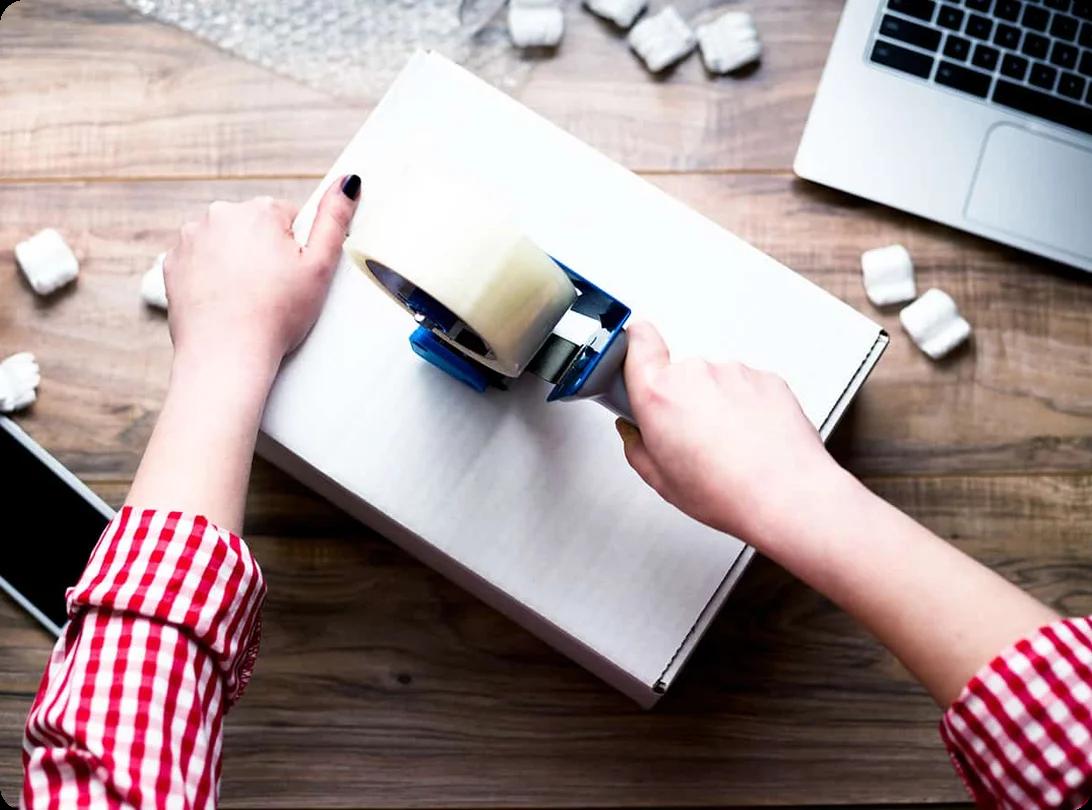
  • Packing tape: Securing the paper or bubble wrap with packing tape keeps whatever you’re using as cushioning tightly in place. It's also needed to secure and close boxes.
  • Permanent marker: Labeling the box as fragile and indicating which side is up helps ensure proper handling.
  • A scale: Try to keep the weight of each box under 40 pounds. Heavier boxes are harder to carry and more likely to get dropped.

For a ready-made solution, you can purchase full dish packing kits, such as the Dish Saver Packing Kit from U-Haul or Dish Packing Kits with dividers from Home Depot.

Step-By-Step Guide for Packing Dishes

Dishes are among the most fragile items in your home, so it's worth taking a few extra steps to pack them properly. Follow this step-by-step guide to pack your dishes like a pro:

1. Prepare your packing boxes
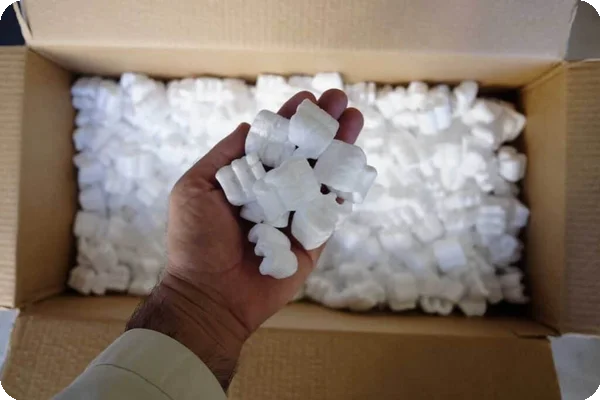
an aerial shot of someone's hand dumping packing peanuts into a box

Assemble the cardboard box and reinforce the bottom seam with 2 to 3 strips of overlapping tape before you start packing. Then, place a layer of packing peanuts or crumpled packing paper at the bottom of the box you plan to use for transporting your dishes. Aim for 3 to 4 layers of cushioning at the bottom.

2. Prepare your dish wrapping area

Set a stack of packing paper on a wide, flat surface, such as a table or the floor, to use as your packing area. Keep the space clear so you can safely lift and turn each dish.

3. Sort your dishes by size and shape

Plates, bowls, and platters should be separated before packing. Matching plates or bowls can be individually wrapped, then stacked together inside the box.

4. Wrap pieces individually
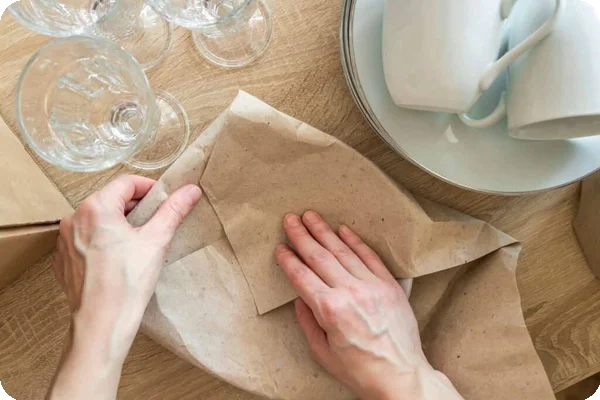
An aerial shot of someone wrapping a dish with packing paper

Place the plate, bowl, or platter in the center of a piece of packing paper or bubble wrap. Fold one corner of the packing paper over the entire dish and tuck it in beneath the other side. Repeat with the opposite corner to fully cover the dish, then use packing tape to secure the paper in place.

5. Stack identical dishes together

Once you've wrapped a few matched plates or bowls, you can stack them together. Limit stacks to 4 or 5 dishes and place bubble wrap or other cushioning between each dish in the stack. Wrap the entire stack in bubble wrap and secure it with packing tape.

6. Pack dishes vertically into the box

Instead of setting the stacked dishes down directly into the box, stand them up vertically, similar to how you arrange dishes in a dishwasher. Pack 2 to 3 sets of wrapped dishes in a single box, placing cushioning between each stacked set.

"It's best to unpack your dishes in the kitchen so you don't have to carry each dish individually from another room. Check for damage before opening the boxes, and unpack the heaviest items first."

Add packing peanuts to the sides and top for more cushioning around the stacks. Choose the smallest size box that fits your dishes. Separating stacks into multiple small boxes is better than using a single large box for everything.

7. Continue filling the box

Group similar items together in the same box, and pack larger serving pieces in a separate box from your plates and bowls. Fill spaces between stacks with cushioning materials, and leave room for cushioning at the top so dishes aren't directly in contact with the box. Make sure there's no empty space when you close the box.

8. Seal and label

Tape the box shut to prevent packing material from escaping. Then, use a permanent marker to indicate the contents of each box and that they are fragile. Also, be sure to mark which side is the top to prevent anyone from accidentally placing it upside down in the moving truck.

How to Transport Dishes Safely

A young woman unpacks dishes in her new home

Set the boxes of dishes aside to load last and avoid placing them on top of a large stack or putting heavier boxes on top of them. Use straps or bungee cords to secure the boxes once everything is loaded.

Once you arrive at your destination, remove the boxes with fragile items first and place them in the room where you will unpack them. This gets your dishes out of the way so other boxes aren't accidentally stacked on top of them.

If you’re really worried about your fragile items, hiring professional movers can help. Their expertise and experience mean they can ensure all your breakables are transported to your new home efficiently and without a chip or scratch. Learn more about efficiently packing everything from fragile dishes to bulky furniture on our How to Pack Hub.

FAQs About Moving Dishes

Recent Articles

A person frantically packing boxes during a last-minute move with a calendar showing the urgent move date

Last Minute Moving: Our Checklist for Getting Out in a Hurry

Packing

Planning to move soon? Like, really soon? Last-minute moving can cause panic, no matter the reason. Maybe an emergency happened, and you have to relocate quickly, or you're offered an exciting job opportunity that... Read More

Kitchen drawer organizer filled with utensils being prepared for packing into a moving box

How Do I Pack Kitchen Utensils?

Packing

Unlike your couch or dresser with four tiers of drawers, kitchen utensils and silverware are small might seem like they're easy things to move to your new home. They're small, light, and typically not very... Read More

an image of a queen mattress on a wooden floor

Packing a Queen Mattress: The Plan vs. Reality

Packing

Every day, people search for advice on moving a mattress because they are bulky, awkward, and easy to damage. So if you’re searching for answers on how to get yours out the door, you’re not alone.

Knowing how to... Read More

A woman sets down an item into a box. The angle of the shot is from the bottom of the box pointing upwards, so it looks as through the woman is reaching towards the camera

What Should You Pack First When Moving?

Packing

The short answer to what you should start packing first is to pack things you don’t use daily. If it can sit in a box for a few weeks without disrupting your routine, it can be packed early. Items in garage... Read More

College student moving into a dorm

How to Pack for College: Complete Dorm Packing Guide

Packing

Getting ready for your first year is thrilling, but it is so easy to bring way too much stuff. To pack for college efficiently, double-check your dorm’s rules, coordinate with your roommate, and follow a... Read More

A woman holding multiple rolls of clear packing tape and a tape dispenser

The Best Type of Packing Tape to Use When Moving

Packing

If you browse office and craft store aisles, you'll find dozens and dozens of tape options. While they all serve a purpose, most aren't ideal for packing. The best packing tape to use when you move is a product... Read More