The No-Stress Moving in Together Checklist (Including the Money Stuff)

moving in with partner

Living with your partner is an exciting milestone, but it's also a complex process packed with practical and emotional hurdles. But, when you've thought ahead and have prepared for potential challenges, you can avoid the biggest sources of tension that couples face when cohabitating: finances and expectations.

In this guide, we'll provide tips for moving in with a partner, including emotional and financial readiness, red flags, sharing expenses, legal tips, and a practical moving-in together checklist. With clear communication and an organized plan, you can make it through the transition with a stronger relationship and an exciting new lifestyle.


Last updated: Sep 04, 2025 12 min read
Melanie Morris
Written byMelanie Morris

Key Takeaways

  • Readiness goes beyond romance – check that your communication, conflict resolution, and money habits actually align before you sign a lease together
  • Watch for red flags early – hidden debts, secrecy around finances, mismatched lifestyles, and dodged hard conversations are warnings worth taking seriously
  • Have the money talk before move-in day – split expenses fairly (equal vs. proportional), agree on shared vs. separate accounts, and write it down
  • Protect yourself legally – consider a cohabitation agreement, keep some financial independence, and understand how shared leases and bills affect both partners
  • Use tools to stay organized – Splitwise, shared calendars, joint budgets, and a printable moving-in checklist take the friction out of daily life together
Melanie Morris
Author

Melanie Morris

Melanie Morris is an editor and writer at HireAHelper, where she uses observational skills honed from over 7 years of experience (and too much detective fiction) to demystify moving and make sure typos remain at a minimum.

Moving from the southwest up and down the west coast and back again has also given her plenty of firsthand moving experience. Now, she makes sure that even if you're just moving down the block, you have the accurate tips and know-how to make your relocation a breeze.

How to Know When You Should Move In Together, Emotionally and Financially

Before you sign a new lease, take some time to decide if you're truly ready to move in together. Assessing your relationship honestly can help you make the best decision for both people.

Emotional Compatibility & Communication Readiness

Look back on your relationship, and figure out if you've spent extended periods of time together. Did it go smoothly? Any tiny irritations you experienced will seem much bigger when you're sharing a space.

“...[C]onsider drawing up a basic cohabitation agreement, especially if you're not married. This legal document can include anything you want, but it usually outlines financial obligations and property division in case of a breakup.”

Then, consider your communication skills. Are you able to discuss difficult topics and resolve disagreements calmly? Strong conflict resolution is a must for happy cohabitation.

It's also important to discuss shared expectations regarding practical things like private time, guests, chores, and noise levels. These aren't romantic topics, but ironing out potential conflicts in advance is far better than the alternative. No one wants to be stuck doing all the dishes while their partner binge-watches TV or invites guests over at odd hours.

Financial Transparency & Trust

When it comes to living together, finances can be the elephant in the room. Before you dive headfirst into a new living arrangement, it’s vital to have an open and honest discussion about your financial situation. In your discussions with your partner, you should tackle topics such as:

  • Money: Share information about your income, debt, and spending habits. Be transparent about student loans, credit card debt, or other financial obligations.
  • Financial habits: Discuss how each of you handles bills and budgeting. Consider whether you can feasibly share expenses if your money management styles are dramatically different.
  • Splitting expenses: Think about how you'll split costs, especially if one person has a higher income.

Timing Considerations

As with most things in life, timing is everything when you're moving in with a partner. Before moving forward, make sure you've been together long enough to know each other. Going too fast can put a lot of pressure on a budding relationship.

Also consider your motivations — are you moving in together to solve a problem? It might sound like a smart way to preserve the relationship or save some cash on rent, but be careful. Things get a lot more complicated when you're sharing expenses and living space.

The same goes for external pressures, such as an expiring lease or an unexpected job change. These can be convenient opportunities to try living together, but only if the timing is right.


Red Flags Before Moving In Together

If you notice any of these red flags, you might want to reassess whether it's a good idea to move in together right now:

  • Financial questions: Both partners should be open about finances. Issues such as secrecy or hidden debts could lead to problems down the road.
  • Avoiding practical conversations: If you're ready to move in together, you should be able to openly discuss things like chores, household budgets, and boundaries regarding finances, privacy, or cleanliness.
  • Rushed timeline: There's no need to rush into cohabitation because it's convenient or you feel pressured. A better option is to wait until both people feel ready and confident.
  • Unequal power dynamic: This can happen if one person owns the home or plans to cover all expenses. Inequality can make the other person feel subservient, like a guest, or unable to make decisions.
  • Lack of emotional readiness: If you and your partner have a history of volatile arguments, emotional blow-ups, or poor conflict resolution, reconsider living together until you achieve stability.

Don't worry if you notice some of these challenges — they don't necessarily mean that you should never live under the same roof. Instead, take them as a sign to proceed slowly, reflect deeply, and communicate openly before making a final decision.


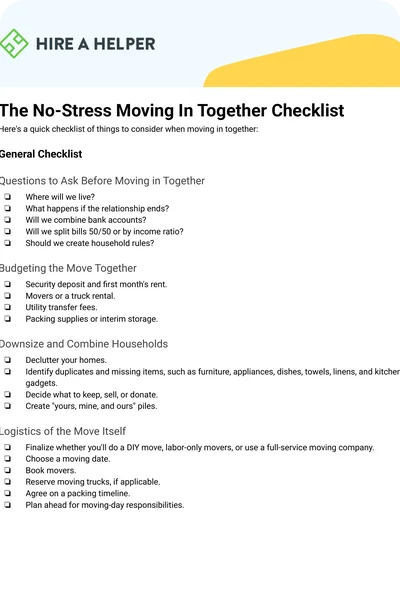
The No-Stress Moving In Together Checklist

Once you decide that you're ready to move in together, it's time to start planning. Use these tips to work through the process logically.

Want a printable version? Check out the PDF version of our moving in together checklist.

Questions to Ask Before Moving in Together

Here are some practical questions to talk about before the big move:

  • Where will we live? Evaluate homes based on your current and future needs. If you plan on growing your family (or your collection of houseplants), ensure there’s space for those future additions. Before making any decisions, discuss what you both need in a living space, such as an office for remote work or a guest room for visitors.
  • What happens if the relationship ends? It's not fun, but you talk about who will move out if you break up, and what to do with your apartment or home.
  • Will we combine accounts? Decide if you'll open a joint bank account to cover expenses, maintain separate accounts, or both.
  • Will we split bills 50/50 or by income ratio? If one person earns a lot more than the other, consider splitting rent based on income percentages rather than equally to lessen the financial burden on the partner with a lower income.
  • What should our house rules be? Address topics that cause conflict, including cleaning expectations, sharing chores, cooking, guests, bedtimes, quiet hours, and whether you'll have pets.

Budgeting the Move Together

Now that you're both on the same page, it's time to talk numbers. Using an expense-sharing app or a shared spreadsheet, create a budget for your moving costs. Start with the obvious expenses, such as the security deposit and first month's rent, movers or a truck rental, and utility transfer fees. Then, consider hidden costs, such as packing supplies or interim storage between your move-out and move-in dates.

Downsizing and Combining Households

Combining your households is one of the most exciting — and challenging — parts of moving in with a partner. To make sure you don't end up with two pressure cookers and no living room couch, declutter your homes and make an inventory of each of your belongings. Identify duplicates and missing items, paying close attention to items such as furniture, appliances, dishes, towels, linens, and kitchen gadgets.

Based on the space in your new shared home, decide what to keep and sell or donate. Creating "yours, mine, and ours" zones can ensure that you both keep enough stuff to feel comfortable. Each person can fill their individual zone with any items they want, but belongings in shared spaces must benefit both people.

Logistics of the Move Itself

Next, you can tackle logistics. Decide whether you'll do a DIY move or if you'll hire movers (and whether you should go with full-service or labor-only, both of which you can find on HireAHelper’s platform). Then, choose the best time to move for both of your schedules, book movers, and reserve moving trucks.

Unless you're packing both homes as a team, you'll need to trust each other to work efficiently. We suggest agreeing on a packing timeline to prevent a last-minute rush.

“Decide which things to keep [in your shared home] based on the item's age, quality, and features. You can also consider factors such as sentimental value and expected usage.”

It's also a good idea to plan ahead for moving-day responsibilities, including loading the truck, directing movers, and returning the truck. If you're moving from different cities, you should also decide if you’re moving in on the same day or not. Doing so means you can share in the excitement, but two sets of movers trying to get everything into a home can be awkward.


Living Together

Once the dust has settled (and you’ve finally located your favorite mug), it’s time to settle into your new life together. This stage is about figuring out how to maintain your interests while creating a comfortable home environment.

  • Designate shared spaces: Decide which areas are communal (like the living room) and which are private (like your respective office spaces). These areas give you personal space while you ease into cohabitation.
  • Establish routines: Create daily or weekly routines that work for both of you, whether that's cooking dinner together or having movie nights on Fridays.
  • Maintain separate lives: While building a life together is important, remember to prioritize self-care and individual interests too. A healthy relationship thrives when both partners feel fulfilled.
  • Divide housework fairly: Divide chores based on preferences and strengths rather than traditional roles. If one of you loves cooking while the other prefers cleaning, go with it. Make sure to share the mental load for tasks as well, like maintaining a grocery list, remembering to switch the laundry, and noticing when a space needs to be cleaned.
  • Set boundaries: Establish personal boundaries to ensure both partners feel comfortable. Maybe one of you needs quiet time after work — don’t be afraid to voice that.
  • Handle arguments calmly: When disagreements arise, take a deep breath and approach the situation with a level head. Yelling rarely leads to resolution; instead, work collaboratively to find solutions that satisfy both partners.
  • Agree on guests: To ensure that your shared home feels comfortable and safe, check in with each other before inviting guests over, including family.
  • Talk about holidays: Decide whether you'll celebrate holidays alone, together, with one family, or separately with your respective families.

Adjusting to living together takes time. Don’t rush the process; enjoy getting to know each other in this new setting.


How to Protect Yourself When Moving In, Legally and Financially

Moving in with a partner creates a certain amount of financial and legal risk for both people. Although it might seem wrong or even cruel to your partner to prepare for the worst, it’s in both of your best interests to do so. Here are some ways you can protect yourself.

Lease and Legal Agreements

When you find a new home, ensure that both your names are on the lease. This helps prevent a power imbalance and ensures that you're equally liable for expenses and rental responsibilities if the relationship goes south.

For a little extra peace of mind, consider drawing up a basic cohabitation agreement, especially if you're not married. This legal document can include anything you want, but it usually outlines financial obligations and property division in case of a breakup. You can also add details about splitting expenses, shared accounts, and ownership of expensive items.

Financial Protections

Although it can be tempting to pool all your resources when you move in together, avoid merging your finances too soon. Protect yourself and your partner by maintaining separate accounts and sharing bills for at least a while. Set up a digital accounting system to save receipts, manage joint expenses, and ensure each person contributes the appropriate amount before you gradually transition into joint accounts or a mix.

What to Know If You Break Up

We get it — breaking up is the last thing you want to think about when you've just moved in together. If you can overcome the discomfort, however, a little bit of planning can help you avoid a great deal of hurt down the line.

You should decide who will keep what if you break up, particularly when it comes to joint purchases. For example, you might decide to sell items you bought together and keep what you brought in.

“Discuss how each of you handles bills and budgeting. Consider whether you can feasibly share expenses if your money management styles are dramatically different.”

The longer you live together, the more you tend to take on shared financial commitments. This might include your lease, a vehicle loan, or joint bank accounts. If you have kids, you might need to sign a binding childcare contract. Talk about how you'll handle these obligations if you decide to split up.

Also, keep a shared record of the purchases and commitments you make together to protect yourselves in the event of a breakup. This is useful for financial record keeping and can help you split up gracefully if the time comes.


Tips for Moving In With a Partner: Making it Work Long-Term

As you settle into the rhythm of living together, it's important to establish routines and boundaries. These strategies can help you cohabitate while maintaining a strong relationship.

Creating Healthy Routines

It takes time to build new routines as a couple who live together. Here are some tips for getting started:

  • Check in weekly: Schedule regular check-ins to discuss how things are going. It’s a great way to address any issues before they snowball.
  • Divide chores equitably: You don't have to go 50/50, but make sure each person is doing a fair amount of work. If necessary, use a chore chart app to split up the work.
  • Balance time alone and together: Make an effort to spend quality time together regularly, whether you go out for dinner or enjoy quiet evenings at home. Get plenty of time by yourself, too — pursuing your own activities is essential for healthy cohabitation.

Avoiding the Roommate Trap

Don't let the mundane tasks of running a house together turn you into mere roommates. Use these strategies to keep your relationship going strong, even when you're dealing with chores and bills:

  • Keep the romance alive: Be intentional about planning date nights, and surprise each other with little gestures.
  • Respect each other's space: Encourage each other to pursue hobbies, hang out with friends, and enjoy private time. The more fulfilled and enthusiastic you are as individuals, the more interesting your relationship will be.

Dealing With Conflict

Let’s face it — no matter how perfect your relationship may seem, conflicts are as inevitable as running out of coffee on a Monday morning. Learning how to navigate disagreements is necessary for maintaining harmony in your new living situation. Here's how:

  • Normalize disagreements: There's no need to make every conflict into a relationship-ending issue. Discuss your feelings calmly and honestly, and work together to find a plan that meets both of your needs. Compromise is key.
  • Pick your battles: Not every disagreement is worth fighting over. Decide what’s truly important, and let the little things slide.
  • Consider couples therapy: A therapist or relationship coach can help you understand each other, communicate more effectively, and learn how to resolve conflict respectfully.

Budgeting Tools and Resources for Couples

Thanks to modern technology, it's pretty easy to manage your joint expenses and coordinate your schedules. Here are just a few of these tools and resources that can help:

  • Expense-splitting apps: Track all your shared purchases and expenses in an app. Splitwise makes it easy to record purchases and track who owes what. Each user can log in to add expenses in seconds. Monarch Money is a more robust option that includes budgeting, planning, and tracking tools. It's particularly useful for budgeting and setting joint financial goals.
  • Calendar tools: These apps keep track of things that affect both of you, including bill due dates, special events, and date nights. Google Calendar is a simple, free option that's probably already loaded on all your devices. For a dedicated shared calendar that helps you coordinate schedules, try Cupla, TimeTree, or Cozi.
  • Moving cost calculator: Figure out your shared moving costs with our handy moving cost calculator. Just enter a few details about your move to get a list of estimated expenses.

Budgeting Tools and Resources for Couples

Frequently Asked Questions

Recent Articles

Cardboard moving boxes packed and ready in the bedroom of a new home

Preparing to Move: What You Need to Know Before You Start Packing

Move Planning

Preparing to move starts with planning: outlining your moving needs, setting a budget, and clearing out clutter before you pack a single box. Moving can be emotionally and logistically heavy, and while it’s normal... Read More

Older couple sorting framed photos and keepsakes while packing boxes during a downsizing move

How to Downsize Your Home: The Ultimate Step-by-Step Guide for Moving

Move Planning

If you’ve been wondering how to downsize your home, you’re not alone. With the average home equity around $250,000 for those aged 65 or older, it makes sense that retirees would want to tap into that value and... Read More

image of a checklist

Moving Checklist: A Step-by-Step Timeline for a Smooth Move

Move Planning

Moving an entire home is a major feat, even for the savviest of planners. It's easy to feel overwhelmed, which is why the best moving checklist is a timeline-based one that breaks your move into manageable steps... Read More

A person checking off items on a moving inventory clipboard next to a row of labeled cardboard boxes

How to Create a Moving Inventory List (and Why it Matters)

Move Planning

From missing boxes to unexpected damage, a disorganized move can cost you more than just your patience. That’s why making an inventory list is one of the smartest things you can do before moving day. It’s your... Read More

A couple sits on the steps of a house surrounded by moving boxes, looking into the distance and imagining changes and renovations to their home

Moving Soon? Experts Share the First DIY Upgrades to Tackle Before You Settle In

Move Planning

Moving into your newly purchased house is an occasion worth celebrating, and it's likely you've already identified ways to transform it into your own. The period immediately after closing, but before moving in, is... Read More

A homeowner using clever packing and unpacking life hacks like color-coded labels and reusable bins in a kitchen

Movehacks: How to Unpack and Organize Before, During and After You Open a Box

Move Planning

You've circled your moving date on the calendar, and now it's time to pack. But wrangling everything from your toaster to your toothbrush can be daunting. How do you pack up your home while making the most of every... Read More