Questions to Ask on an Apartment Tour

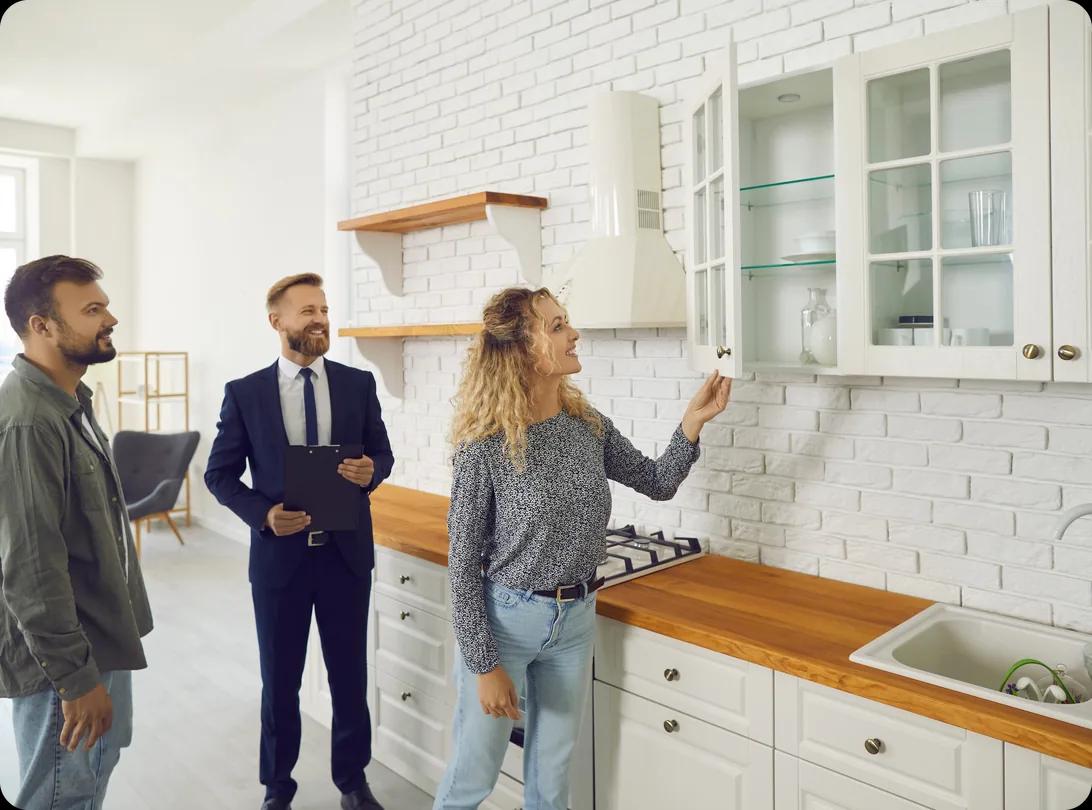
A young couple looks at the oven in a bright apartment kitchen while an agent holding a tablet shows them the unit

The most useful questions to ask on an apartment tour include what the place will really cost, what you’re agreeing to in the lease, and what happens when something breaks. You’ll also want to check a few things yourself, since water pressure, cell service, storage space, and noise aren’t always obvious from a listing or a quick walkthrough.

HireAHelper has helped with more than 1 million moves, including plenty into apartments and rental homes, so we know what might not be obvious during a listing that you should still know. This guide will cover the questions to ask about costs, lease terms, maintenance, pets, parking, internet, and the neighborhood, plus what to check while you’re standing in the unit.


Last updated: Sep 29, 2026•10 min read
Karen Bodkin
Written byKaren Bodkin

Key Takeaways

  • Ask what the rent doesn’t include. Utilities, parking, storage, pet fees, and other extras can change what you actually pay each month.
  • Find out what happens if you need to leave early. The cost of breaking a lease can matter just as much as the length of the lease itself.
  • Ask how repairs have actually gone in the past. A recent example can tell you more than hearing the building’s official maintenance policy.
  • Check some things for yourself. Water pressure, cell service, storage space, noise, and the exact unit you’ll be renting are easier to judge while you’re there.
Karen Bodkin
Author

Karen Bodkin

Karen Bodkin is a writer at HireAHelper who's passionate about helping people navigate their moves with less stress and more confidence. She empowers readers by turning the many overwhelming parts of moving into clear, actionable guidance.

Karen draws from a broad writing portfolio that includes home improvement, health, and travel. Her work reflects a deep understanding of life's transitions and a genuine drive to make moving feel more manageable for everyone.

The Apartment Tour Checklist

It’s easy to forget what you wanted to ask once you’re walking around an apartment and talking to a leasing agent. Keep this list on your phone or print out a copy to have on hand so you have a reminder of the most important questions:

  • Rent: What isn’t included in the monthly rent?
  • Utilities: Which utilities would I pay separately?
  • Fees: Are there extra charges for parking, storage, pets, laundry, amenities, or packages?
  • Deposit: How and when is the deposit returned?
  • Lease: What happens if I need to end the lease early?
  • Renewal: What happens when the lease ends?
  • Pets: What are the pet rules and costs?
  • Guests: How long can a guest stay?
  • Roommates: Can someone be added to the lease later?
  • Maintenance: How long did the last emergency repair take?
  • Parking: Is a space included? Does it cost extra?
  • Laundry: Where is it, and how does payment work?
  • Internet: Which providers actually serve this unit?
  • Security and noise: What security systems are used, and when is the building noisiest?
  • The unit: Can I see the exact apartment I would be renting?

Rent, Fees, and Move-In Costs

The advertised monthly rent may only be part of what you’ll pay to live there, so start by asking what the rent does not cover.

Utilities are a big part of renting that can change from building to building, so you should be very clear on which ones are your responsibility and which ones are billed through the building. Depending on the property, that could include water, sewer, trash, electricity, gas, or a separate utility charge.

Useful questions include:

  • Which utilities are included in the rent?
  • Which ones would I set up and pay myself?
  • Are any utilities billed through the building?
  • Do you know what the previous tenant typically paid for electricity or gas in this unit?

From there, you can ask, “What would I pay every month on top of the rent?” which can include things like parking, storage, amenities, pets, package lockers, and laundry.

You’ll also want to know which charges happen before you get the keys. Ask about application fees, administrative fees, deposits, pet deposits, holding fees, and any rent that needs to be paid in advance. Find out which charges are refundable and which aren’t.

If the building is offering a move-in special, ask what happens after it ends. A discount for the first few months is very different from a lower ongoing rent.

The deposit is another area where the details matter. Ask how the return process works, what can be deducted, and what the building considers normal wear rather than damage.

Lease Terms, Renewals, and Breaking a Lease

It’s important to know the terms of your lease, so you should always ask what it costs to break the lease and exactly how early termination works. Is there a set fee? Would you continue paying rent until another tenant takes the unit? Would you be responsible for finding that person? Is there a relocation clause, especially for military families?

Next, find out what happens at the end of the term. Does the lease automatically continue month to month? Would you need to sign another fixed-term lease? How much notice would you need to give if you plan to leave? It can also be useful to ask what happened with previous renewals to see what current tenants experienced. Ask about subletting, too, and whether you can add someone to the lease later.

Finally, ask for a blank copy of the lease before you sign anything. Read the actual document instead of relying only on what you were told during the tour.

Rules around lease termination, renewal, and notice periods vary by location, so check your state or local landlord-tenant rules if anything is unclear.

Pet, Guest, and Roommate Policies

No matter how the landlord or building manager answers your questions, make sure to get the pet, guest, and roommate rules in writing. These are the kinds of policies that can become a problem later if what you were told during the tour doesn’t match the lease.

If you have a pet, ask about breed or weight restrictions, how many animals are allowed, and whether those limits apply per apartment or per tenant. You’ll also want to know whether there’s monthly pet rent, a one-time deposit, or both, and whether any deposit is refundable.

"If you’re getting a virtual tour because you’re not in the area, but you have a friend or family member who lives nearby, you could also ask whether they can see the unit in person for you."

Service and assistance animals may be covered by different rules, so check the requirements that apply where you live rather than assuming the regular pet policy applies.

Guest policies are worth clarifying even if you don’t have people staying over often. Ask how long a guest can stay before the building considers them an occupant and how that rule is handled in practice.

For roommates, ask whether someone can be added to the lease later and what approval involves. You’ll also want to know whether everyone signs one joint lease or rents separately by the room, which can affect what happens if one roommate stops paying, so it’s worth understanding before you commit.

Maintenance, Repairs, and Who Fixes What

Instead of simply asking how long repairs take, ask specifically how long the last emergency repair took. A real example will usually tell you more.

From there, you can find out more details about how the maintenance process works. Try asking:

  • What counts as an emergency?
  • How do I request a repair? Is there an online portal, a phone number, an email address, or an office in the building?
  • Is the maintenance team on-site, or does the property rely on outside contractors?
  • Who do I contact if something happens late at night?
  • How long do routine repairs usually take?
  • What was the most recent emergency repair in the building, and how long did it take?
  • Is there anything in this unit that was repaired recently?

It’s also useful to know which repairs could be charged back to you. Things like lockouts or clogged drains may be handled differently depending on the building and what caused the problem.

Ask how pest control works, too. Some buildings schedule regular treatments, while others only respond when someone reports a problem.

Finally, ask how residents are notified before maintenance staff or management enters the apartment. Notice requirements vary by state, so check your local rules if you want to know exactly what applies where you live.

Parking, Laundry, Internet, and Packages

Parking, laundry, internet, and packages add to your monthly costs, so it’s worth getting clear answers on how these are charged during the tour.

For parking, ask whether a space is included, assigned, or waitlisted. Guest parking is another point to be clear on, and you should find out whether it exists, whether guests need a permit for it, and whether there are any fees or time limits.

For laundry, find out where the machines are, how you pay, and how many machines serve the building or floor.

Internet can vary quite a bit from one building to another, so ask which providers actually service the property, whether internet is included in the rent or charged separately, and what speeds residents typically get. Check your cell signal, too, especially in the bedroom or any room where you’d spend a lot of time.

Also ask where deliveries go. Depending on the building, that could be a locker, office, lobby, mailroom, or your apartment door. You can also ask whether package theft has been an issue and whether the building has changed anything to address it.

Safety, Noise, and the Neighborhood

Listed amenities don’t always cover everything, so you should start learning about the building’s safety by asking about access. Is there controlled entry, a key fob, a code, cameras, or on-site staff? Ask whether those systems are currently working and how often they’re checked. If you’ll receive a key, fob, or code, find out what happens if it gets lost and how replacements are handled.

As for noise, ask what’s above, below, and beside the unit, especially if you share bedroom or living-room walls. You can also ask about quiet hours and how the landlord handles noise complaints.

If you’re seriously considering the apartment, it can be worth coming back at a different time of day and standing outside for a few minutes.

What To Check Yourself While You Walk Through

Some things are easier to test yourself than to ask about. Start with the water. Run the shower and a faucet at the same time to see how the pressure holds up and how quickly the water gets hot. You should also try flushing the toilet and look under sinks for signs of moisture.

Find the thermostat and ask what heats and cools the apartment. If you can, turn the system on briefly and listen to how it runs.

Think about where your furniture and work setup would go. Count outlets, open every closet and cupboard, and measure the doors and hallways. Taking photos can also help you remember storage space, room layouts, and awkward corners once you’re comparing apartments later.

Check the windows, too. See which direction they face, how much light comes in, and whether they open, close, and lock properly.

Most importantly, ask to see the exact apartment you would be renting. A model unit can show you the general layout, but it can’t tell you what your actual unit looks, sounds, or feels like.

Questions for a Virtual Apartment Tour

On a virtual apartment tour, you should focus your questions on what the camera isn’t showing you.

Ask for a live walkthrough rather than a pre-recorded video if possible, and make sure you’re seeing the actual unit you would rent instead of a model.

You can also direct the person holding the camera. Ask them to show you:

  • Inside closets and cupboards
  • Under the sinks
  • The view from every window
  • Hallways and common areas
  • The building entrance
  • The parking area
  • Laundry or storage areas you would use

You can also ask them to run the taps, flush the toilet, open the windows, and show you how the locks work.

Afterward, ask for recent photos or video of the exact apartment so you have something to refer back to. If you’re getting a virtual tour because you’re not in the area, but you have a friend or family member who lives nearby, you could also ask whether they can see the unit in person for you.

If you’re being asked for a deposit before you’ve ever seen the apartment yourself, ask whether it’s refundable and get the answer in writing. Paying a deposit on an apartment you haven’t seen in person simply isn’t a good idea.

What To Do Right After the Tour

Write down your impressions before you leave the parking lot. After a few apartment tours, it becomes surprisingly easy to forget which kitchen belonged to which building.

Note the total monthly amount you were quoted and who gave you that number. Write down anything that was promised verbally, such as a repair, waived fee, parking space, or appliance replacement, and ask for those promises in writing.

If photography is allowed, take a few pictures of the unit and the outside of the building so you can compare it with other places later.

"It’s also useful to know which repairs could be charged back to you. Things like lockouts or clogged drains may be handled differently depending on the building and what caused the problem."

Before you commit, read the actual lease. If you weren’t given one, ask for a blank copy.

And if you’re being pushed to sign immediately, it’s reasonable to say you need time to read the lease and think it over. You don’t have to make the decision while you’re still standing in the apartment.

Frequently Asked Questions

Recent Articles