How Do I Pack Kitchen Utensils?

Kitchen drawer organizer filled with utensils being prepared for packing into a moving box

Unlike your couch or dresser with four tiers of drawers, kitchen utensils and silverware are small might seem like they're easy things to move to your new home. They're small, light, and typically not very delicate. But, while you might be tempted to toss everything into a big box and deal with it later, there’s a much easier (and tidier) way to do it.

In this guide, we'll show you how to protect utensils during a move, what supplies you need, and how to reduce unpacking time with thoughtful kitchen utensil packing.

Last updated: Jan 19, 20264 min read
Kevin The Mover
Written byKevin The Mover

Key Takeaways

  • Kitchen utensils are an awkward packing category: sharp, soft, long, and weird-shaped items all in one drawer
  • Supplies you need: small to medium boxes, packing paper, plastic bags or cling wrap, dish towels, and a thick marker for labeling
  • Strategy options: pack drawer-and-all using cling wrap (fastest), individually wrap each item (most protective), or group by category (knives, serving, baking)
  • Step-by-step: separate sharp items, wrap them safely, use towels to pad, pack heavy items at the bottom, and clearly label fragile
  • Final tips: keep one "essentials" utensil box for unpacking day (knife, can opener, basics) and load this box first into the truck for easy access
Kevin The Mover
Author

Kevin The Mover

Kevin Kato is a travel and home services writer with over 20 years of experience as a professional mover.

Having been both a professional mover and a crew leader, Kevin has seen it all in the world of moving: hectic moves, unique packing, bizarre accident claims, truck mishaps, or just run-of-the-mill moves as advertised; there is virtually no situation Kevin hasn't managed. Today, Kevin provides his insights as Kevin The Mover for professional movers and "movees" everywhere.

What Supplies Do I Need?

Every packing job is different, but some supplies you might need specifically for your kitchen utensils include:

  • Boxes
  • Packing tape
  • Packing paper
  • Markers for labeling boxes
  • Rubber bands
  • Zip ties
  • Cardboard strips/scraps

Strategies for Packing Kitchen Utensils

You should always pack with efficiency in mind. In other words, as you're putting stuff into boxes, think about how much time it will take to unpack and sort everything later.

If possible, take the path of least resistance (as long as it won’t damage your things). For example, many people keep silverware organized in a tray that they then stick in a drawer. Typically, there's no reason to take everything out of the tray when you pack.

"Don't pack wet or dirty utensils...Trapped moisture can lead to mold or bacteria if items aren’t unpacked quickly."

If it won’t damage anything, consider packing the entire tray — silverware and all — directly into a box. Then, remove the tray from the box and place it in a drawer in your new kitchen. You can do the same for other utensil trays and containers.


How to Pack Kitchen Utensils: Step-by-Step Walkthrough

Whether you’re an avid chef with a deluxe set or you only have a handful of spoons and forks, you can follow the steps below to safely pack kitchen utensils of all types.

Packing Silverware in a Tray

Let's start by packing the easiest kitchen utensils: silverware that's already in a tray.
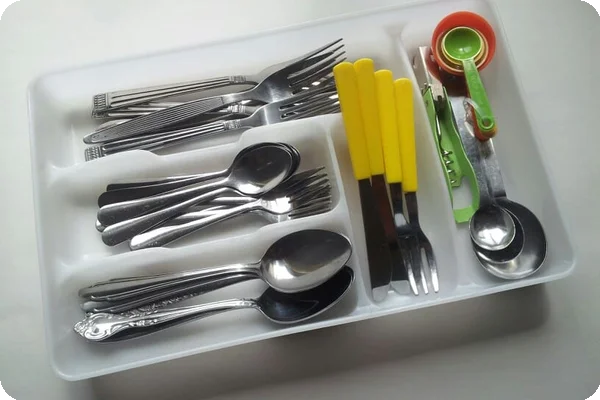
silverware is packed in a plastic tray

If you just put a tray into a larger box and send it off, your items may rattle around, which leads to an annoying clatter at best and serious damage at worst. Add some protection with one or more of the following methods:

  • Place a couple of clean tea towels on top of the tray to keep everything in place
  • Wrap each set of silverware in packing paper or a clean dishcloth, then place it back in the tray
  • Wrap the entire thing in packing paper or newsprint and tape the paper in place, ensuring your silverware stays in the tray
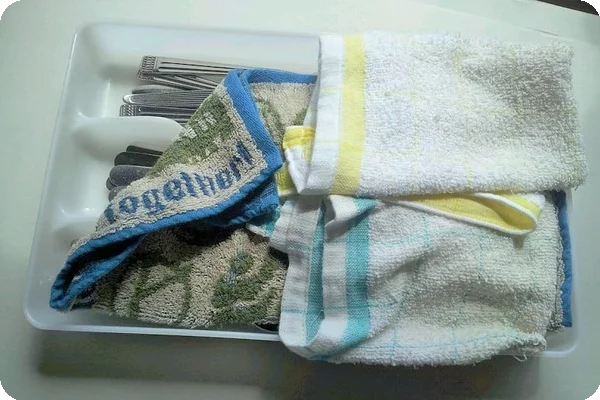
Pack Utensils With Towels

Packing Silverware That's Not in a Tray

If silverware isn't in a tray, make bundles of similarly shaped and sized items. For example, you might have bundles of butter knives, salad forks, teaspoons, and serving spoons.

Follow the steps below to secure and pack each bundle:

  • Secure each bundle with a rubber band
  • Wrap the bundles with packing paper, newsprint, a dishcloth, or bubble wrap — use items you already have for an eco-friendly move
  • Tape or tie the wrapping on to secure it further
  • Carefully place the bundles of silverware into a box
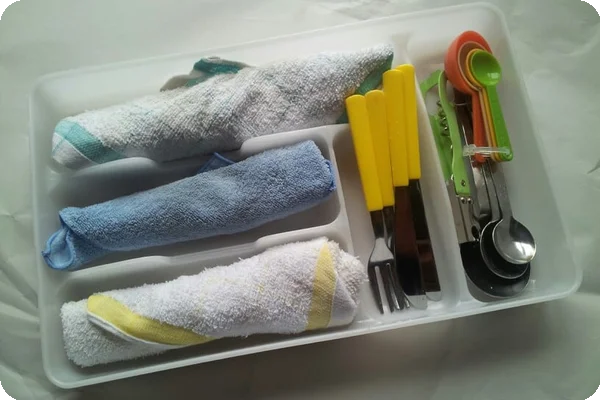
an example of silverware wrapped in towels
Although these are in a tray, it's a good example of how to wrap bundles of utensils together

To save space, you can pack silverware bundles in boxes with other kitchen items. Consider cushioning silverware with towels or oven mitts and packing it inside large bowls or pots.

"If possible, take the path of least resistance (as long as it won’t damage your things)...Typically, there's no reason to take everything out of the tray when you pack."

Just be sure to avoid stacking heavy silverware trays on top of fragile dishes like glass or ceramics — they can easily crack under the weight.

Packing Cooking Utensils

Pack your other cooking utensils the same way you would your silverware:

  • Secure and package utensils like cooking spoons, spatulas, and tongs in trays if that's how they're already stored
  • If utensils are stored in a canister, use a large zip tie to secure them together and wrap the entire canister in a dish towel or paper
  • Sort loose utensils by size and shape, securing them together and wrapping them in paper

Pack utensils in clearly labeled boxes. It’s fine to pack them with other kitchen items — just be sure to wrap them up well so they don’t scratch or break anything fragile.


Wrap It Up: Final Tips for Packing Kitchen Utensils

Now that you’ve learned how to pack kitchen utensils like a pro, here are some extra tips to make sure your silverware is in top shape when you unpack it at your new place.

  • Don't pack wet or dirty utensils: Trapped moisture can lead to mold or bacteria if items aren’t unpacked quickly. Plus, if you ask someone what they're looking forward to in their new home, running the dishwasher first thing probably isn't it
  • Take special care with actual silver items: Genuine silver silverware is usually stored in a special velvet-lined box or other safe environment. Make sure the items are clean and dry, and then wrap the storage container and place it in a box
  • Label boxes clearly: Rather than just labeling a box “kitchen,” list what’s inside. A label like “coffee mugs and utensils” will make unpacking in your new kitchen much easier
  • Protect sharp edges and points: Fold cardboard over knife edges or sharp utensil points and tape them in place. This helps prevent damage to other items in the box and keeps your fingers safe when unpacking later

Don't have time to pack your silverware or other items like a pro? Connect with professionals who can do it for you!

Recent Articles

A person frantically packing boxes during a last-minute move with a calendar showing the urgent move date

Last Minute Moving: Our Checklist for Getting Out in a Hurry

Packing

Planning to move soon? Like, really soon? Last-minute moving can cause panic, no matter the reason. Maybe an emergency happened, and you have to relocate quickly, or you're offered an exciting job opportunity that... Read More

an image of a queen mattress on a wooden floor

Packing a Queen Mattress: The Plan vs. Reality

Packing

Every day, people search for advice on moving a mattress because they are bulky, awkward, and easy to damage. So if you’re searching for answers on how to get yours out the door, you’re not alone.

Knowing how to... Read More

A woman sets down an item into a box. The angle of the shot is from the bottom of the box pointing upwards, so it looks as through the woman is reaching towards the camera

What Should You Pack First When Moving?

Packing

The short answer to what you should start packing first is to pack things you don’t use daily. If it can sit in a box for a few weeks without disrupting your routine, it can be packed early. Items in garage... Read More

College student moving into a dorm

How to Pack for College: Complete Dorm Packing Guide

Packing

Getting ready for your first year is thrilling, but it is so easy to bring way too much stuff. To pack for college efficiently, double-check your dorm’s rules, coordinate with your roommate, and follow a... Read More

A woman holding multiple rolls of clear packing tape and a tape dispenser

The Best Type of Packing Tape to Use When Moving

Packing

If you browse office and craft store aisles, you'll find dozens and dozens of tape options. While they all serve a purpose, most aren't ideal for packing. The best packing tape to use when you move is a product... Read More

Movers packing

The Most Damaged Items During a Long Distance Move & How to Pack Them

Packing

You made the decision to move, and now you're getting ready to get everything you love safely to your new home (once you’ve decluttered, that is).

You're most likely not worried about random knick-knacks or a $2... Read More