How to Get a Couch Through a Door

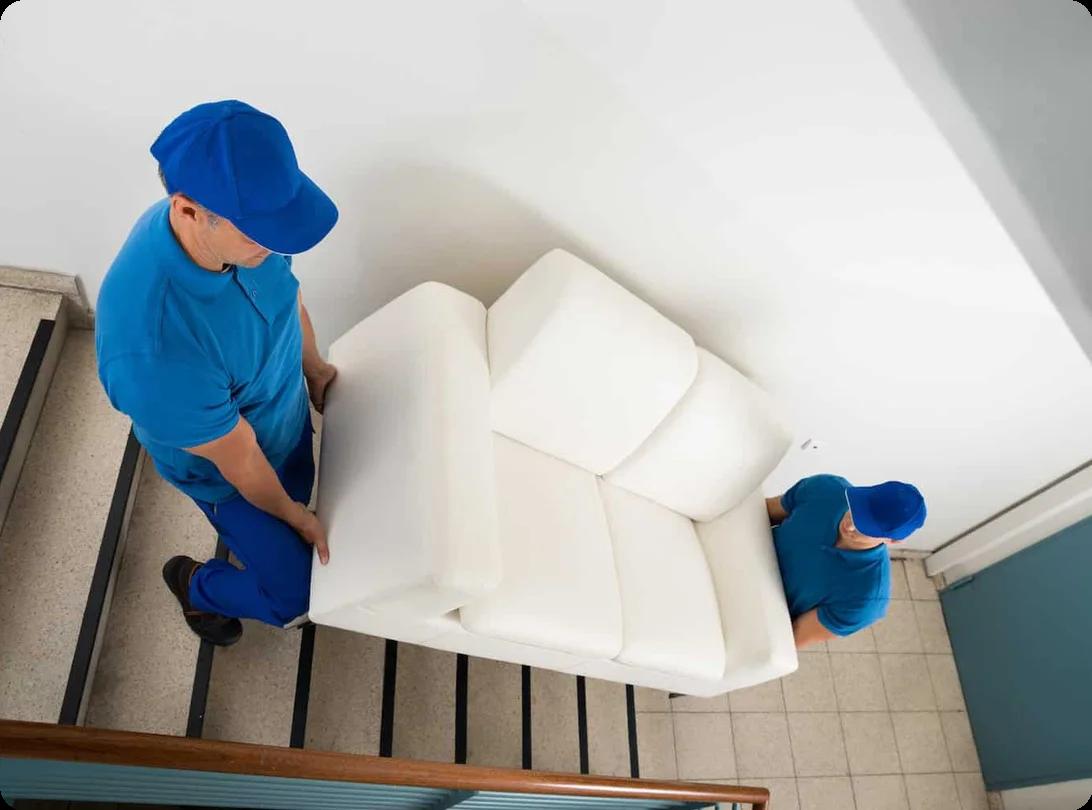
two people work together to lift a gray couch

We have all seen that scene in Friends. Ross is screaming "Pivot!" while his new sofa is hopelessly wedged in a stairwell. It is funny on TV, but when you’re the one sweating in a hallway with a heavy piece of furniture stuck between the jambs, it is a lot less hilarious.

But you don’t have to end up stuck. With the right techniques and a little math, you can almost always find a way to make it work. This guide will walk you through exactly how to get a couch through a door, from taking the right measurements to mastering the tilt-and-pivot maneuver.


Last updated: Jan 23, 20267 min read
Karen Bodkin
Written byKaren Bodkin

Key Takeaways

  • Measure first, lift second: measure both the couch and the doorway/hallway, including diagonal clearances, before attempting to move
  • Prep the space and the couch: remove cushions, detach legs if possible, protect doorframes, and clear the path of obstacles
  • The "hook and pivot" technique works for most couches: angle the couch upright, slide one end through, pivot, and ease the rest through
  • When DIY falls short: extra-wide couches, tight staircases, second-floor apartments — call labor-only movers with the right tools
  • Labor-only movers: are an affordable middle ground when DIY won't work but you don't need full-service
Karen Bodkin
Author

Karen Bodkin

Karen Bodkin is a writer at HireAHelper who's passionate about helping people navigate their moves with less stress and more confidence. She empowers readers by turning the many overwhelming parts of moving into clear, actionable guidance.

Karen draws from a broad writing portfolio that includes home improvement, health, and travel. Her work reflects a deep understanding of life's transitions and a genuine drive to make moving feel more manageable for everyone.

Why Proper Planning Matters

It is tempting just to pick up the couch and hope for the best, but that is usually how walls get scratched and upholstery gets ripped. Taking five minutes to plan the route now will save you from a world of frustration on moving day.

Start by visualizing the path. You have to consider more than the doors, and look at the hallways leading up to them, any tight corners you have to turn, and obstacles like low-hanging light fixtures or radiators. If you have a clear path and know where the trickier parts are ahead of time, you have a much better shot at maneuvering the furniture without damaging it.

“ If the couch is exceptionally heavy or the path is dangerous (like a narrow, steep staircase), it is safer to call in professionals.”

You also need to be realistic about your muscle power. Couches are heavy and awkward. If you don't have a reliable friend (or two) to help you lift, you risk injuring yourself or dropping the piece. If your friends are all busy that weekend, this is a perfect time to find furniture moving help on HireAHelper. You can book strong, highly-rated locals for just the hour or two you need to load or unload the heavy stuff.


Measuring Your Couch and Doorway

Before you lift a single cushion, you need your tape measure. Knowing your couch measurements for moving is the only way to know if it will actually fit.

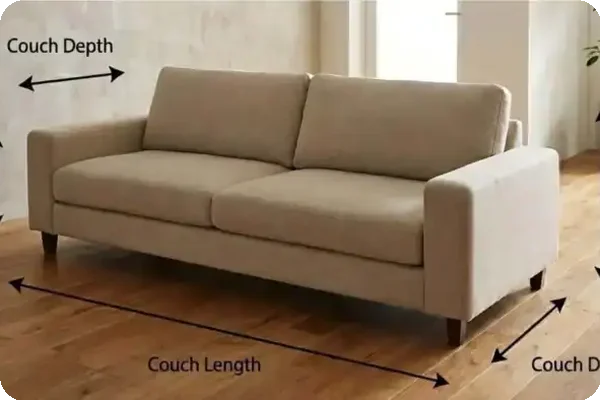
Start with the basics: length, width, and height. But here is the biggest pro tip: measure the diagonal depth. This is the distance from the top back corner of the frame to the bottom front corner. This number is often smaller than the total upright height of the couch, and it is the key to sliding it through narrow openings.

a diagram of the dimensions of a couch

Next, measure the door. You want the width of the actual opening, not just the frame. If the door usually opens only 90 degrees, measuring from the face of the door to the opposite stop is your true clearance. It helps to have a second person hold the tape so you aren't guessing at the numbers. If your couch height is 34 inches and your door width is 32 inches, don't worry just yet. There are certain ways around that.


Prepping the Space and Your Couch

You can buy yourself a few extra inches of clearance just by taking things apart. The easiest way is to remove the door itself. You can pop the hinge pins out with a screwdriver and a hammer, and set the door aside. This often gives you an extra inch or two of space, which can make all the difference.

On the couch itself, take off everything you can. Throw pillows and seat cushions should go in a separate box. If the legs screw off, remove them. This makes the couch both lighter and shorter.

If you’re worried about the fabric getting snagged on the door latch, wrap the couch in moving blankets or plastic wrap. It protects the upholstery and helps the fabric slide against the door frame rather than catching on it.


Techniques for Fitting a Couch Through a Door

Once you are prepped, it’s finally time to move. But keep in mind that the goal here isn't brute force — it is body mechanics. You’ll also want to communicate with your partner constantly. If you hired labor-only movers through HireAHelper, they will likely take the lead here, but if you are DIYing it, make sure you and your helper agree on the plan before you lift.

Tilt-and-Pivot Method

This is the classic move for a reason. If the couch is too wide to walk straight through, you need to angle it. Here are the steps to take:

  • Stand the couch on one end so it is vertical (tall).
  • Angle it so the seat is facing the door frame.
  • Hook the top of the couch through the doorway first.
  • Pivot the couch around the door frame, swinging the bottom section through as you rotate it.

This technique uses the "diagonal depth" measurement we talked about earlier. It allows a 36-inch-deep couch to slip through a 30-inch door because you use the sofa's V-shape to curl around the jamb. You definitely need two people for this — one to guide the top and one to steer the bottom.
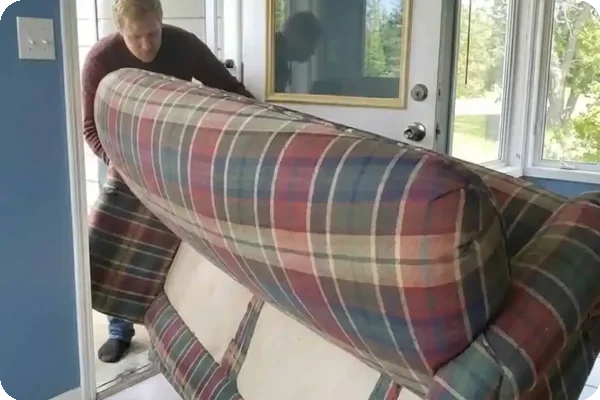
a man pivots a plaid couch through a door

Disassembly Approach

If the tilt-and-pivot fails, you might need to disassemble the couch. Many modern sofas have backs or arms that unbolt, so check underneath the dust cover or between the back cushions for bolts or levers.

If you can remove the back panel or the arms, you’ve turned one giant, unmovable object into three or four manageable pieces. Just make sure you keep all the screws and bolts in a labeled bag taped to one of the pieces so you don't lose them during the move.


Benefits of DIY Couch Moving

Moving the couch yourself is definitely the most budget-friendly option. You save money by not hiring a full-service moving company, and you have the flexibility to do it on your own schedule. This approach is often the best-case scenario when the logistics are simple — for example, if you live on the first floor, have a straight path to the truck, and have a couple of friends or family members willing to work for pizza. It also makes a lot of sense if you are only moving a single piece of furniture rather than a whole house full of boxes.


When DIY May Fall Short

Sometimes, no amount of pivoting is going to work. If you have an antique sofa with a solid wood frame that doesn't come apart, or a hallway with a sharp 90-degree turn immediately after the door, you might be stuck. Other challenges can include walk-up apartments or old buildings where the elevators and hallways are simply too small.

DIY moves also come with risks. Back injuries are common, and scratching up the walls of a rental can cost you your security deposit. If the couch is exceptionally heavy or the path is dangerous (like a narrow, steep staircase), it is safer to call in professionals. Labor-only movers have the equipment and the experience to handle tight squeezes without damaging your home or their backs.


Comparing DIY vs. Labor-Only Movers

It helps to see your options side by side.

  • DIY: Cheapest option, total control over schedule, high physical effort, higher risk of damage/injury.
  • Labor-Only Movers: Moderate cost, professional expertise, zero physical effort for you, lower risk of damage.

If you are just moving a loveseat into a first-floor apartment, DIY is great. If you are trying to move a couch through a doorway on the third floor of a walk-up, the extra cost for helpers is usually worth every penny.


Final Thoughts on Fitting Your Couch Through Any Door

Most of the time, if you think a couch won't fit, you just haven't found the right angle yet. By measuring carefully, removing legs and doors, and using the tilt-and-pivot method, you can fit furniture through door frames that look impossibly small.

Don't force it. If you feel resistance, stop and reassess. And remember, if you get stuck, you can always book a couple of strong helpers on HireAHelper to save the day.


Frequently Asked Questions

Recent Articles

Two people using moving straps to safely lift a heavy dresser in a living room

How to Move Heavy Furniture Up Stairs: A Heavy Furniture Moving Guide

Loading & Unloading

If you've ever tried to figure out how to move furniture up stairs, you know that it can be a minefield of injuries and scratched walls. But you can maneuver those tight spaces and awkward corners without injuring... Read More

A four-wheeled furniture dolly with a padded top, ready to support heavy furniture during a move

What’s a Furniture Dolly, and How Do I Use It for Moving?

Loading & Unloading

Your first glance at a furniture dolly might evoke memories of middle school gym class, where kids sat on scooter boards and pushed themselves after a ball. But this humble tool can make a big difference when... Read More

a wooden outdoor barrel sauna

Take the Heat with You: How To Move Your Sauna

Loading & Unloading

A sauna is an expensive investment, so it makes sense that you want to hold on to it when you’re planning a move. Plus, there's nothing like heat to soothe sore muscles after a move.

The U.S. sauna market is still... Read More

A riding lawn mower being securely strapped onto a utility trailer for transport to a new home

How to Transport a Riding Lawn Mower

Loading & Unloading

Riding lawn mowers make yard work faster and easier, but they’re also bulky, heavy, and awkward to move. Whether you’re selling your mower or relocating with it to a new home, knowing how to transport a riding... Read More

A homeowner unpacking moving boxes in a new living room with furniture being arranged on moving-in day

How to Unpack After Moving Like the Pros

Loading & Unloading

Lots of people put off unpacking after a move, but transforming your space into a place you can rest and relax instead of staring at all those boxes and furniture is an important final step. Learning how to unpack... Read More

Movers using a ramp to unload boxes and furniture from a moving truck into a home on moving day

How to Best Unload Your Moving Truck

Loading & Unloading

You might think that getting everything off the truck is going to be easier than getting everything onto it. But unloading your moving truck still requires planning to make the most of your time, prevent injuries,... Read More