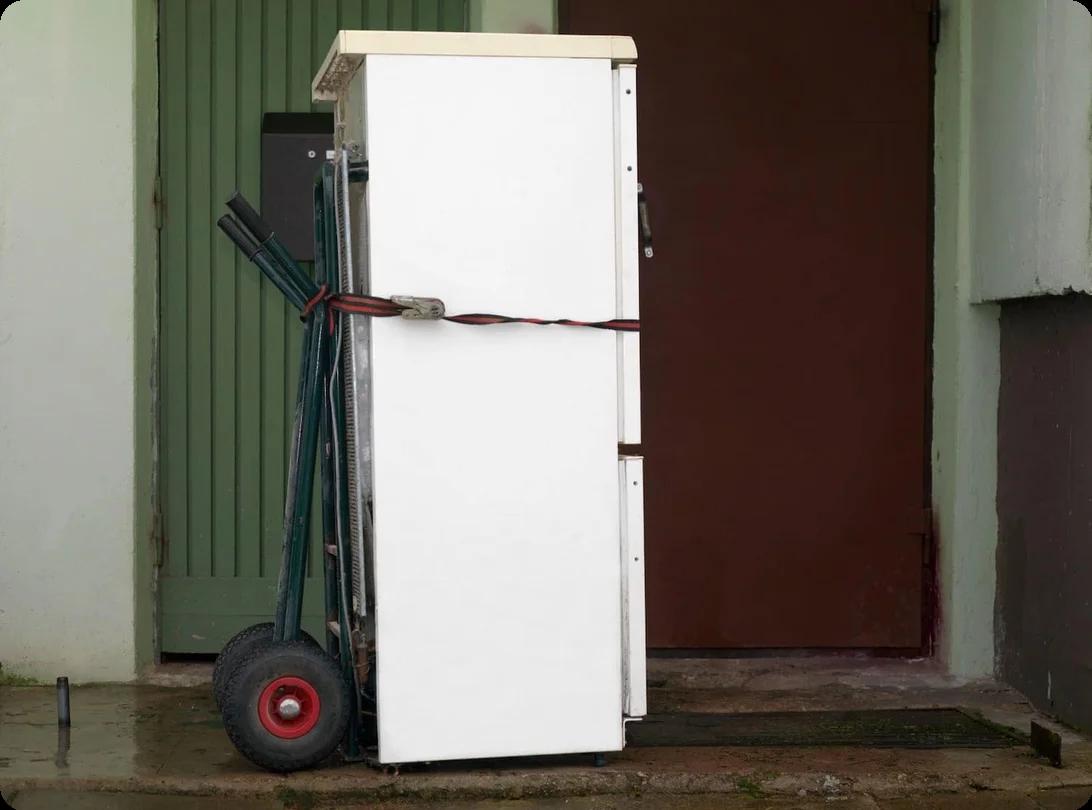
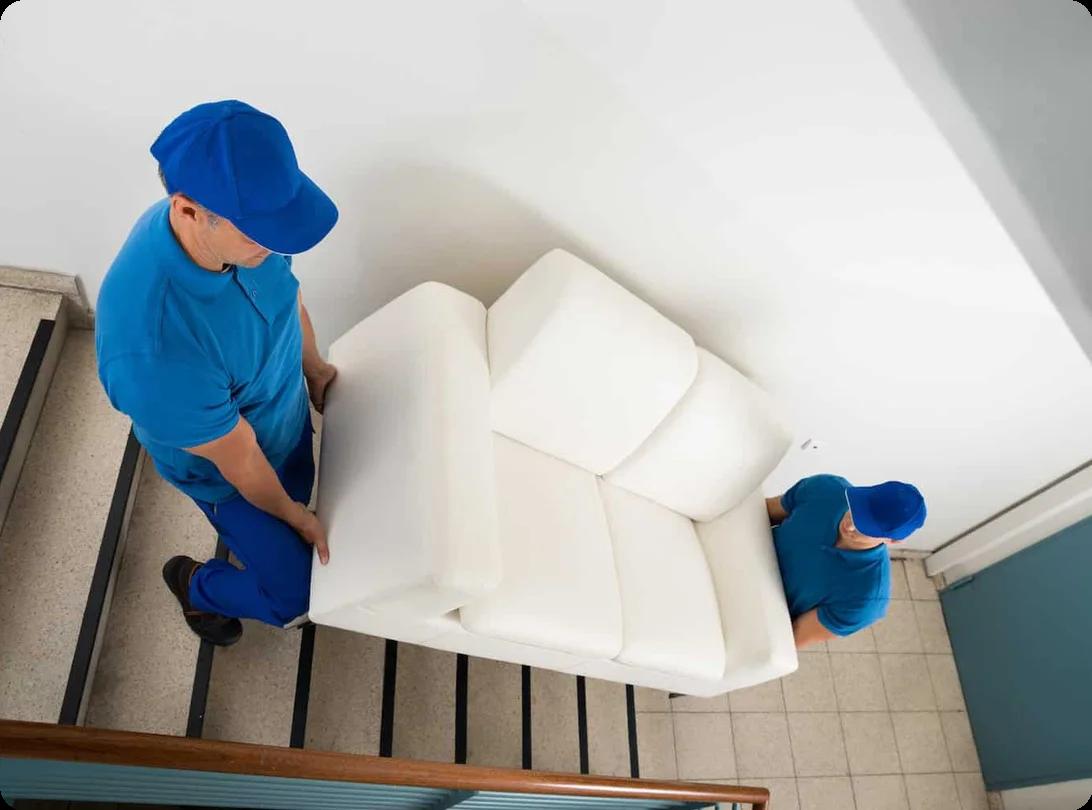
How to Move A Heavy Safe

a gray home safe sits open

You bought a safe to protect your most valuable possessions. But now that it is time to move, that steel box becomes less of an asset and more like a tricky problem to solve. Moving a safe is not like moving a couch or a dresser. It is dense, awkward, and unforgiving. One slip can damage your floors, your walls, or worse, your toes.

While many people assume their only options are to risk a DIY disaster or pay a fortune to a full-service van line, there is a middle ground. This guide will walk you through how to move a heavy safe the right way and show you how to find affordable help if you decide the job is too big to handle alone.


Last updated: Jan 23, 20268 min read
Karen Bodkin
Written byKaren Bodkin

Key Takeaways

  • Safes are dense, awkward, and unforgiving: they can weigh 100-1,000+ lbs and easily damage floors, walls, or injure you
  • Essential equipment: heavy-duty appliance dolly, moving straps, plywood for stair protection, and floor pads
  • Step-by-step: empty contents, plan the route, protect surfaces, strap to the dolly, and move slowly with at least one helper
  • Stairs are the danger zone: never move a heavy safe down stairs alone; use a stair-climbing dolly or call labor-only pros
  • Hire HireAHelper labor-only movers: for anything over 300 lbs, multi-floor moves, or when the route involves tight turns — far cheaper than full-service and safer than DIY
Thomas O'Sullivan
Author

Thomas O'Sullivan

Thomas O'Sullivan is the Senior Manager of Service Operations at Porch Moving Group, where he oversees the post-booking customer experience for HireAHelper. His expertise is the part of a move most people never see — the logistics, coordination, and accountability that turn a booking into a finished move.

Thomas has spent six years in the moving and relocation industry, starting in corporate relocation and long-distance logistics before stepping into his current role. He's supported more than 130,000 moves across local labor, full-service, commercial, and long-distance work — experience he draws on to make sure HireAHelper content reflects how moves actually go.

Why Moving a Heavy Safe Is So Difficult

If you have ever tried to nudge a safe with your foot, you know the problem immediately: they’re both heavy and extremely dense.

Safes are designed to be impenetrable and immovable. They have a low center of gravity and a small footprint, which means all that weight is concentrated in a tiny area. This makes them incredibly difficult to tip and balance on a dolly. If a safe starts to fall, you can’t just catch it like you would a mattress. It will crash through whatever is in its path.

Essential Equipment and Tools

Do not try to move a safe with a standard lightweight hand truck you got at a home improvement store. It will likely buckle under the weight. To do this without hurting yourself or your house, you need the right gear.

  • Heavy-Duty Appliance Dolly: This is non-negotiable. You need a rental-grade dolly with straps specifically designed for heavy appliances.
  • Moving Blankets: You need to wrap the safe completely to protect its finish and your door frames from scratches and dents.
  • Heavy-Duty Straps: These secure the safe to the dolly. Relying on gravity is not enough.
  • Work Gloves: When handling something as heavy as a safe, you need a good grip. Sweaty hands on smooth steel is a recipe for disaster.
  • Floor Protectors: Masonite, plywood, or thick cardboard can protect hardwood or tile from cracking under the weight of the dolly wheels.
  • Steel-Toe Boots: If you have them, wear them. If not, wear the sturdiest close-toed shoes you own.

Step-by-Step DIY Safe Moving Process

Once you secure the right gear, you need to secure the right people. Please do not try to move a safe by yourself. You need at least two strong friends or family members to help lift, spot, and steer. We know the preparation and careful maneuvering described below might add some time to your schedule, but rushing is how accidents happen. These steps might feel slow, but they are necessary to keep your move smooth and injury-free.

1. Empty and Secure the Safe

Never move a safe full of stuff. It adds unnecessary weight, and loose items can damage the interior mechanisms. It’s always best to remove everything you’ve stored inside the safe and move those items separately.

Once your safe is empty, close the door and lock it. Wrap the safe in moving blankets and tape them securely so they don't slide off.

2. Plan Your Route

a woman uses a yellow measuring tape to measure a doorway's width

Before you start lifting anything, walk the path you’ll be taking from the safe to the truck and measure every doorway as you go. If any spot looks like it’s going to be a tight squeeze, you need to know that now, not when you’re wedged in the frame with a big and heavy safe. You should also clear away any rugs or tripping hazards.

3. Load it onto the Dolly

This tends to be the trickiest part, so take it slowly. Have your helpers tilt the safe slightly to one side so you can slide the dolly toe plate underneath. You might need to rock it gently to get it in place. Once the safe is on and secure, strap it to the dolly as tightly as possible.
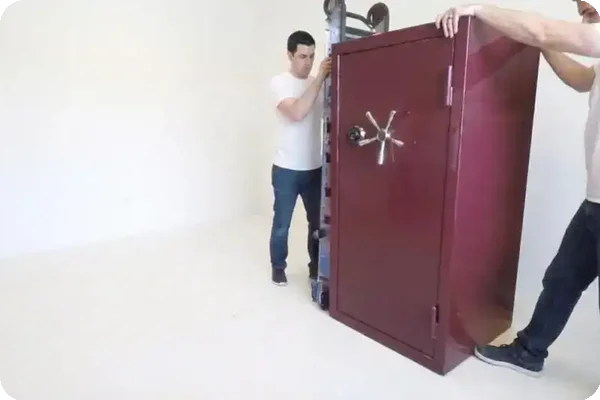
two men load a safe onto a dolly

4. The Tilt and Roll

Tilt the dolly back so the weight is balanced over the wheels. You want to find the "sweet spot" where the safe feels relatively light when you’re moving the dolly. Don’t rush as you start to move the safe. Have one person steering the dolly and two helpers spotting you on the sides to prevent tipping.
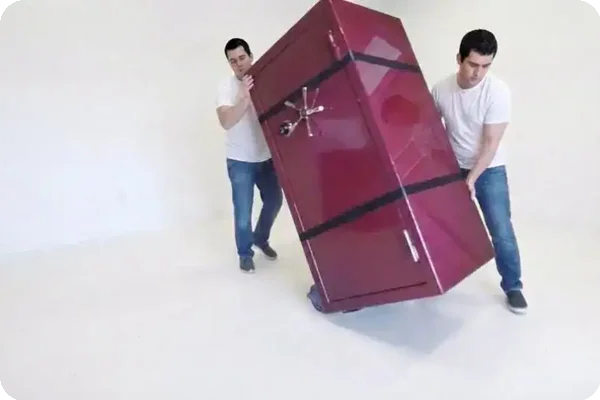
two men start moving a safe using a dolly and moving straps

5. Loading the Truck

If you are using a ramp, this is where you need both momentum and control. The person with the dolly should pull the safe up the ramp while walking backwards as the helpers push from below. Never be on the downhill side of a heavy safe without a spotter. Once it is in the truck, strap it securely to the wall rails. You definitely don’t want one slipping off or unlatching in the middle of a drive.

When to Hire Labor-Only Movers Through HireAHelper

Sometimes, DIY just isn't worth the risk. If your safe weighs more than 500 pounds, or if you have to navigate something like a spiral staircase, you should really consider professional help.

This doesn't mean you need to hire a full-service moving company to do everything for you. Instead, you can use HireAHelper to find labor-only movers. These are pros who show up, do the load and unload your safe, and then head out. You rent the truck and do the driving, while they handle the heavy lifting for you.

“[Don't] overlook the terrain outside your home. Soft grass or loose gravel can bog down a heavy load like a safe instantly...[so lay] down sheets of plywood to create a smooth, stable walkway from your front door to the truck.”

When you search on HireAHelper, look for crews that specifically mention moving heavy items safely. Ask them if they have experience with gun safes or large vaults. You should also be clear about the weight. Most crews can handle standard safes, but if you have one that’s 1,000 pounds, they need to bring special equipment.

DIY vs. Hiring Through HireAHelper: A Comparison

Deciding between a DIY move and hiring help comes down to balancing your budget against your time, effort, and physical limitations. Doing it yourself is the cheapest route on paper, but the risk of injury is higher. If you slip while moving a 600-pound safe, the medical bills will cost a lot more than hiring a helper would have.

Full-service movers offer a totally hands-off experience, but you pay a premium for it. You also lose control over the schedule, often waiting on the company’s delivery windows. Labor-only movers hit the sweet spot. You get professional muscle for the dangerous lifting, but you keep control of the truck, the timing, and the price tag.

Safety is the final piece of the puzzle. Professional helpers bring their own equipment, have plenty of experience lifting very heavy furniture, and know how to maneuver awkward items without scratching floors. When you DIY, you have to rent the dolly, buy the straps, and hope everything holds. Hiring labor-only movers lets you offload that risk without draining your bank account.

FeatureDIY MoveLabor-Only Movers (HireAHelper)Full-Service Movers
CostLowModerateHigh
EffortHeavy physical exertionZero heavy lifting for youZero effort
Risk of InjuryHighLow (Pros handle it)Low
EquipmentYou must rent/buyPros usually bring toolsPros bring everything
ControlTotal controlYou manage the truck/scheduleThe company manages the schedule

Moving a Heavy Safe in Tight or Challenging Spaces

Navigating an open living room is one thing, but hallways and corners require a solid game plan. If you’re dealing with tight turns, measuring the width alone often isn't enough. You should check the diagonal depth of the safe to ensure you have enough room to pivot. In some older homes, you might even need to temporarily remove a door to gain that crucial extra inch of clearance.

Stairs present the biggest safety challenge during a move. Because balancing hundreds of pounds on an incline is so risky, we strongly recommend hiring professionals if your move involves a flight of stairs. If you do choose to handle it yourself, you must take it slowly and never try to do it on your own. You and whoever’s helping you should move one step at a time and ensure the dolly wheels rest fully on each tread before proceeding.

Finally, don't overlook the terrain outside your home. Soft grass or loose gravel can bog down a heavy load like a safe instantly. A great trick is to lay down sheets of plywood to create a smooth, stable walkway from your front door to the truck.


Mastering Your Heavy Safe Move with Confidence

Moving a heavy safe is one of those tasks where "good enough" isn't safe enough. You need the right plan and the right tools.

If you have a straight, simple path and some friends or family to help you, the DIY method can save you money. But if you are staring at a flight of stairs and feeling nervous, remember that professional help is affordable. Booking a couple of hours of labor on HireAHelper can ensure your safe gets to its new home without putting a hole in your drywall or your budget.


Frequently Asked Questions

Recent Articles

Two people using moving straps to safely lift a heavy dresser in a living room

How to Move Heavy Furniture Up Stairs: A Heavy Furniture Moving Guide

Loading & Unloading

If you've ever tried to figure out how to move furniture up stairs, you know that it can be a minefield of injuries and scratched walls. But you can maneuver those tight spaces and awkward corners without injuring... Read More

A four-wheeled furniture dolly with a padded top, ready to support heavy furniture during a move

What’s a Furniture Dolly, and How Do I Use It for Moving?

Loading & Unloading

Your first glance at a furniture dolly might evoke memories of middle school gym class, where kids sat on scooter boards and pushed themselves after a ball. But this humble tool can make a big difference when... Read More

a wooden outdoor barrel sauna

Take the Heat with You: How To Move Your Sauna

Loading & Unloading

A sauna is an expensive investment, so it makes sense that you want to hold on to it when you’re planning a move. Plus, there's nothing like heat to soothe sore muscles after a move.

The U.S. sauna market is still... Read More

A riding lawn mower being securely strapped onto a utility trailer for transport to a new home

How to Transport a Riding Lawn Mower

Loading & Unloading

Riding lawn mowers make yard work faster and easier, but they’re also bulky, heavy, and awkward to move. Whether you’re selling your mower or relocating with it to a new home, knowing how to transport a riding... Read More

A homeowner unpacking moving boxes in a new living room with furniture being arranged on moving-in day

How to Unpack After Moving Like the Pros

Loading & Unloading

Lots of people put off unpacking after a move, but transforming your space into a place you can rest and relax instead of staring at all those boxes and furniture is an important final step. Learning how to unpack... Read More

Movers using a ramp to unload boxes and furniture from a moving truck into a home on moving day

How to Best Unload Your Moving Truck

Loading & Unloading

You might think that getting everything off the truck is going to be easier than getting everything onto it. But unloading your moving truck still requires planning to make the most of your time, prevent injuries,... Read More