How To Pack and Protect Your Books During a Move

a man stands contemplatively in front of a full bookshelf that takes up one wall of a room

If you’re among the 25% of Americans who own at least 100 books, you know how challenging it can be to decide how to pack books for moving. Your beloved volumes are vulnerable to moisture, and even a small collection can become surprisingly heavy.

In general, the best way to pack books is to load them flat or spine-down in small, sturdy boxes, reinforce seams with tape, and fill the extra space.

Of course, packing books isn't always that simple. As moving pros (and fellow book lovers), we're here to provide packing tips that protect your books, prevent injuries, and save space in your moving truck. In this guide, you'll learn how to pack, organize, and store every type of book safely — from heavy hardcovers to fragile collectibles.


Last updated: Sep 12, 202511 min read
Melanie Morris
Written byMelanie Morris

Key Takeaways

  • Books are heavier than you think: always pack them in small (1.5 cubic ft) boxes to keep weight manageable
  • Three packing methods: spine-down flat, upright with spines facing the box wall, or stacked on their sides — never spine-up
  • Protect rare or sentimental books: with acid-free tissue paper, individual wrapping, and a separate labeled box
  • Fill gaps: with packing paper or soft items so books don't shift in transit and damage their covers
  • Storage tip: if books are going into storage, choose climate-controlled units and use silica gel packs to prevent moisture damage
Melanie Morris
Author

Melanie Morris

Melanie Morris is an editor and writer at HireAHelper, where she uses observational skills honed from over 7 years of experience (and too much detective fiction) to demystify moving and make sure typos remain at a minimum.

Moving from the southwest up and down the west coast and back again has also given her plenty of firsthand moving experience. Now, she makes sure that even if you're just moving down the block, you have the accurate tips and know-how to make your relocation a breeze.

Supplies You’ll Need to Pack Books for a Move

One of the best ways to save time on packing is to gather all your supplies first. With everything on hand, you can power through your library quickly without having to halt your momentum to go pick something up.

Supplies for packing books

  • Small, sturdy moving boxes and packing tape: When packing books, it’s better to use smaller boxes, since it’s much easier to overpack the larger ones to the point you can’t lift them safely. Buy or source free moving boxes that hold a max of 50 pounds for easy carrying.
  • Acid-free packing paper or kraft paper: Use paper to protect covers from scratches. Avoid newspapers because the ink can rub off and ruin the pages or cover of your books.
  • Silica gel: Add these packets to keep books dry by absorbing excess moisture and preventing mold or mildew.
  • Bubble wrap: Use to cushion rare, collectible, or antique books.
  • Tape, markers, and labels: Label boxes clearly for easier unpacking.
  • Plastic wrap or sleeves: Wrap individual books to keep out moisture.
  • Box filler: Use packing paper, packing peanuts, or even towels to fill the empty space. This prevents damage from the books knocking against each other or the walls of the box.

How to Pack Books for Moving Step-by-Step

Packing books is a little bit like a puzzle. You need to load boxes in such a way that the spines are safe, the books don't move, and the boxes aren't too heavy. Follow these steps to keep your collection safe and make packing easier on your back.

Step 1: Sort and Consolidate Your Books
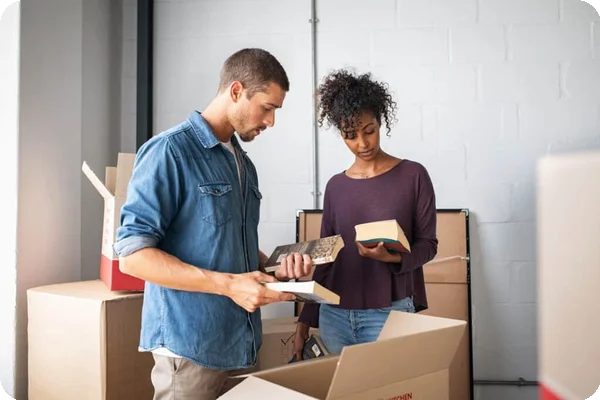
a couple looks over the books they're packing

Go through your library, and separate books into piles by different types like hardcovers, paperbacks, collectible books, textbooks, reference books, and children's books.

Sort through each pile, taking out any duplicates, books you don't want, or those that are too damaged to read. Getting rid of books makes packing and moving easier. The less you have to move, the faster and cheaper it is, no matter if you’re doing it yourself or if you're hiring movers.

What should you do with the extra books? Give them a good home by donating or selling them.

Places to donate books:

  • Libraries: Some libraries accept donated books. Just make sure to check their donation policies first.
  • Little Free Library: Check the library map to find a nearby book exchange, and drop off your books at any time.
  • Operation Paperback: This nonprofit organization helps you send paperbacks directly to active-duty troops, veterans, and military families.
  • Goodwill: This nonprofit organization offers educational, career, and community-based support to help people improve their lives.
  • Kids Need to Read: This group accepts like-new children's books, which they distribute to children around the country.
  • Better World Books: Better World Books sells donated books online and uses the funds to support literacy nonprofits.

Places to sell books:

  • Consignment stores: You'll get a percentage of the price when your books sell.
  • Online marketplaces: Use eBay and Amazon to sell books to customers around the world.
  • Half Price Books: This bookstore chain will buy books from you and has stores across the US.
  • World of Books: Download the World of Books app, and scan your books to get an instant purchase offer.
  • Used bookstores: Local used bookstores are often good places to sell your used books, and will sometimes have better offers than the national chains.

Step 2: Reinforce Your Boxes to Handle Weight

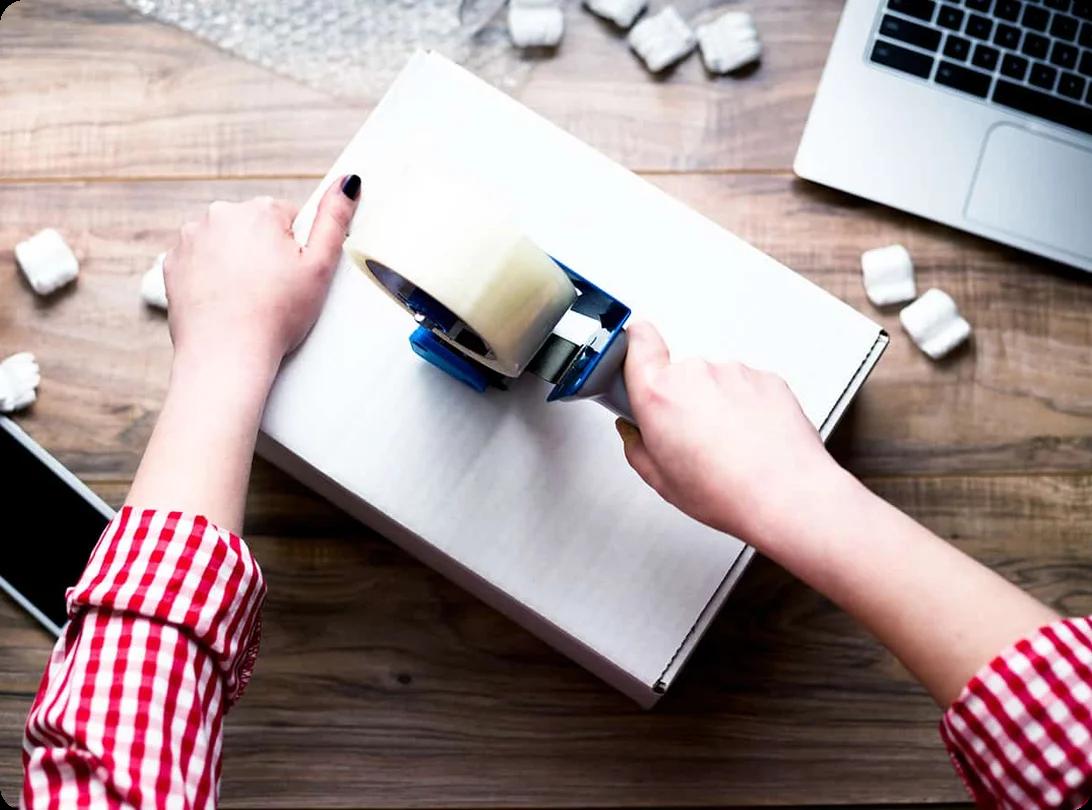
Before you start filling your boxes, use two or three layers of packing tape to reinforce all of the seams. Tape adds extra strength and helps the box hold the weight of your books.

If you’re packing extra-heavy books, put a thick piece of cardboard at the bottom for added support.
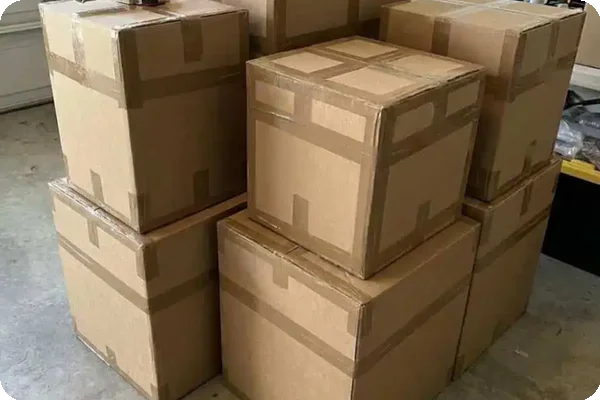
Reinforced cardboard moving boxes piled up

Step 3: Pack Books Flat or Spine-Down (Never Up)

When you're ready to pack your books into boxes, make sure you take the time to place them carefully. The spines are fragile, and the right orientation can prevent them from breaking. Packing them properly also protects pages, corners, and dust covers from damage.

Follow these quick tips:

  • Paperbacks: Pack them spine-down. Make sure they’re snug enough not to shift, but not so tight that their spines bend. Only add one layer per box to protect the pages.
  • Hardcovers: Pack them flat, with the heaviest books on the bottom and lighter ones on top. Avoid overloading the box because hardcovers can strain the seams of the box when too heavy.

Always test the weight of your book box as you fill it by lifting it gently from the bottom after adding a few books. If it feels heavy or strains your back or arms, remove a few books before sealing it.

Step 4: Fill Gaps Around Books
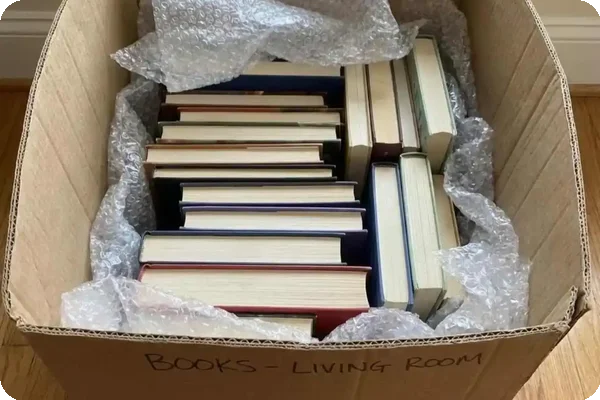
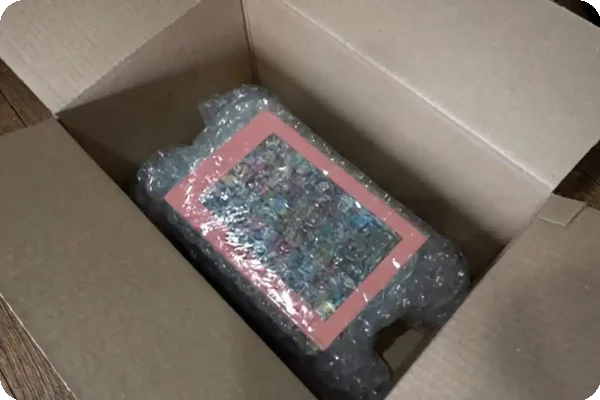
Box with bubble wrap inside of a cardboard moving box

Once a box has enough books, fill the extra space with something lightweight and cushioning. You can use packing paper, but don't be afraid to get creative with scarves, towels, and even pillows. They add plenty of padding, and you won't have to use up another moving box to pack them.

Not sure if you have enough filler? Give the box a gentle shake. If the books shift around, add more. Too much movement can damage your books and throw your movers off-balance, so it's always better to be safe.

Step 5: Label Clearly for Unpacking

While the box is still open, write a label that tells you what's inside. Depending on how you're packing, you could label boxes by category or room. A box labeled "living room paperbacks" tells your movers exactly where it should go.

“You'll want to avoid regular packing paper [when packing antique books] because it contains acids that can cause yellowing or break down the cover.”

While you have a marker handy, write "HEAVY BOOKS" on every box. It's a nice reminder to lift carefully, so you don't accidentally throw your back out.

Step 6: Load In Your Car or Moving Truck Strategically

Even when you pack boxes strategically, your books will still be heavy. Try to put them near the back of your moving truck on the bottom to balance the load. Then, you can stack lighter items on top.


How to Pack Heavy Books for Moving

The best way to pack heavy books for moving is to use split loads, where you mix books with lighter household items like linens, towels, or clothing. Instead of filling a box entirely with books, place a few on the bottom, add a layer of crushed packing paper, and fill the rest with soft, lightweight items.

However, this strategy takes some planning. You’ll need to figure out how many boxes you need and find items that fit snugly in the extra space. Plus, you need to avoid placing anything fragile on top of the books.

You should also remember to balance the weight evenly so the box doesn’t tip or split.

Pro tip: Make sure none of your boxes are heavier than 40 pounds. Any more than that and the risk for back, knee, and other injuries goes up.

How to Pack Different Types of Books

If you have eclectic book tastes, the packing process can be a little more complicated. For maximum protection, your comic books need to be packed differently from your leather-bound antique books. Before you start packing, come up with a plan for each book type and follow these tips on how to handle them:

Packing Paperback Books

Knowing how to pack paperback books for moving is a must, since they’re very common in any book-lover's collection, and they can deform pretty easily. To prevent that, it's usually best to stack them with the spine facing down. You can also stack them flat with the spines facing each other.

If you're expecting rain on moving day, you might want to pack in plastic bins. Water can soak through cardboard boxes quickly, putting your paperbacks at risk. Another good option is to wrap books in plastic wrap or plastic sleeves to keep them dry. Just make sure to keep it loose so the plastic doesn't trap too much moisture.

Comic Books & Collectibles

Comic books and collectibles can be pretty delicate, so it's worth giving them some extra attention.

First, put each book in a plastic sleeve to prevent the pages from tearing or slipping out of place. Then, slip in a backing board or put a layer of cardboard between each book to keep it flat. For collectibles, you might want to use specialized rigid cardboard boxes made specifically for transporting comics.

As you pack the books into a box, make sure the pages are flat. If they're even a little bit off, the weight on top can cause permanent damage to the spine. Add lots of padding to make sure the books don't shift around and catch the pages.

A bubble-wrapped comic book inside of a cardboard moving box

Rare or Antique Books

Your rare and antique books are probably the most fragile part of your collection. Before you pack them, wrap each one in several layers of acid-free paper. Then, wrap it in a layer of bubble wrap to give the edges and spine some extra cushioning.

You'll want to avoid regular packing paper because it contains acids that can cause yellowing or break down the cover.You can also consider investing in custom acid-free boxes.

“Before you start filling your boxes, use two or three layers of packing tape to reinforce all of the seams. Tape adds extra strength and helps the box hold the weight of your books.”

If you're packing books in cardboard boxes, make sure the seams are taped to keep out moisture, or skip the cardboard altogether and pack them in plastic bins instead. Either way, make sure there's some airflow to prevent condensation, and toss in some silica gel packs for good measure.

Rare books need consistent temperature and humidity, so you might want to move them separately with a specialized carrier. If possible, carry them personally.


Common Mistakes When Packing Books

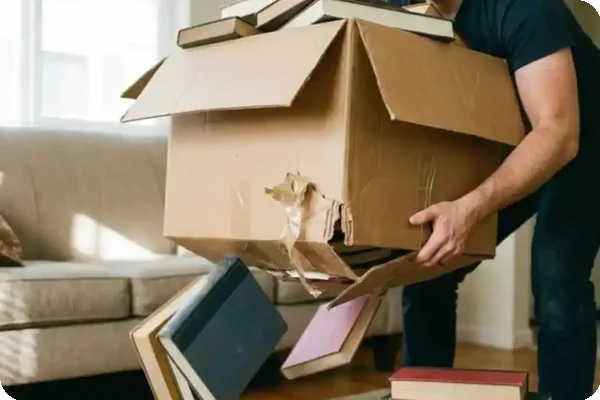
Damaged moving box breaking open and dropping books during a home move

Everyone makes mistakes when they're learning how to pack books for moving. That doesn't mean you have to sacrifice your favorite novels, though. To save time and energy (and broken spines), avoid these common packing pitfalls:

  • Using large boxes: It might seem smart to choose a box that holds a lot of books, but the weight can add up quickly and break the cardboard. Heavy boxes also increase your risk of an injury.
  • Overfilling boxes: Books tend to warp under pressure, so it's important not to put too much weight on top of them.
  • Forgetting to label boxes: Without labels, it's easy to forget what books are where. There's nothing more frustrating than digging through boxes and ruining your packing job to find a single book.
  • Not reinforcing box bottoms: Have we mentioned that books are heavy? Even if you're packing carefully, they can come crashing through an unreinforced seam without warning.

How to Pack Books for Moving and Storage

Sometimes, books need to sit in storage during a move or when you need to free up space. If they're not going straight to their new home, you'll need to take a few extra precautions to keep them safe.

  • Manage temperature and humidity: If you’re storing your books, choose a temperature-controlled unit that stays below 70 degrees. Humidity is tough on books, so it should be relatively dry — 30% to 55% humidity is ideal. If you’re storing them elsewhere, you can track moisture levels with a wireless humidity sensor and use a dehumidifier as a backup during humid months.
  • Use plastic bins: Plastic bins offer more crush-resistance and moisture protection than cardboard. Just make sure your books are completely dry before packing. Even a small amount of mildew can get out of control quickly.
  • Keep boxes off floors and away from walls: Use pallets to lift your boxes off the floor, and make sure they're not touching the walls. The extra space allows air circulation and prevents critters from getting at your beloved books.

Pro Tips for Packing Books for Your Move

By now, you know almost everything about how to pack books for moving. Use these pro tips to make the process more comfortable and convenient:

  • Think about size: While you're sorting books, stack them in piles based on size. Packing stacks of similarly-sized books reduces wasted space, so you can save on filler material.
  • Organize in advance: Pack your books by shelf or section. Mountaineering books go in one box, and travel books go in another. It's a lot easier to unpack and set up your new bookshelves when everything's organized already.
  • Pack in suitcases: Give your back a break by loading your books into suitcases. The wheels and telescoping handles can save you a lot of heavy lifting.
  • Put boxes on a table: When your boxes are sitting at waist height, you don't have to bend over repeatedly to add books. It'll also be easier to pick up a full box from the table than from the floor when you're ready to move it.
  • Leave space near the handles: If your boxes have cut-outs for handles, use packing material to leave a small gap. If the books are pushed too close to the sides, you won't be able to slip your fingers inside.

Whether you're moving a single bookshelf or a full home library, the right packing techniques can keep your books safe. Start early and go slowly, and you'll be ready to load when the moving truck arrives.


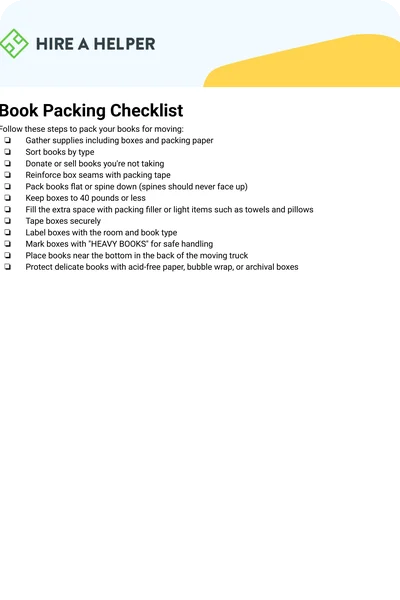
Book Packing Checklist


HAH253_PDF-1_cover.webp

FAQs

Recent Articles

A person frantically packing boxes during a last-minute move with a calendar showing the urgent move date

Last Minute Moving: Our Checklist for Getting Out in a Hurry

Packing

Planning to move soon? Like, really soon? Last-minute moving can cause panic, no matter the reason. Maybe an emergency happened, and you have to relocate quickly, or you're offered an exciting job opportunity that... Read More

Kitchen drawer organizer filled with utensils being prepared for packing into a moving box

How Do I Pack Kitchen Utensils?

Packing

Unlike your couch or dresser with four tiers of drawers, kitchen utensils and silverware are small might seem like they're easy things to move to your new home. They're small, light, and typically not very... Read More

an image of a queen mattress on a wooden floor

Packing a Queen Mattress: The Plan vs. Reality

Packing

Every day, people search for advice on moving a mattress because they are bulky, awkward, and easy to damage. So if you’re searching for answers on how to get yours out the door, you’re not alone.

Knowing how to... Read More

A woman sets down an item into a box. The angle of the shot is from the bottom of the box pointing upwards, so it looks as through the woman is reaching towards the camera

What Should You Pack First When Moving?

Packing

The short answer to what you should start packing first is to pack things you don’t use daily. If it can sit in a box for a few weeks without disrupting your routine, it can be packed early. Items in garage... Read More

College student moving into a dorm

How to Pack for College: Complete Dorm Packing Guide

Packing

Getting ready for your first year is thrilling, but it is so easy to bring way too much stuff. To pack for college efficiently, double-check your dorm’s rules, coordinate with your roommate, and follow a... Read More

A woman holding multiple rolls of clear packing tape and a tape dispenser

The Best Type of Packing Tape to Use When Moving

Packing

If you browse office and craft store aisles, you'll find dozens and dozens of tape options. While they all serve a purpose, most aren't ideal for packing. The best packing tape to use when you move is a product... Read More