You should also talk about whether you’ll keep everything separate or open one shared household account for bills. Before applying for a lease, be honest about anything that could affect the application or monthly budget, including debt, credit, car payments, child support, or other recurring costs.
Finally, decide how you’ll handle surprise expenses. Even a small shared buffer can make it easier to deal with a broken appliance, vet bill, or urgent repair without turning it into a bigger argument.
Discussion #2: Household Division: Chores, Cleaning Standards, Maintenance
Sharing a home also means sharing the everyday stuff: dishes, laundry, groceries, trash, cleaning, and all other little day-to-day tasks. Talking about it now can help keep one person from feeling like they’re doing more than their share later.
Start with a simple chore plan. You might split tasks based on what each person prefers, what fits your schedules, or what feels easiest to rotate. It also helps to talk about the mental load, like who notices when you’re out of toilet paper or when the bathroom needs a real clean.
You should also talk about what “clean” means to each of you. One person’s cluttered might be the other person’s outright filthy. Dishes in the sink or shoes by the door can become small daily frustrations if you never talk about them.
If you rent, decide who will contact the landlord when something needs fixing. If one person owns the home, talk about what you’ll handle together and what still falls to the homeowner.
Discussion #3: Lifestyle & Boundaries: Schedules, Space, Guests
Moving in together does not mean you have to do everything together. A good shared home still gives both people room to rest, work, have quiet time, and feel like themselves. Talk about things like sleep, noise, quiet time, and what you both need after a long day. It is much easier to say, “I need a little time to myself after work,” now before anyone takes it personally.
You should also discuss what daily life will actually look like. That might include sleep schedules, morning routines, work-from-home needs, room temperature, noise, weekends, and how much alone time each of you needs.
Guests are another thing to sort out early. Some people love a full house and open-door policy, while others don’t appreciate friends and family coming over unannounced. Talk about what feels okay for weeknight visits, family staying over, and how long is too long for someone to camp out on the couch.
Discussion #4: Move-In Logistics: Lease and Movers
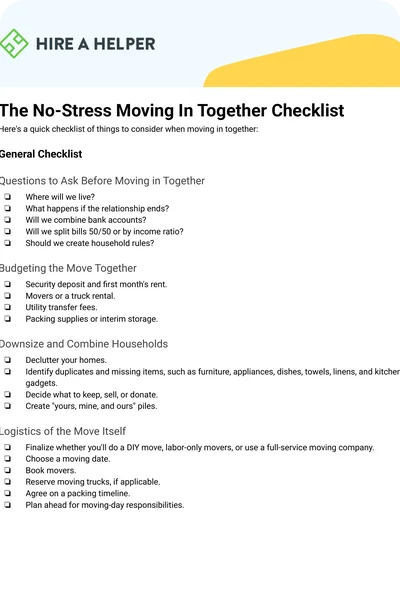
Lastly, figure out the move itself. You’ll want to know whose name is going on the lease, what you’ll need for the application, and what would happen if one of you had to move out before the lease was over. It’s not a fun thing to bring up, but it’s better than trying to make that decision when things are already stressful.
You’ll also need to talk about the moving budget. Starting 4 to 6 weeks before move day can make the process feel less rushed and give you time to shop around. You may decide to hire full-service movers, rent a truck, or book labor-only movers to help with loading and unloading. Labor-only help can be a good option if you want help with the hardest parts, like loading and unloading. Labor-only help can be a good option if you want help with the hardest parts of the move while keeping more control over the total cost.



 Karen BodkinSep 01, 2026