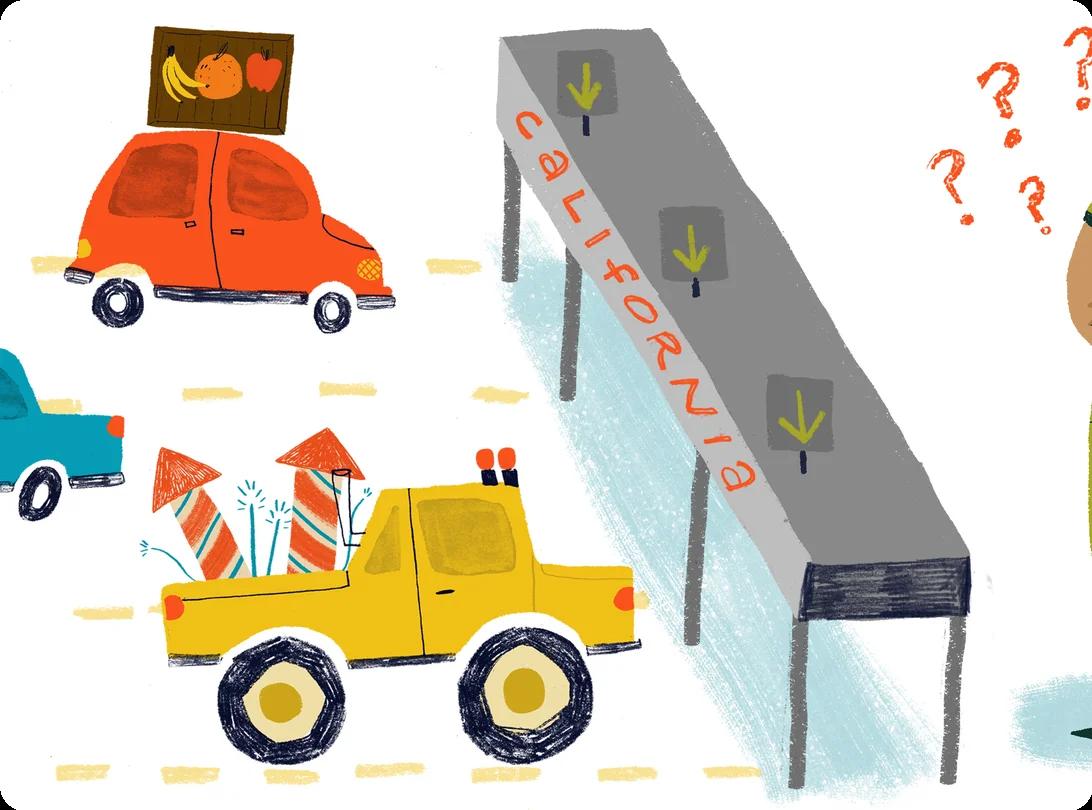
Can You Legally Transport Marijuana When You Move?
The short answer is that it depends on your destination. You can usually transport marijuana within a state where it’s legal. However, you cannot take it across state lines. Even if you’re preparing for a long-distance move between two states where you can legally carry marijuana, it’s still not allowed.
Once you cross state lines, you enter federal jurisdiction. Marijuana remains a Schedule I drug, meaning no legal use is recognized under federal law, not even for medical purposes. This covers every form of the product, including flowers, edibles, concentrates, and vapes, as long as it contains more than 0.3% THC by dry weight.
2026 Marijuana Legalization Status by State
As of 2026, cannabis laws vary widely by state. Most states fall into 4 distinct categories: fully legal, medical use only, decriminalized, or completely illegal. Don’t confuse decriminalized with fully legal. Decriminalized usually means you pay a fine instead of going to jail for small amounts.
| State | Marijuana Status |
|---|
| Alabama | Legal for medical purposes (partial) |
| Alaska | Legalized |
| Arizona | Legalized |
| Arkansas | Legal for medical purposes (partial) |
| California | Legalized |
| Colorado | Legalized |
| Connecticut | Legalized |
| Delaware | Legalized |
| District of Columbia | Legalized |
| Florida | Legal for medical purposes (partial) |
| Georgia | Legal for medical purposes (partial) |
| Hawaii | Decriminalized / Legal for medical purposes (partial) |
| Idaho | Fully illegal |
| Illinois | Legalized |
| Indiana | Legal for medical purposes (partial) |
| Iowa | Legal for medical purposes (partial) |
| Kansas | Fully illegal |
| Kentucky | Legal for medical purposes (partial) |
| Louisiana | Decriminalized / Legal for medical purposes (partial) |
| Maine | Legalized |
| Maryland | Legalized |
| Massachusetts | Legalized |
| Michigan | Legalized |
| Minnesota | Legalized |
| Mississippi | Decriminalized / Legal for medical purposes (partial) |
| Missouri | Legalized |
| Montana | Legalized |
| Nebraska | Decriminalized / Legal for medical purposes (partial) |
| Nevada | Legalized |
| New Hampshire | Decriminalized / Legal for medical purposes (partial) |
| New Jersey | Legalized |
| New Mexico | Legalized |
| New York | Legalized |
| North Carolina | Decriminalized |
| North Dakota | Decriminalized / Legal for medical purposes (partial) |
| Ohio | Legalized |
| Oklahoma | Legal for medical purposes (partial) |
| Oregon | Legalized |
| Pennsylvania | Legal for medical purposes (partial) |
| Rhode Island | Legalized |
| South Carolina | Fully illegal |
| South Dakota | Legal for medical purposes (partial) |
| Tennessee | Legal for medical purposes (partial) |
| Texas | Legal for medical purposes (partial) |
| Utah | Legal for medical purposes (partial) |
| Vermont | Legalized |
| Virginia | Legalized |
| Washington | Legalized |
| West Virginia | Legal for medical purposes (partial) |
| Wisconsin | Legal for medical purposes (partial) |
| Wyoming | Fully illegal |
Always double-check your local laws before transporting marijuana, even if you’re still within state lines. Laws change frequently, and penalties vary by location.
Planning to transport alcohol during your move as well? This guide goes into how to transport it safely and in compliance with both state and federal laws.
State vs. Federal Law and the Penalties
Even if your state allows marijuana, there might be some rules around transporting it. If you run afoul of those regulations but you stay within your state, the penalty usually comes down to the amount you’re carrying, your record, and why you got stopped. You might just get a warning for a minor issue.
However, the moment you cross state lines, it becomes a federal matter. If you get caught someplace like a state border or on an interstate highway while transporting marijuana, it’s treated as federal drug trafficking. This carries penalties of up to 5 years in prison and fines of $250,000 for a first offense under 50 kilograms. The Drug Enforcement Administration (DEA) applies these serious penalties even if the product is just for personal use.



 Lauren ThomasAug 24, 2026


.png&w=64&q=75)