If your washer has a drain pump filter, empty it before moving. Coil up the power cord and hoses, and use zip ties or tape to keep them neat and out of the way.
While prepping a washer is a little different from packing a box, the same safety basics apply, so follow the tips in our guide on how to take care of your back while you pack to stay injury-free.
2. Protect Your Floors
A washing machine is heavy enough to scuff hardwood or crack tile, so you need to do something to protect your floors. Put furniture sliders under each corner of your machine if you need to move it a short distance, or lay down cardboard sheets to make a path to your dolly. If you’re using an appliance dolly, bring it close to the washer so you don’t have to drag it far.
A shoulder harness can help on stairs or uneven floors, but it’s best for experienced movers. For most people, using a moving dolly and having a helper is the safest choice.
3. Secure the drum and transit bolts

Inside every washer is a large drum that’s held by shock absorbers. When you move the machine, those parts can shift and break if they aren’t locked down. That’s why you need transit bolts to secure the drum for transport.
Most front-loaders need four bolts that screw into the back of the machine. You can find them in your original manual or order replacements online. Skipping this step can cause bearing damage, which often means an expensive repair.
4. Wrap the washer with moving blankets
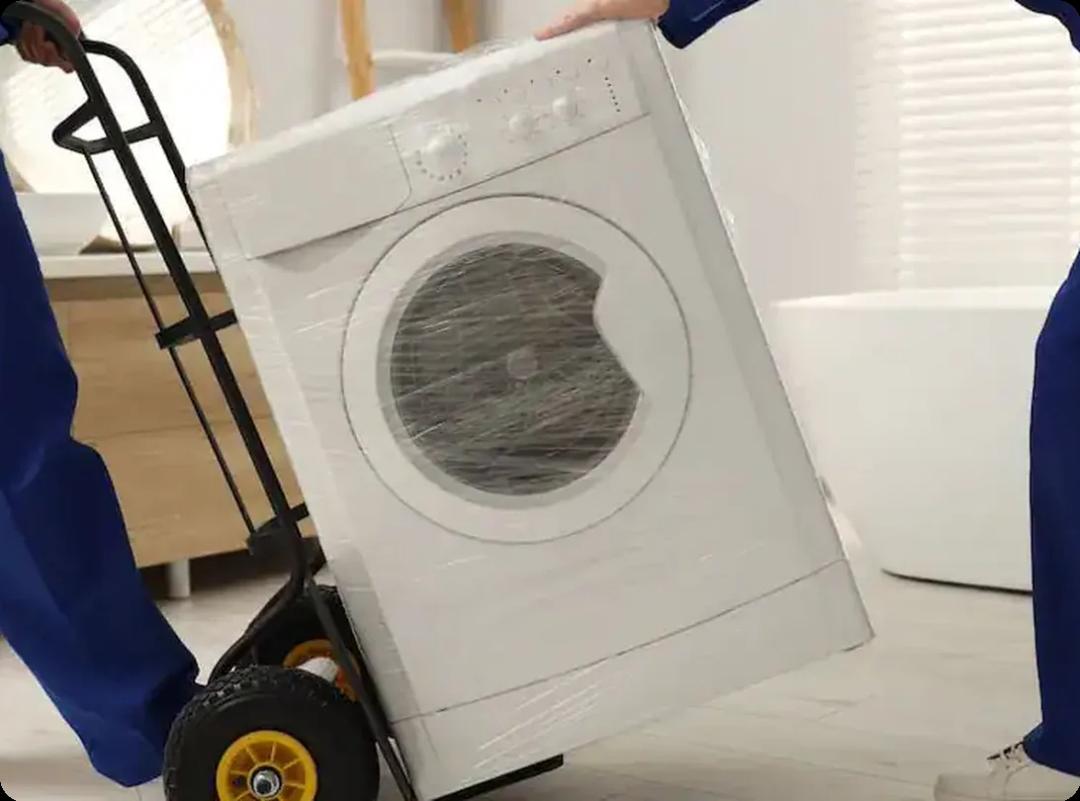
Once the drum is locked, cover the washer with moving blankets to prevent scratches and dents. Wrap the sides, corners, and especially the control panel, then secure the blankets with stretch wrap or tape. Make sure you avoid touching any rubber seals.
If you’re not sure where to find quality moving blankets, here’s a quick guide on why they matter and where to find them.
5. Use an appliance dolly to lift the machine
An appliance dolly is taller than a standard dolly and comes with heavy-duty straps that hold your washer upright and stable, so it’s perfect for this kind of job. First, slide the dolly’s base plate under the washer, then gently tilt it back just enough for the weight to rest on the wheels.
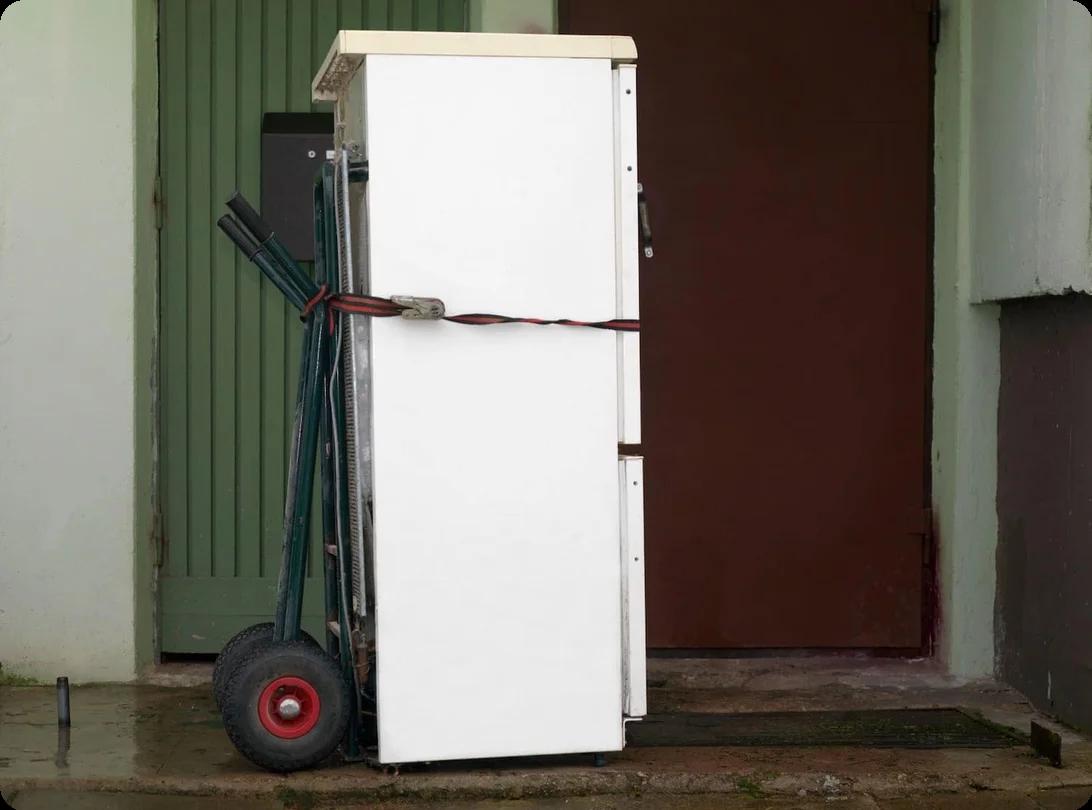
For balance, you should place one strap above the drum’s centerline and another below it. Tighten both until the washer feels secure but not squeezed tightly. This keeps the weight centered and prevents shifting while you move.
Here’s a quick reference for the tools that make this step easier:
| Tool | Use | Why It Helps |
|---|
| Appliance dolly with ratchet straps | Lifting and rolling the washer upright | Keeps the machine balanced and stable without overexertion |
| Moving blankets | Wrapping the sides and control panel | Prevents scratches and dents while loading |
| Corner guards | Placing on tight doorways or hallways | Protects walls and trim from dings |
| Furniture sliders | Sliding the washer into position before lifting | Reduces friction and protects flooring |
| Valve caps | Sealing disconnected water lines | Prevents drips and rust stains |
| Plug tie or zip tie | Securing the power cord and hoses | Keeps cords neat and out of the way |
| Stair climber dolly (optional) | Handling multi-level homes | Adds traction and control for stairs |
| Packing tape or stretch wrap | Securing blankets or straps | Keeps protective materials snug during the move |
Doorway Fit Guide
Before you start rolling the washer toward the truck, make sure it can actually fit through your halls and doorways. Getting it prepped and on a dolly is one thing, but tight corners can still slow you down. Measure each doorway ahead of time so you know what kind of clearance you have. The table below gives a quick look at how common washer types handle a standard 30-inch doorway. If you’re doing a self-move, this is a good time to review how to plan a DIY move safely.
| Washer Type | Average Width | Average Depth | Fits Through 30″ Door? | Notes |
|---|
| Compact / Apartment | 23–25″ | 24–26″ | ✅ Yes | Easiest to move through narrow doors |
| Standard Top-Loader | 26–27″ | 25–28″ | ✅ Usually | May need to angle slightly |
| Standard Front-Loader | 27–29″ | 30–34″ | ⚠️ Tight Fit | Measure carefully; remove the door if needed |
| Large-Capacity Front-Loader | 29–30″ | 33–36″ | ❌ Often No | Remove the washer door or trim if needed |
6. Tilt and roll slowly and keep the machine upright.
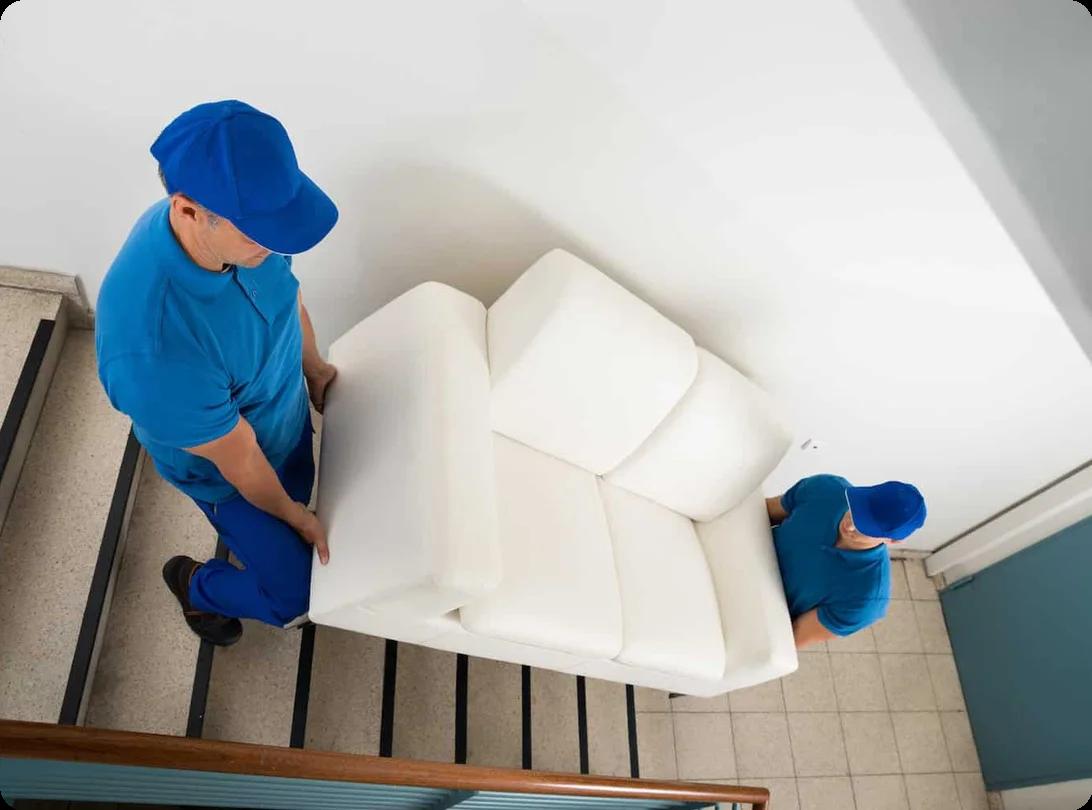
A good rule of thumb: always keep your washer upright. Tilting it on its side can cause water or oil to leak into parts that aren’t sealed for travel. You should always move slowly and communicate with whoever’s helping you move the appliance. On stairs, one person should guide from above while the other steadies from below. This helps make sure the dolly and washer stay stable as you move.
If you’re moving alone, use a stair ramp or a powered dolly if you can, and never try to lift it up or down by yourself.
7. Load into the truck
You should position the washer upright against the side wall of your moving truck, near the front for better balance. Strap it securely at two points, one above and one below the center of the drum. Use the E-track system (the metal rails with horizontal slots built into many truck walls) or built-in strap points to lock it down tight.
While it might be tempting to use the flat surface, it’s important not to stack boxes or heavy furniture on top of the washer to prevent those items from damaging internal components or crushing the display. If you’re moving other large appliances, load the washer after the fridge but before bulky furniture so the weight is spread out evenly.
8. Reinstall and level at your destination
When you arrive, move the washer into place before unpacking anything else. Take out the transit bolts, reconnect the water lines, and plug it in. Then, run a short rinse cycle to check for leaks and make sure it’s level.
If the machine shakes during the test cycle, adjust the feet until it sits flat on the floor. A stable washer runs quieter and lasts longer, so this is an important step to take.



 Melanie MorrisSep 8, 2026



.png&w=64&q=75)