Plan Your Loading Order
Think top to bottom and front to back. Build the load so it is stable, easy to drive, and easy to unpack.
- Bottom to top: Keep the heaviest items low and toward the front of the box, then lighter boxes and soft items on top.
- Last in, first out: Load the things you will need right away at the very end, closest to the door. Keep essentials like an overnight bag, chargers, meds, and valuables with you, not buried on the truck.
- Tight stacks: Stack boxes by size so walls are even, and fill small gaps with soft items to reduce shifting.
Keep the load balanced left to right. If a refrigerator goes on the left, place another heavy piece on the right so the truck handles predictably.
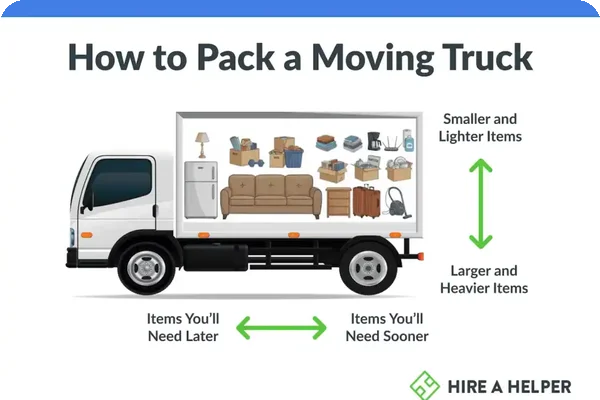
This order creates a balanced load that’s easier to drive and makes unloading easier. If you haven’t booked a truck yet, it helps to compare sizes and features to find the right fit for your home and budget.
1. Use the Over-Cab Compartment (the “attic”)
That small space above the cab is made for lighter boxes and soft items. Fill it with things you won’t need until you’re unpacking at the new place — extra blankets, towels, or bins of clothes. Pack it tight so nothing shifts, but avoid putting anything heavy up there.
2. Load Large Appliances and Furniture
Start with the biggest, bulkiest items. Refrigerators, washers, sofas, and dressers should go against the truck’s walls. Place them upright and secure them with moving blankets and straps.
Try to distribute weight evenly side to side. For example, if you load a refrigerator on the left, balance it with a couch or dresser on the right. Keeping these items upright also helps protect their internal parts — especially for appliances. Heavy, awkward pieces like sofas, armoires, or pianos should be handled with care, so check out our heavy furniture moving guide for step-by-step tips.
3. Add Boxes by Size and Weight
Next, bring in the boxes. Heavier boxes should be placed first, stacked tightly on the floor. Work your way up with lighter boxes, filling as much vertical space as you can. When boxes are stacked to the ceiling, they create a solid wall that resists shifting.



.png&w=64&q=75) Kevin The MoverJun 24, 2026
Kevin The MoverJun 24, 2026