Accidents can happen, so you may want to consider moving insurance that includes coverage in case of a stairs-related injury.
Step 6: Disassemble Heavy Furniture
It's a lot easier to figure out how to lift heavy furniture if you disassemble it first. Just make sure to put the nuts and bolts in a plastic bag and attach them to the frame with painters' tape. Losing a screw in the shuffle of a move and then not being able to put your couch back together is a scenario you want to avoid!
Here are some types of furniture that can be disassembled:
- Couches, recliners, armchairs: Remove legs, cushions, armrests (if possible), and backrests.
- Dressers and vanities: Remove drawers and mirrors.
- Tables and desks: Remove legs and drawers.
- Bed frames: Remove slats and legs, detach the headboard, and separate frame components.
Step 7: Wrap and Attach Straps
Once your stuff is disassembled, wrap the frame in moving blankets to protect the finish and prevent sharp corners from damaging your walls. This is also the point to attach moving straps if you're using that tool to help you lift and transport furniture.
Make sure the wrap and straps are both secure around the furniture before lifting. If it slips while you're carrying it, then the furniture can drop onto your floors, knock into your walls, or worst of all, land on you and your helper. Stretch wrap is a useful tool to keep moving blankets in place, and in many cases, it is better than using tape.
Step 8: Use Proper Lifting and Moving Techniques
Believe it or not, one of the best ways to prevent injury during a move is to treat the process like a workout or sporting event. Keeping your muscles limber, following proper technique, and taking breaks are good overall rules. Use these other tips to protect your body when lifting heavy furniture:
- Warm up. Do some stretches to warm up your muscles. Lifting furniture without this step increases the risk of injury.
- Wear the right clothes. Cover your arms and legs to protect yourself from scrapes and bruises. It's also a good idea to wear closed-toe shoes with grippy bottoms.
- Practice your posture. Lifting starts with a spine in natural alignment — no stooping or slouching. Stand close to the item you're lifting, and place your feet about shoulder's width apart for a stable base.
- Lift from your knees, not with your back. Tighten your core and squat down to pick up something heavy. Never arch your back.
- Get a grip. Ensure you have a strong grip before lifting anything. You may need gloves to help mitigate sweaty hands.
- Straighten up strategically. Use your legs to stand up, keeping your load close to your body at waist height.
- Keep your body aligned. As you walk, always make sure your feet, hips, shoulders, and head point in the same direction. No twisting or abrupt pivoting.
- Avoid lifting heavy items above waist height. If you need help getting items into an elevated truck bed, rent a ramp or ask for help.
- Listen to your body. Injuries to the back, ankle, shoulder, knees, and hands are all common when moving. If you need a break — or a complete change of plan — it's worth the delay to keep yourself healthy.
Step 9: Carry the Heavy Furniture Up Stairs
The way you carry heavy furniture upstairs depends on the type of stairs you're dealing with. For straight stairs, you can typically tilt the item and angle it to fit between the wall and the banister. When the staircase is too narrow for a tilt-and-angle strategy, you may need to carry the item vertically.
When the stairs have a bend or a landing, move the furniture in stages. Carry the item to the landing or corner, set it down, and reposition it before taking on the next section. For tight turns, you might need to carry the item vertically and pivot it at the turn.
If possible, use a stair-climbing hand truck to bear most of the weight. You can also use moving straps to distribute weight and help you maintain a steady grip.
Best practices for safely carrying heavy furniture up stairs with two people:
- Agree on signals for "stop," "lift," "step up," and "lower."
- Talk through the plan before you start, including where you're going to change the position of the item.
- Position the strongest person at the bottom.
- Take breaks at stair landings or any time someone needs to rest or reposition their hands.
- Move the heaviest items first.
When To Call a Professional Mover
Your health and well-being should always come first. Hiring a professional is the best way to move heavy furniture up or down stairs if:
- You feel pain or discomfort when lifting.
- The item you're moving is fragile or valuable.
- Stairs or narrow spaces make the move dangerous.
It's usually more expensive to move furniture up or down stairs because movers often charge extra. According to HireAHelper cost data, it costs an average of $331 to hire two labor-only movers for two hours. Then, you can expect to pay $50 to $100 for each flight of stairs (though some movers include one flight for free).
How to Move Specific Furniture Up Stairs
Whether you're moving a dresser or home gym equipment, the right technique is critical. Here are a few ways to move heavy furniture up stairs by hand, with straps, or with a hand truck.
Moving a Couch Up Stairs
- Tilt and angle: Tilt the couch until it's parallel to the stairs, and rotate it to fit the width of the staircase. Grip it by the bottom, and lift until the person at the top end can stand straight and walk backwards up the steps.
- Use a strap: Wrap a moving strap around the length of the couch. The person at the top pulls the strap up while one or two people push from below.
- Vertical carry: Stand the couch on one end, and use a hand truck or two people to lift it up narrow stairs.
Moving a Mattress Up Stairs
- Stand the mattress: Lift the mattress up so it's on its long edge, or a short edge for stairs with a tight bend.
- Two-person system: Position one person on top and one on bottom, and tilt the mattress to match the angle of the stairs.
- Lift or slide: Depending on your stairs or how you're moving the mattress, you can either physically lift the mattress up the stairs, or slide it over the treads.
- Maneuver as needed: You can bend the mattress temporarily to get around corners, but don't leave it in that position for too long. You can damage the internal springs or foam if you crease or fold it too tightly.
Moving a Dresser Up Stairs
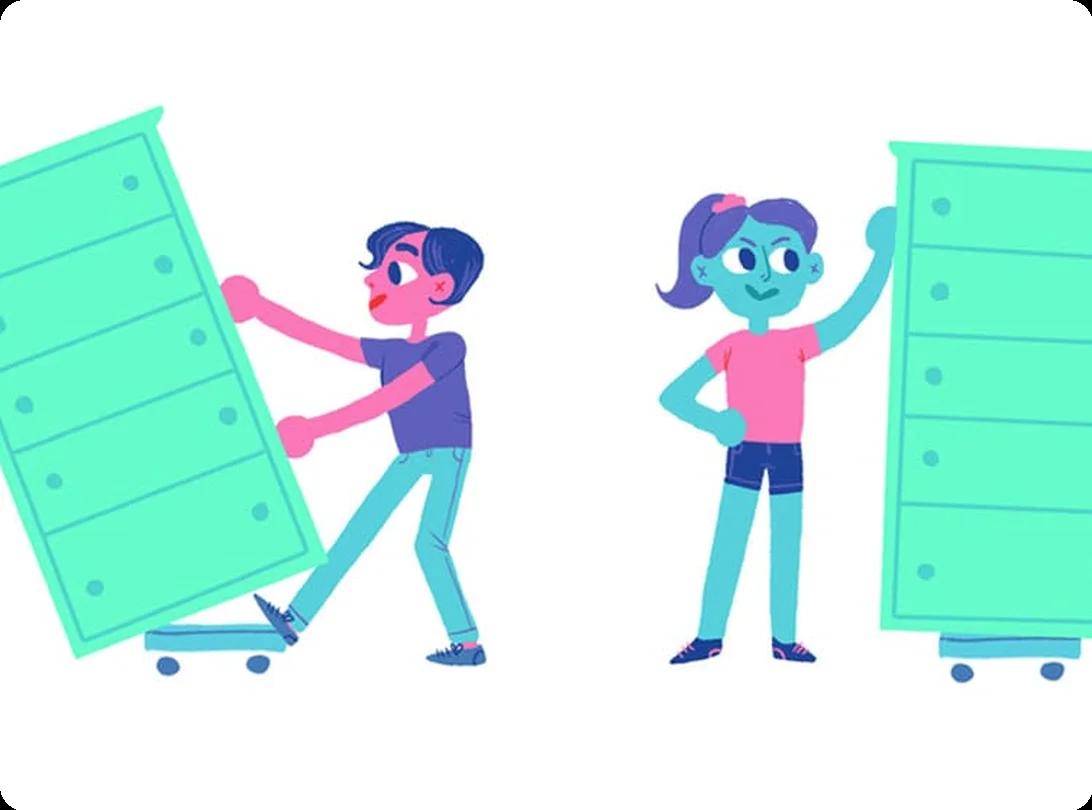
- Tilt and carry: If you and your helper can lift the dresser easily, tilt it on the short side and carry it up the stairs. Do the same to move a desk or console table.
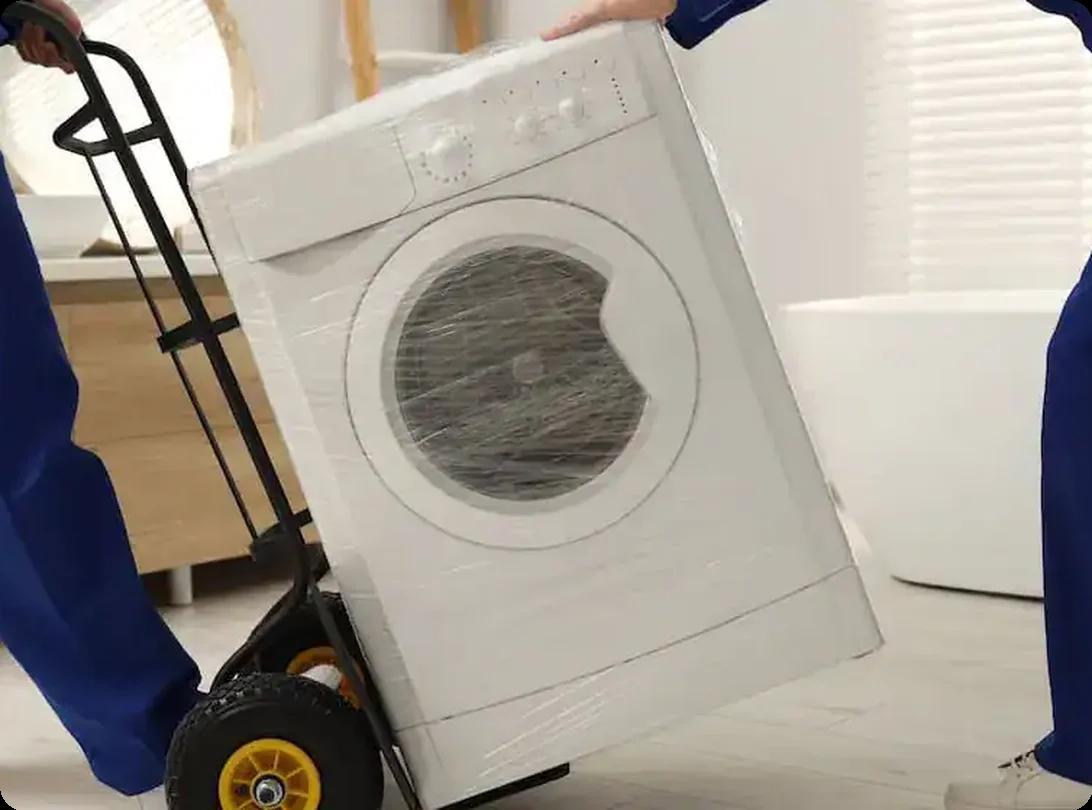
- Use straps or a dolly: Cross moving straps under the base of the dresser lengthwise, secure to your forearms or shoulder harness, and lift. Climb the stairs slowly. This is also a great way to move a washing machine.
Best Tools for Moving Heavy Furniture Up Stairs
Moving heavy furniture requires the best tools, some of which are almost universally necessary, while others are specialized for certain types of furniture.
- Stair-climbing furniture dolly for easier transport
- Furniture sliders to go under the legs of bigger pieces to facilitate movement and protect your floors
- Moving blankets or furniture pads to protect furniture, walls, and floors
- Non-slip, heavy-duty gloves to protect your hands and enhance grip
- Stretch wrap to keep drawers closed
- Lifting straps help evenly distribute the weight of heavier furniture (look for straps that secure around your forearms or shoulders for extra stability)
- Hand trucks for moving items over uneven ground
- Packing tape for extra security and keeping moving blankets in place
- Ratchet straps and grips to secure cargo during transport
- Closed-toe shoes with anti-slip soles
- Stair rollers or a stair slide for moving larger items
If you have a prior injury, you may want to wear back or knee braces for extra protection and support.
Dollies and hand trucks can make it a lot easier to transfer furniture, but when you're moving up stairs, you might need a stair-climbing model. Traditional dollies and hand trucks have two or four wheels and a platform. Stair-climbing hand trucks are designed specifically to move up and down stairs. Some models have motorized wheels to handle some of the heavy lifting, while others have rotating three-wheel units that roll smoothly up stairs.
Tool Comparison for Moving Heavy Furniture Up Stairs
| Tool | Works for Heavy Items? | Works for Tight Stairs? | DIY Friendly? |
|---|
| Stair-climbing dolly or hand truck | Yes | Yes, but limited on sharp turns | Yes, but practice is needed |
| Shoulder moving straps | Yes | Yes | Yes, but requires two people |
| Stair rollers or slides | Yes | If the item fits when laid flat | Yes, but requires two people |
| Furniture sliders | Yes | Not ideal | Yes |
| Ratchet straps | Yes | Yes | Yes |
Safety Tips and Mistakes to Avoid for Moving Furniture
When you're moving heavy furniture up or down stairs, safety should be your top priority. A few extra precautions can go a long way toward preventing injuries and damage to your property.
Here are a few extra tips to help you move safely:
- Walk your route first and talk through challenging spots.
- Move during cooler times of day to reduce the risk of things like heat stroke and drink plenty of water.
- Take breaks and set furniture down occasionally on long staircases.
- Take photos of your furniture before and during disassembly to use as a guide for reassembly.
- Take doors off their hinges to gain a couple extra inches of clearance.
- Bungee or strap items to your dolly to prevent slippage.
Common Mistakes to Avoid
In the chaos of moving, it's easy to forget a step or to overlook something. But that can lead to damaged furniture or injury, so take care to avoid these common mistakes when moving heavy furniture up stairs:
- Skipping measurements
- Lifting with your back (always use your legs)
- Starting without a plan
- Forgetting to remove loose carpets and other obstacles
- Failing to use the right tools
- Moving heavy items alone
- Rushing to get the job done
- Wearing flimsy, loose, or slippery footwear
- Trying to move items without disassembling them

.png&w=96&q=75)

.png&w=64&q=75) Kevin The MoverJuly 25, 2025
Kevin The MoverJuly 25, 2025