How to Pack Clothes for Moving: Expert Tips

An arial shot of people packing clothing into various moving boxes

You might think that clothing is the easiest thing to move. Thankfully, in many cases, you’d be right. Most clothing items are highly forgiving and are unlikely to be damaged, but some can be ruined by folding or storing them incorrectly. Snags, fold lines, and more could turn a stunning silk dress or an expensive suit from suave to in dire need of repairs

After helping countless people move, we've learned a thing or two about organizing and packing, so keep reading to learn how to pack clothes for moving like a pro.

Last updated: Jan 19, 20267 min read
Melanie Morris
Written byMelanie Morris
Daniel Cobb
Reviewed byDaniel Cobb

Key Takeaways

  • Most clothes are forgiving to pack, but delicate fabrics (silk, wool, leather) can wrinkle, snag, or stain easily
  • Declutter first: donate, sell, or recycle anything you haven't worn in a year before packing a single box
  • Pick the right packing material: by fabric: wardrobe boxes for hanging items, regular boxes for folded clothes, vacuum bags for bulky off-season pieces
  • Effective techniques: keep hanging clothes on hangers, roll t-shirts to save space, fold delicates flat with tissue paper
  • Organize for unpacking: label by season and category so you can put away what you need first without digging
Melanie Morris
Author

Melanie Morris

Melanie Morris is an editor, writer, and one of the sharpest moving experts at HireAHelper. Seven years spent answering readers' toughest questions and demystifying a process most people dread has made her an authority on what movers actually need to know — and how to explain it without the jargon. Her own relocations around the Southwest and up and down the West Coast give her the firsthand experience to back it up. Whether you're crossing the country or just moving down the block, Melanie makes sure the advice you get is accurate, trustworthy, and easy to act on.

Preparing Your Wardrobe for the Move

The best way to pack clothes for moving starts with a thorough decluttering and cleaning. Clearing out outgrown or unwanted clothing means you have less to pack and haul, and cleaning your laundry helps streamline unpacking later.

Declutter Before You Pack

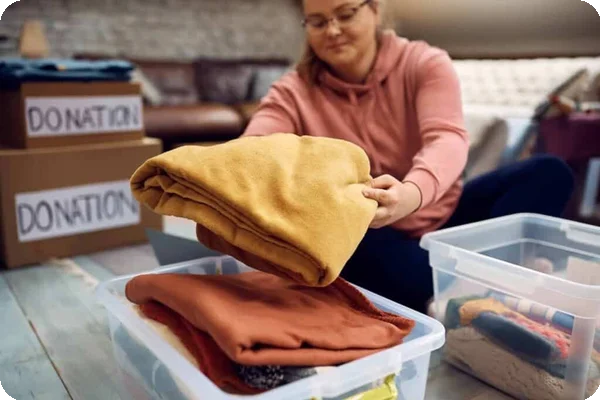
A woman sorts items into various boxes, some labeled

There's no point in packing and moving items you don't plan on keeping around or using. A move is the perfect time to clear out any outgrown kids' clothing or items you haven't worn in a while.

  • Go through your wardrobe one category at a time. For example, consider all your winter gear at once so you can identify any excess items to let go of.
  • Sort out clothing you no longer wear by deciding whether to keep, donate, or discard it. Donate anything in good condition through programs like UNIQLO's Recycling Program or at your local thrift store. Discard damaged, worn clothing.
  • If you haven't worn something in over a year, consider donating it unless you have a good reason to keep it. It's fine to hold onto a sentimental item or two, but there's no need for half your closet to be filled with items you'll never wear again.

Launder and Repair Clothing

Take care of all your laundry and any clothing repairs before the move. This way, your only concern in your new home will be unpacking.

"In the days leading up to your move, pack a suitcase with a few outfits to get you by. Make sure you have an outfit or two for after your move, too."

Additionally, washing your clothes beforehand helps prevent stains from setting in and keeps unpleasant odors to a minimum.


Choosing the Right Packing Materials

In most cases, moving clothing doesn't require much preparation. You might need some specialized boxes if you have formal wear that requires protection, but a collection of boxes and bags is often enough.

Essential Packing Supplies

A wardrobe box and several other types of moving boxes sit in front of a closet that has only been partially packed away

Most movers consider these packing supplies essential for clothing:

  • Wardrobe boxes: A wardrobe box typically features a bar across the top, similar to a closet. Delicate or structured clothing, such as suits and dresses, tends to fare better when stored hanging up than when folded.
  • Cardboard boxes: Clothing that can withstand folding can be packed safely into cardboard boxes. This is a convenient option for essentials like jeans, T-shirts, and athletic or loungewear.
  • Vacuum-sealed bags: These bags compress fluffy items by sucking out all the air, letting you pack far more clothing in the same amount of space. This is an especially good method for items like winter parkas.

Alternative Packing Options

HAH256_body-3.webp

Clothing doesn't need to be packed in boxes for a move. These alternative packing options often work just as effectively.

  • Suitcases or duffel bags: Suitcases and duffel bags have to be moved anyway. You may as well pack them full of clothing. Even better, use your suitcases and duffel bags to hold the clothes and toiletries you need immediately before and after the move.
  • Your dresser: If you secure your dresser drawers, you can often leave folded clothes in them. Just make sure there's no risk of the drawers opening during the move and that it's not too heavy to lift.
  • Plastic totes: The great thing about this option is that once you're done moving your clothes in them, the plastic totes can be reused later for storage.
  • Trash bags: Durable trash bags offer a quick and affordable way to pack up clothes. Just throw clothes that aren't likely to get damaged into bags, tie them up, and put them in the moving truck wherever they fit.

Effective Packing Techniques

Moving clothes efficiently boils down to packing in the most effective way possible. Learn when to fold, roll, or hang your clothing while moving.

Folding vs. Rolling
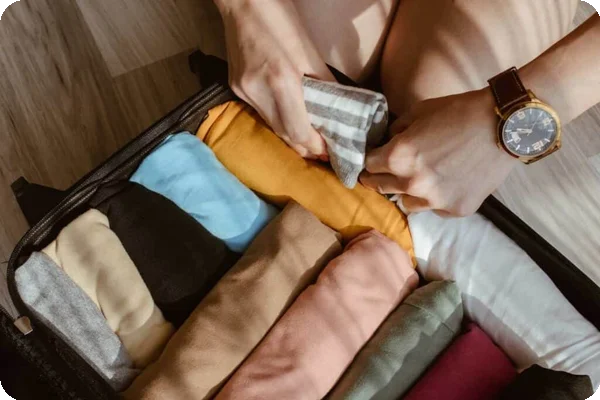
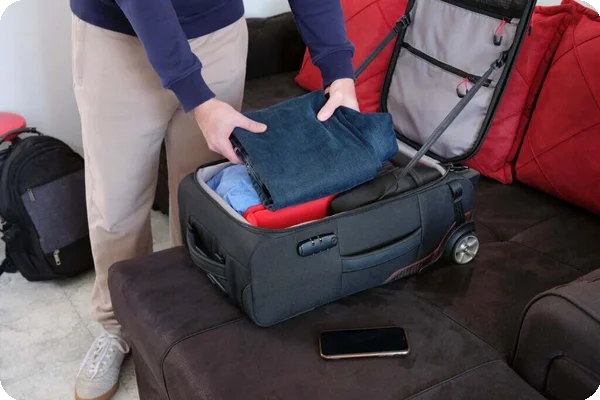
Someone adds a rolled up t-shirt to a suitcase already packed with other rolled up clothing

Some clothes are fine rolled up, and you can often save a significant amount of space by doing so. Roll up casual clothes like jeans and everyday shirts. Formal wear or structured clothing should be folded to avoid wrinkling.

If you're not quite sure which to choose, use the ironing test: Would you iron the item before wearing it? If so, fold it or hang it in a wardrobe box. If it doesn't matter, give it a roll.

Protecting Delicate Items

Moving expensive or delicate clothes can be nerve-wracking, but a few simple tips can keep them wrinkle- and snag-free.

  • Use garment bags to protect suits and dresses.
  • If layering delicate fabrics, place acid-free tissue paper between them to prevent snags on zippers or buttons. This is a great way to protect lace, silk, and other damage-prone fabrics.
  • Hang delicate items in wardrobe boxes to avoid fold lines and wrinkles.

Organizing for Easy Unpacking

Skip the confusion of mixed-up or misplaced clothes by taking time to organize before your move.

Labeling and Organizing

Skip the confusion of figuring out what goes where by clearly labeling all boxes. A tried-and-true method involves using colored duct tape or markers to match boxes to their corresponding rooms.

"...washing your clothes beforehand helps prevent stains from setting in and keeps unpleasant odors to a minimum."

If you put a corresponding sticky note in the same color on bedroom doors, movers know exactly which room to put boxes in as they unload. It's also a good idea to specifically label what's in each box.

Packing an Essentials Bag

While finalizing your move and settling in, you'll be glad to have an essentials bag nearby. Pack a few sets of clothing and toiletries into a suitcase or duffel bag for every person moving with you. Include items such as:

  • A couple of outfits, including sleepwear, clean socks, and underwear
  • Weather-dependent clothing (think hats, gloves, jackets, rain boots, or other seasonal items you might need on the first day or two after moving)
  • A few clean towels and washcloths
  • Clean bedding for every bed
  • Key toiletries, including toothbrushes, toothpaste, shampoo, conditioner, body wash, hand soap, and deodorant
  • Basic makeup (if you wear it)

Additional Tips

These tips for packing clothes help cut down on space while keeping things organized and easy to move.

Using Space Efficiently

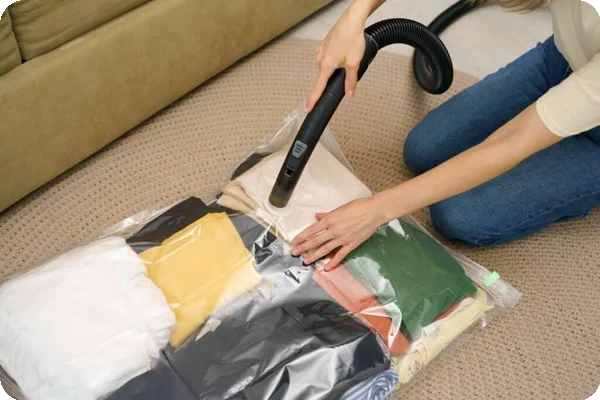
a personal attaches a hose to a vacuum seal bag full of clothing

You probably have more space for packing clothes than you think. Consider implementing these tips to pack as much as you can into the smallest spaces:

  • Put socks inside shoes or into spare space in boxes as you pack.
  • Use vacuum-sealed bags to compress bulky items, such as jackets and comforters. This works for stuffed animals, too!
  • Consider rolling instead of folding garments to make more space.
  • Use packing cubes to organize your clothing before putting it into your luggage.

Avoiding Common Mistakes

You don't need to sweat packing clothes for a move. Even if you make a mistake, most clothes are pretty forgiving and will be fine. However, these common errors can make the moving process a bit more inconvenient:

  • Overpacking: Avoid packing your bags or boxes too full, especially with heavy items. This can lead to torn handles or bursting, resulting in a big mess. You know you've overpacked a box if it bulges at the sides or is difficult to close. A bag may look like it's ready to tear if overfilled.
  • Not packing clothes separately for pre- and post-move: In the days leading up to your move, pack a suitcase with a few outfits to get you by. Make sure you have an outfit or two for after your move, too. Consider work obligations and the weather while preparing.
  • Not organizing effectively: If you're moving a family, try packing everyone's clothing in individual bags or boxes. That way, clothes can be brought to the correct room immediately.
  • Packing clothing incorrectly: Not all clothes should be treated the same way. Delicate fabrics, such as silk or chiffon, for example, don't always tolerate folds well. Outerwear and structured pieces, like blazers or pleated dresses, also shouldn't be folded.

Learn more on our How to Pack Hub.


FAQs About Moving Clothes

Recent Articles

An artist carefully packing brushes, paints, canvases, and art tools into protective boxes for a move

How to Pack Art Supplies for Moving

Packing

Packing an art studio can feel more complicated than packing the rest of the house. Instead of neatly shaped household items, you may be dealing with paints, delicate brushes, unfinished work, fragile ceramics, and... Read More

Mover packing a cardboard box during a move

How Long Does Professional Packing Take?

Packing

Professional packing can take anywhere from 2 hours for a small apartment to a full day or more for a larger home. The actual timeline depends on how much you own and how prepared you are when the crew arrives. In... Read More

Stack of cardboard moving boxes with bubble wrap and packing tape

Do Packers Bring Their Own Boxes and Supplies?

Packing

Packers do not always bring their own boxes, including when you book labor-only packing help directly or through HireAHelper. What supplies they bring depends on the type of packing service you choose. With... Read More

Toiletries and props arranged on a bathroom washbasin

How To Pack Bathroom Items for Moving

Packing

The bathroom can be tricky to pack. It’s one of the last rooms you get to because you use it regularly, and it’s filled with items that can break or spill, but there are techniques to make this area easier to move.... Read More

Woman keeping boots in a cardboard box at home

How to Pack Shoes for Moving: A Step-by-Step Guide (2026)

Packing

You might think shoes are easier to pack than glassware or your TV, but if you just throw them into a large bag without following the proper steps, you might end up with scuffed leather, bent heels, or a moldy pair... Read More

Patio furniture cleaned and wrapped for moving

How To Pack Patio Furniture for Moving

Packing

Patio furniture tends to be heavy, collect dirt from outside, and have irregular shapes that don’t fit well in standard boxes. But packing them for a move isn’t impossible with the right process. If you clean each... Read More