Factors to Consider When Moving to a New City

new city guide

No matter if you’re moving to a new city by choice or by necessity, the process comes with big emotions, physical labor, and endless tasks.

That’s why it's important to think through logistics such as hiring movers, changing your address, and finding housing before you take the leap. Planning can help you save money, reduce stress, and make sure you're choosing the right city.

In this guide, we'll go through everything that's involved in a move: researching the city, planning and budgeting, and preparing for the inevitable emotional impact. We've also created a complete moving to a new city checklist to help you stay organized so every important detail is covered.


Last updated: Oct 17, 202512 min read
Melanie Morris
Written byMelanie Morris

Key Takeaways

  • Moving to a new city is one of life's biggest decisions: driven by jobs, family, relationships, lifestyle, or simply a fresh start
  • Prepare carefully before you go: research cost of living, neighborhoods, job market, schools, and visit at least once before committing
  • Use a dedicated checklist: utilities, address changes, transcripts, pet records, and the dozens of admin tasks tied to a relocation
  • Settling in takes intentional effort: explore the city, find your new routines, and build community through work, hobbies, and neighborhood groups
  • Common mistakes: underestimating costs, picking a neighborhood you didn't visit, isolating socially — and not asking for help when you need it
Thomas O'Sullivan
Author

Thomas O'Sullivan

Thomas O'Sullivan is the Senior Manager of Service Operations at Porch Moving Group, where he oversees the post-booking customer experience for HireAHelper. His expertise is the part of a move most people never see — the logistics, coordination, and accountability that turn a booking into a finished move.

Thomas has spent six years in the moving and relocation industry, starting in corporate relocation and long-distance logistics before stepping into his current role. He's supported more than 130,000 moves across local labor, full-service, commercial, and long-distance work — experience he draws on to make sure HireAHelper content reflects how moves actually go.

Why People Move to a New City

A row of colorful houses with different architectural styles, chimneys, and a bright sky above.

People move to new cities for a lot of reasons, but housing is the most common. In our 2024-25 HireAHelper Migration Report, 14.95% of people said that they moved to find a new or better place to live. Cost is a big motivator — 7.5% of people moved for cheaper housing, and 6% relocated so they could buy a house instead of renting.

Major life changes often inspire people to relocate. About 10.1% of moves happen because of a new job or a job transfer. And 8.3% of people move because they're ready to set up their own household.

Pros and Cons of Moving to a New City

Moving somewhere completely new is exciting, but it also has drawbacks that can impact your career, family, and lifestyle. If you absolutely have to move, like for a job or family situation, you have to take the plunge no matter what. But if you’ve decided to move for your own reasons, you should weigh the pros and cons before you start packing.

Pros of moving to a new city

  • New opportunities: A new city opens you up to new experiences, people, and job opportunities that you might not have in your current city.
  • Higher quality of life: Moving can give you access to better housing, a lower cost of living, higher salaries, and a bigger social circle.
  • Emotional benefits: Relocating can be good for you if you need a fresh start or want to experience something new.

Cons of moving to a new city

  • Stress: Moving can be extremely stressful. In fact, 29% of people say they'd rather get a divorce than move again!
  • Costs: Uprooting your life can be expensive and time-consuming.
  • Family challenges: Relocating can be hard on your family, especially if you have kids.

Preparing for the Move

Happy moves usually have one thing in common: planning. Knowing what to expect in your new city, especially when it comes to lifestyle, cost of living, and housing options, makes it easier to prepare.

Research the City First

Relocating is a big commitment, so it pays to research carefully before you decide. Now is the perfect time to do a deep dive into your new city and ask the big questions that affect the move.

Will I like it here?

Living in a city is a completely different experience from visiting, so make sure to research the things that will affect you as a resident. For example, consider how the local industries might change your lifestyle. A city with a big tourism industry will have plenty to do, but you'll also have to deal with road congestion.

“When you arrive [in your new city], you can take leisurely walks, drives, or public transport to check out interesting spots along the way. This is the best way to find great local bakeries and hole-in-the-wall diners that can become new go-to places.”

You should also look at what matters in your everyday life. Judge the city's walkability using Walk Score, check the air quality on AirNow, or look at the public transportation system map to make sure it can get you where you need to go.

Social opportunities can be a lifeline in a new place, so spend some time in city subreddits to get a sense of where people your age hang out. Do they tend to socialize in bars, community centers, and fitness groups, or are there other things to do? Find out about local events and cultural performances on Eventbrite and the city's official events calendar.

Will my family like it here?

A smiling man carries two young children, one on his shoulders, one on his hip, outdoors by a fence.

Your family's happiness can make or break a move. Make sure your kids have the resources they need by checking school ratings on GreatSchools, and request quotes well in advance from several local daycare facilities to get an idea of costs and availability.

As you're house-hunting, websites such as Neighborhood Scout and Family Watchdog can help you find a safe neighborhood with family-friendly activities and amenities nearby. You can also scan Google Maps for local parks, children's museums, and outdoor activities. You can also search for local kids' sports leagues and after-school clubs.

Will I be able to afford it?

You'll want to avoid moving to a new city and realizing that the higher costs are going to wipe out your disposable income. The comparison calculators at Bankrate and Nerdwallet can show you how much you need to earn to maintain the same living standard.

In general, you shouldn't spend more than 30% of your pre-tax income on housing. If you're making $100,000 per year, that's a max of $2,500 per month. That amount might cover a spacious place in a smaller city — for example, the average rent for a 2-bedroom apartment in Nashville, TN is about $1,642. In New York City, the average 2-bedroom rent is $4,529, which means the same budget won’t stretch nearly as far.

Think about job stability, too. Do the companies in your industry offer room to grow? If you lose your job, is it easy to find other opportunities? Jobseeker groups on Facebook can give you a personal perspective on the job market.

Find Housing

Check the average housing prices on sites like Zillow or Apartments.com, and ask yourself these questions:

  • Are there plenty of options in your price range?
  • Can you find affordable places in your top neighborhoods?

If the answer is yes to both, you're ready to start house-hunting. Visit the new city fora few days to look at properties, or use photos and online video tours to pick your top places. Then, fill out applications and wait to see if you're approved. From there, you can choose the best option, sign a lease, and pay the security deposit.

Nervous about renting a home sight unseen? Consider booking a month or two in a short-term rental. That way, you can see properties and neighborhoods in person before committing to a purchase or a long-term lease.

Set a Moving Budget

Now that you have an idea of the average rent and living expenses in your new city, it's time to make a budget for the move. A moving budget is a plan for covering one-time relocation expenses along with everyday costs until you’re earning again. Building one helps you avoid surprise expenses and understand how much savings you’ll need before moving.

Include these expenses in your moving budget:

  • Packing supplies
  • Professional movers or moving truck rental
  • Temporary housing and storage, if needed
  • Travel expenses for hotels, gas, and restaurants
  • Security deposit and first month's rent
  • Utility deposits
  • Childcare
  • 1-3 months' living expenses

The total depends on your situation, home size, family size, and how far you're moving. Our data shows that moving costs can range from $450 to $10,000 or more.


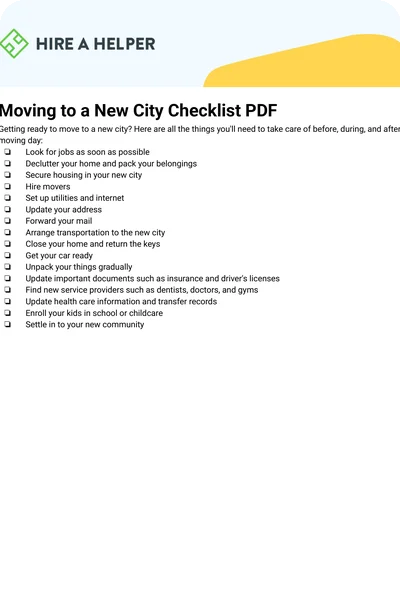
Moving to a New City Checklist

There's a lot to do when you're moving to a new city, which is why it's so helpful to have a checklist on hand. It keeps you organized and ensures that you don't forget anything important.

Here are some steps to take before and after the move.

Before the Move

  • Look for jobs: Start applying for jobs in your new city as soon as possible. The process can take a while, and you don’t want to be out of work for too long in a completely new area.
  • Declutter and pack: Get rid of anything you don't want to take with you. Then, pack one room at a time, making sure to label boxes clearly.
  • Secure housing: Research properties online or in person, and sign a lease that aligns with your moving schedule. Ask about move-in hours, where you can park a moving truck, and whether you need to reserve an elevator, loading dock, or parking spaces.
  • Hire movers: Once you have a move-in date, book movers to transport your stuff. To keep costs down, rent a moving truck and hire labor-only movers to do the loading and unloading.
  • Set up utilities and internet: As soon as you have a new address, call the local electricity, gas, water, and internet providers to set up new accounts. Schedule each service to turn on a day or two before you move in.
  • Update your address: Change your address with your bank, doctor, credit card companies, insurance companies, phone provider, and government agencies.
  • Forward your mail: It can take time for address changes to kick in. To make sure you're getting your mail, forward it to your new address through the USPS.
  • Arrange transportation: Figure out how you're getting to your new city and how you'll get around once you arrive. Will you be bringing your car, or do you plan to take public transportation?
  • Close your home: Clean your house. Hand the keys over to the buyers if you're selling, or return them to the landlord.
  • Get your car ready: Vacuum your car and bring it to the mechanic for a tune-up.

After the Move

  • Unpack your things: Start with the things you'll need right away, and work your way gradually through boxes of non-essentials such as decor.
  • Update important documents: If you're moving to a new state, update your health insurance, car insurance, and driver's license.
  • Find new service providers: Look for new doctors, dentists, gyms, vets, and cleaning services.
  • Update health care information: Once you find a new doctor, ask your old doctor to transfer your medical records and prescriptions.
  • Enroll your kids in school or childcare: Tour the school or daycare in person, and sign up your children.
  • Settle in to your new home: Join clubs, attend exercise classes, volunteer with local organizations, and explore your new city.

Moving comes with a lot of life admin and physical work. If you can start early, you'll avoid the stress of a last-minute rush.


Settling Into Your New City

Once moving day is history, you can focus on building a life in your new city. Now, you can start meeting people, exploring the area, and learning how to stay safe in your new surroundings.

Getting Connected

One of the most exciting — and intimidating — parts of moving to a new city is building your social and professional networks. Start close to home and introduce yourself to your neighbors. You can also sign up for Nextdoor and neighborhood Facebook groups to join in conversations and see what's happening in the area.

“In general, you shouldn't spend more than 30% of your pre-tax income on housing. If you're making $100,000 per year, that's a max of $2,500 per month.”

If you want to build a professional network, look for "networking professionals" groups on Facebook, or check with the local chamber of commerce to sign up for local business events. You can also join the local chapter of professional industry associations. Networking events, volunteer days, and social events are great places to meet career-minded people.

When it comes to making friends, activities are your best bet. Join something that sounds interesting, like exercise classes, book clubs, running groups, church choirs, community theater productions, and cooking classes. Strike up conversations with everyone you meet while you’re there. Apps like Bumble BFF and Meetup can also help you connect to other people who are looking for friends.

Exploring Your New Neighborhood

A family of four walks on a city crosswalk. Mom carries a baby, dad holds an older girl's hand.

Getting to know your new neighborhood helps it feel more like home. Make a list of restaurants that look interesting, and pick a new one every time you go out for dinner. If you have kids, do the same for parks and playgrounds. Eventually, you'll start to find favorites, build a new routine, and recognize a few faces.

Give yourself plenty of time to explore, too. When you arrive, you can take leisurely walks, drives, or public transport to check out interesting spots along the way. This is the best way to find great local bakeries and hole-in-the-wall diners that can become new go-to places.

You can also check the neighborhood and city calendars for upcoming events such as festivals, restaurant weeks, block parties, and holiday events. Chatting with vendors and other guests can help you feel less isolated.

Staying Safe

As you explore, take a few precautions to stay safe. Check local crime maps, and take note of dangerous neighborhoods. Sign up for the police department's public safety alert system to get notifications about crimes and other emergencies.

The best advice usually comes from other residents. Ask your coworkers and new friends for recommendations. For example, you can ask if there are any places in the city they avoid, or if they feel safe taking public transportation late at night.


Common Mistakes to Avoid When Moving to a New City

Moving comes with a few common pitfalls that can make the experience harder than it needs to be. To create a smoother transition into your new life, avoid these mistakes:

  • Not budgeting enough money: Take the budget you think you'll need and add 20% to give yourself a little wiggle room. The extra cash reduces stress while you look for a job or wait for your first paycheck.
  • Not doing your research: A few Google searches and a weekend visit aren't enough to decide if a new city is a good fit. Make sure you look into costs, housing, job prospects, and social opportunities before taking the leap.
  • Romanticizing the new city: While you research, make sure you're not glossing over the challenging aspects of the city. Be realistic about what you can afford and what you actually want.
  • Packing too much: Decluttering can be time-consuming, but it's worth the effort. Bringing fewer things means you'll spend less on movers and have an easier time unpacking.
  • Isolating yourself by living and working alone: Consider living with roommates or working an in-office job to build a community faster. Otherwise, you might need to step outside your comfort zone (e.g., watching your favorite shows) and push yourself to try new activities and meet people.

If you've moved more than once, you've probably made at least one of these mistakes before. The good news? They're pretty easy to avoid once you know what to look out for.


Tips for Moving to a New City Alone

If you’re moving to a new city by yourself, you'll need to get organized. You're responsible for all the expenses and labor, so you'll probably need to do more planning than those who have a lot of extra helping hands.

Here are some specific tips for a solo move to a new city:

  • Start budgeting as early as possible: You should begin to save for your relocation at least 6–12 months in advance.
  • Expand your emergency fund: Just like your moving budget, you should be looking to squirrel away at least 3–6 months of living expenses.
  • Choose manageable packing boxes: When you’re moving solo, it’s even more important to pack well. Make sure that no box is too heavy for you to lift without help.
  • Join community groups quickly: Start making friends as soon as you arrive.
  • Build routines locally: Become a regular at a coffee shop, grocery store, or gym.
  • Celebrate milestones: Take time to recognize your successes and accomplishments.

A Note About Moving to a New City Alone in Your 20s

Moving alone is always challenging, but it's especially overwhelming in your 20s — you're leaving your childhood or college home behind. You might find yourself feeling extra-attached to your friends, family, and familiar places.

These strong emotions are completely normal, but they don't have to hold you back. Remind yourself that the move will open up new doors in your career and personal life. It might be helpful to make a list of the reasons you want to move — a new job, exciting hobbies, etc.

Still feeling worried? Remember that nothing is permanent. If you end up hating the new city, you can always move back. At the very least, it'll be an adventure and a learning experience.

Tools to stay organized during your move

There are a few things you can do to feel more at peace with moving to a new city alone in your 20s. Build a solid savings fund, so you have a safety net in case things don't work out. It's also helpful to make a plan and a schedule to help you stay organized. Use these resources to make sure you're covering all the bases:

Moving to a new city can be a big undertaking, but it can also open up a new world of opportunities and possibilities. With thorough research, careful budgeting, and plenty of planning, you can avoid pitfalls and settle in faster.


Moving to a New City Checklist PDF

Getting ready to move to a new city? Here are all the things you'll need to take care of before, during, and after moving day:

Cover image

Recent Articles

Cardboard moving boxes packed and ready in the bedroom of a new home

Preparing to Move: What You Need to Know Before You Start Packing

Move Planning

Preparing to move starts with planning: outlining your moving needs, setting a budget, and clearing out clutter before you pack a single box. Moving can be emotionally and logistically heavy, and while it’s normal... Read More

Older couple sorting framed photos and keepsakes while packing boxes during a downsizing move

How to Downsize Your Home: The Ultimate Step-by-Step Guide for Moving

Move Planning

If you’ve been wondering how to downsize your home, you’re not alone. With the average home equity around $250,000 for those aged 65 or older, it makes sense that retirees would want to tap into that value and... Read More

image of a checklist

Moving Checklist: A Step-by-Step Timeline for a Smooth Move

Move Planning

Moving an entire home is a major feat, even for the savviest of planners. It's easy to feel overwhelmed, which is why the best moving checklist is a timeline-based one that breaks your move into manageable steps... Read More

A person checking off items on a moving inventory clipboard next to a row of labeled cardboard boxes

How to Create a Moving Inventory List (and Why it Matters)

Move Planning

From missing boxes to unexpected damage, a disorganized move can cost you more than just your patience. That’s why making an inventory list is one of the smartest things you can do before moving day. It’s your... Read More

A couple sits on the steps of a house surrounded by moving boxes, looking into the distance and imagining changes and renovations to their home

Moving Soon? Experts Share the First DIY Upgrades to Tackle Before You Settle In

Move Planning

Moving into your newly purchased house is an occasion worth celebrating, and it's likely you've already identified ways to transform it into your own. The period immediately after closing, but before moving in, is... Read More

A homeowner using clever packing and unpacking life hacks like color-coded labels and reusable bins in a kitchen

Movehacks: How to Unpack and Organize Before, During and After You Open a Box

Move Planning

You've circled your moving date on the calendar, and now it's time to pack. But wrangling everything from your toaster to your toothbrush can be daunting. How do you pack up your home while making the most of every... Read More