Storage Unit Size Guide: How Big Does My Storage Unit Need to Be?

storage unit

Estimating what size storage unit you need can be confusing, especially if you want room for everything in your house. Your stuff fits a completely different space than you're used to when it's all boxed and stacked.

On top of that, choosing the right storage unit size can save you money, stress, and an unwanted game of real-life Tetris. But if you don’t know where to start figuring that out, our storage unit size guide can help.

Below, we get into the details to break down unit sizes, real-life examples of what fits in each, and some pro packing strategies so you can make the most of your storage unit rental.


Last updated: Nov 25, 202514 min read
Kevin The Mover
Written byKevin The Mover

Key Takeaways

  • The most common storage size is 10'×10' — about 100 square feet, roughly enough for a packed 1-bedroom apartment when stacked efficiently
  • Average storage costs vary by size — small 5'×5' units run $50–$70/month, 10'×10' units run $110–$150, and extra-large units can hit $265+
  • Climate control matters for sensitive items — electronics, upholstered furniture, and artwork all warrant climate-controlled storage for long-term protection
  • Smart packing can shrink your unit size — disassemble furniture, stack vertically, use uniform box sizes, and leave a center aisle for access
  • Vehicles and business inventory need special considerations — drive-up units, ground-floor access, and facility rules about flammable liquids all affect what you can store
Kevin The Mover
Author

Kevin The Mover

Kevin Kato is a travel and home services writer with over 20 years of experience as a professional mover.

Having been both a professional mover and a crew leader, Kevin has seen it all in the world of moving: hectic moves, unique packing, bizarre accident claims, truck mishaps, or just run-of-the-mill moves as advertised; there is virtually no situation Kevin hasn't managed. Today, Kevin provides his insights as Kevin The Mover for professional movers and "movees" everywhere.

How to Figure Out What Size Storage Unit You Need

The most common storage unit size is 10 ft x 10 ft. That's 100 square feet, or around the size of a small bedroom. When you stack things efficiently, you can actually fit the contents of a 1-bedroom apartment in such a space.

But how big a storage unit do you need for more or less than what’s in the average 1-bedroom apartment? To answer this question, begin by inventorying your stuff. Estimate how many boxes you might need to store and consider large or awkward items like bicycles or pianos.

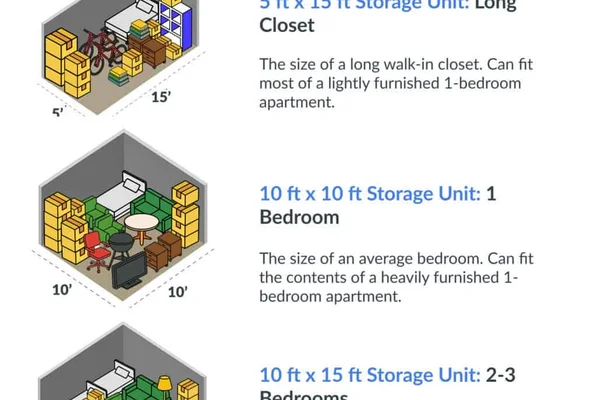
Infographic titled ‘How Big Does My Storage Unit Need to Be?’ showing isometric illustrations of different storage unit sizes with descriptions of what each can hold

Visualize Storage Space Needs

There’s one common trick you can do to help visualize the space you need, and that’s to create a faux storage unit at home. You can do this by:

  1. Clear some floor space. First, use your dining room, part of the living room, the garage, or a covered patio space. Make sure it’s empty and there’s enough square footage of clear space to match your several storage unit sizes.
  2. Tape out your "storage" unit Estimate the size you might need and mark it on the floor with tape, such as 5 ft x 10 ft.
  3. Start packing things into the space. Start stacking your boxes, furniture, and other items into the space you just marked with tape. You quickly begin to see whether your belongings will fit or if you need a bigger space.

If you can use an actual corner, with 2 walls as the sides of your "storage unit," you can get a better idea of how things might stack. According to Kevin Kato, a professional mover with more than 2 decades of experience, storage units generally have 8-foot ceilings. And, he goes on to add, "You can stack stuff pretty high as long as you're careful."

Understand Storage Space Measurements

The square footage of a unit is the amount of floor space you get. A 5 ft x 10 ft storage unit provides 50 square feet of floor space. But if the unit is 8 feet tall, you multiply 5x10x8 to get 400 cubic feet.

“…when storing a vehicle, you need to consider whether it's the right size for a storage unit and whether a local storage center allows vehicle storage. Typically, you need a storage location with drive-up, garage-style 10 ft x 20 ft (or larger) units.”

The difference matters, as cubic feet helps you understand how many boxes you can cram into a space. If you have boxes that are 2 ft x 3 ft x 1 ft, that's 6 cubic feet. If you don't need much access space, you could fit 50 or more of those boxes into a 5 ft x 10 ft unit.

Plan Ahead for Access Needs

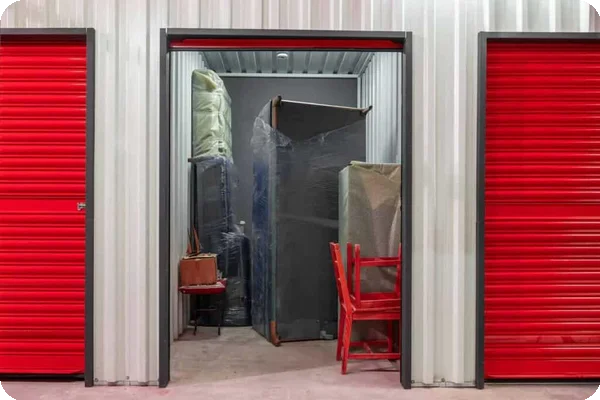
An image of the interior of a storage unit with red doors. Inside there are various peices of furniture including chairs and a couch stored upright

For short-term storage, you can arrange everything tightly into a unit without access space. This assumes you are putting everything into storage temporarily and removing it all at the same time. An example of this situation is storing your belongings for a few weeks when moving to a new home.

Long-term access is more complicated. You may need to get to 1 or 2 items without unpacking the entire storage unit. In that case, you'll need aisle space to walk between boxes and furniture safely. Factor in this kind of access space when deciding on storage unit size.


Standard Storage Unit Sizes Explained

5x5 Storage Unit: Small Closet

These units are around the size of a small closet and are ideal when you need to keep a few boxes along with items like sports gear or seasonal decor. Typically, for this sized unit, you'll pay $50 to $70 a month, which is an affordable option for housing dorm contents during college breaks, for example.

You don't need a climate-controlled unit unless you're storing sensitive items like documents or electronics. Odd-shaped items like bikes take up more space than expected, so plan carefully for them.

5x10 Storage Unit: Walk-In Closet

Careful packing lets you store the contents of a whole studio apartment in this walk-in-closet-sized unit. That might include a sofa, a mattress set, a bike, and up to 15 boxes. While you can stack items fairly high in these units, avoid packing items so tightly that stacking becomes unsafe or access gaps are lost.

At $65 to $100 a month, 5 ft x 10 ft units are an affordable option for storing furniture during renovations or housing extra items if you've downsized. We recommend splurging on climate control when storing electronics or wooden furniture in a humid area.

5 ft x 15 ft Storage Unit: Long Closet

A 5 ft x 15 ft storage unit looks like a long walk-in closet — the type that often spans the entire width of a master bedroom. You may pay $90 to $130 per month for this size unit, which can fit most items from a lightly furnished 1-bedroom apartment. Renters without on-site storage might use a 5 ft x 15 ft storage unit to house large seasonal decor, camping equipment, or bikes for the family.

When storing items like upholstered furniture or books long-term, paying for climate control is a good idea.

10 ft x 10 ft Storage Unit: 1 Bedroom

Visualize an average bedroom that’s not a home’s master suite. That's around how much space you get with a 10 ft x 10 ft unit, and you can usually fit the contents of a well-furnished 1-bedroom apartment inside. If you need to store a queen bed, sofa, a few other items, and 20 to 30 boxes, this is the size unit for you.

“Self-storage facilities have strict rules about what you can store. Violating these restrictions can lead to eviction, damage to your belongings, or liability if your items cause harm to other units.”

Average 10 ft x 10 ft storage units cost $110 to $150 per month. Consider climate-controlled options for long-term storage of upholstered furniture, electronics, or other sensitive items. If you're storing irregular-shaped items like grills or yard decor, leave them unpacked — they'll take up more space if you box them.

10 ft x 15 ft Storage Unit: 2-3 Bedrooms

A 10 ft x 15 ft space is almost the size of a 1-car garage. A good packing plan lets you get the contents of a 2-bedroom house into such a unit. That might include some appliances, bulky furniture, and up to 40 boxes.

You'll likely pay $140 to $180 a month for 10 ft x 15 ft storage, and paying a bit more to get climate control is smart if you're including leather furniture or artwork in the mix. This size storage unit is ideal for families that need a waystation for stuff during a move or an option for storing large furniture long-term.

10 ft x 20 ft Storage Unit: 1-Car Garage

A 10 ft x 20 ft unit can fit the contents of a small 3-bedroom home or a large 2-bedroom home. Depending on the facility, these units can also be used for storing cars, boats, or ATVs.

Costs are $160 to $220 a month on average. The expense may be worth it to store a classic car in a protected environment, keep small business inventory safe, or stash multiple rooms' worth of belongings during a move.

When storing belongings in extreme climates, consider paying for a climate-controlled space — especially if items include upholstered furniture or electronics (and the aforementioned cars and boats!). If you're storing a vehicle, double-check facility rules. Storing 2 vehicles in the same unit is rarely allowed.

10 ft x 30 ft Storage Unit and Larger: Whole House

These extra-large storage units offer as much space as a 2-car garage and can hold the contents of a 5-bedroom house when packed intelligently. You may pay $200 to $300 a month, but that gets you space to store a car plus furniture and boxes. A 10 ft x 30 ft storage unit may be ideal for business inventory storage or whole-house or large family moves.

We strongly recommend climate control for units this size that house numerous item types and may contain valuables.


Cost vs. Size: How to Avoid Overpaying

According to SpareFoot, the average monthly rent on storage units is around $85. However, rent on small units averages $48 per month, while rent for extra-large units is $265 per month on average. As Kevin Kato adds:

"The monthly cost of your unit depends on a few things. "The most obvious is size, but temperature control, climate control, 24-hour access, and whether your unit is on the first floor or not all go into the equation."

Kato also notes that self-storage is a competitive business, so you might be able to save money with deals. Facilities are eager for your business. You may be able to get the first month of rent heavily discounted or even free, complimentary use of moving vehicles, off-season specials, or discounts for longer-term contracts.

Other ways to save include:

  • Choosing the smallest size that works for you: As the price goes up, so does the square footage. Kato says, "Request the smallest unit you think you might need, and then ask to switch to a bigger one if you find you can’t fit everything. They’ll probably be happy to let you upsell yourself.” Just make sure you budget for that just-in-case larger size, though.
  • Paying ahead: Ask about bulk deals if you pay for an entire quarter or year at once. For example, if a 10 ft x 20 ft unit costs $160 a month and you get a 10% discount by paying 6 months ahead, you save almost $100.
  • Negotiating discounts: Ask whether a storage business is willing to match rates on similar units from competitors.

Packing & Stacking Strategies to Maximize Space

Smart packing can reduce how much storage space you need — sometimes enough to size down to a cheaper unit. Here’s how to make the most out of your space and how to pack it efficiently:

  • Disassemble bulky furniture. When you can, take the legs, cushions, and other extraneous parts off of furniture. If you can remove any parts that stick out or make something flatter/smaller, you should do so before storing it.
  • Stick with uniform-sized boxes for better stacking. For long-term storage, consider investing in stackable plastic bins. They’re all of uniform size and are made to be stacked easily.
  • Fill empty dresser drawers, bins, or suitcases with lighter items. If you're storing a container, try to store something in it to better use the space.
  • When storing long-term, consider adding freestanding shelves. This maximizes vertical space while keeping items accessible. For example, you can place a sturdy shelf down the middle of a long storage unit. Then, you can stack boxes, bins, and large items against the walls, leaving room for an access aisle, and then store smaller items on shelves in the middle.
  • Label every box on multiple sides. This helps you see what’s in a box even if it’s in the middle of a stack. In larger units, leave at least 2 clear aisles so you can reach what you need without unloading half the unit. Organizing in zones — like 1 side for furniture, another for seasonal gear — also helps.
  • Take photos as you load. They’ll be useful if you need to file an insurance claim. They can also act as a visual index to make finding items easier later.

Special Considerations: Vehicles, Business Items, and More

The average storage unit is designed to hold extra household goods or temporarily house furniture and big items while you move. Kato says when storing a vehicle, you need to consider whether it's the right size for a storage unit and whether a local storage center allows vehicle storage. Typically, you need a storage location with drive-up, garage-style 10 ft x 20 ft (or larger) units. Kato goes on to say:

"Some facilities have outdoor units, but not all those allow storage of vehicles, likely due to the assumption that there is oil and gas inside, and flammable liquids are generally not allowed. You may have to search for a vehicle-specific storage facility."

For business inventory, choose a unit large enough to keep items organized and accessible, and plan ahead with shelving and clear labeling to help you save time when retrieving stock.

If you’re using a unit for mixed storage, such as household goods alongside seasonal gear or outdoor equipment, separate items into zones for ease of retrieval.


What You Can't Put in a Storage Unit

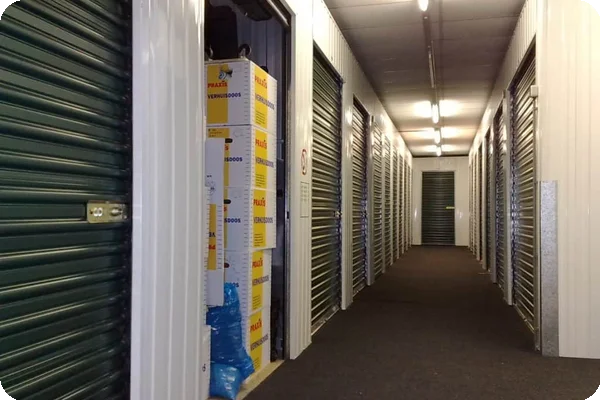
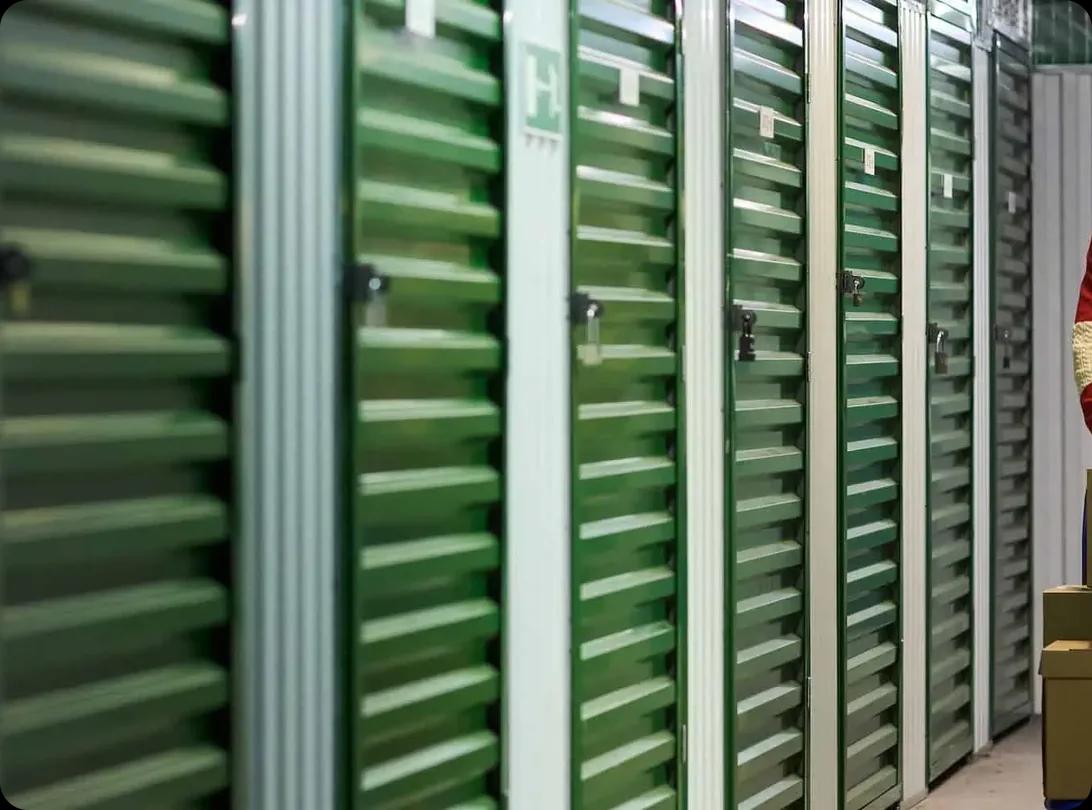
Indoor self-storage hallway with many units; one open unit on the left displays stacked moving boxes.

Packing & Stacking Strategies to Maximize Space

Smart packing can reduce how much storage space you need — sometimes enough to size down to a cheaper unit. Here’s how to make the most out of your space and how to pack it efficiently:

  • Disassemble bulky furniture. When you can, take the legs, cushions, and other extraneous parts off of furniture. If you can remove any parts that stick out or make something flatter/smaller, you should do so before storing it.
  • Stick with uniform-sized boxes for better stacking. For long-term storage, consider investing in stackable plastic bins. They’re all of uniform size and are made to be stacked easily.
  • Fill empty dresser drawers, bins, or suitcases with lighter items. If you're storing a container, try to store something in it to better use the space.
  • When storing long-term, consider adding freestanding shelves. This maximizes vertical space while keeping items accessible. For example, you can place a sturdy shelf down the middle of a long storage unit. Then, you can stack boxes, bins, and large items against the walls, leaving room for an access aisle, and then store smaller items on shelves in the middle.
  • Label every box on multiple sides. This helps you see what’s in a box even if it’s in the middle of a stack. In larger units, leave at least 2 clear aisles so you can reach what you need without unloading half the unit. Organizing in zones — like 1 side for furniture, another for seasonal gear — also helps.
  • Take photos as you load. They’ll be useful if you need to file an insurance claim. They can also act as a visual index to make finding items easier later.

Special Considerations: Vehicles, Business Items and More

The average storage unit is designed to hold extra household goods or temporarily house furniture and big items while you move. Kato says when storing a vehicle, you need to consider whether it's the right size for a storage unit and whether a local storage center allows vehicle storage. Typically, you need a storage location with drive-up, garage-style 10 ft x 20 ft (or larger) units. Kato goes on to say:

"Some facilities have outdoor units, but not all those allow storage of vehicles, likely due to the assumption that there is oil and gas inside, and flammable liquids are generally not allowed. You may have to search for a vehicle-specific storage facility."

For business inventory, choose a unit large enough to keep items organized and accessible, and plan ahead with shelving and clear labeling to help you save time when retrieving stock.

If you’re using a unit for mixed storage, such as household goods alongside seasonal gear or outdoor equipment, separate items into zones for ease of retrieval.


What You Can't Put in a Storage Unit

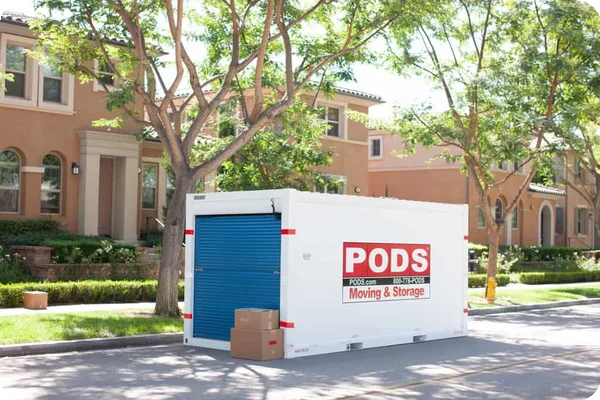
A PODS container sits curbside in front of a home

Portable containers provide a convenient, flexible alternative to fixed self-storage units. You don't have to drive to the storage unit location or haul heavy items in a vehicle. A portable container might be better if you're storing extra items temporarily, like for a home renovation or you’re between houses, because you get all your stuff back in one trip when the container is re-delivered to you.

You can also opt for portable containers for moving. These storage containers are brought to your existing home, where you can load them at your leisure. The container is then picked up and hauled to your new home by pros, and you can unload it — again, at your leisure. This convenience can save time and eliminate the need for multiple trips with a rental truck. However, they require the right setup.

"You'll need a wide and fairly level space to accommodate a portable container," says Kato. "The truck dropping the container off also needs space to maneuver. If you don't have a driveway and can't get permission to have a container placed curbside or in your building's parking area, you may be out of luck."

Consider your budget, access needs, and property layout before deciding. In urban areas with limited space, self-storage may be more practical. In a suburban or rural area, an on-site container might save you time and money.


FAQs About Storage Unit Sizes

We've put together some answers to some other frequently asked questions about storage units below.

Recent Articles

Person accessing storage unit

Self-Storage Security Solutions and Tips

Storage Units

When you're putting your stuff in storage, your primary concern might be getting everything to fit inside. But you should also pay attention to another important part of your unit: security. Storage units get... Read More

a person locks up their storage unit

Will Movers Go to a Storage Unit?

Storage Units

The short answer: it depends. While yes, many movers can go to a storage unit, not all will, and it typically comes down to the company and service type you choose. Movers are no strangers to loading into or out of... Read More

A row of yellow self-storage unit doors lined up under a bright blue sky

Top 10 Things to Ask Your Self-Storage Facility Before Leasing

Storage Units

You're looking for a self-storage unit and have an idea of the size you need, but that’s not all you need to know when renting one. From hidden fees and pest control to security measures and climate options, what... Read More

A row of self-storage units with blue doors

Storage Insurance: Cost, Coverage, and Convenience

Storage Units

When you place your belongings in a storage unit, you expect them to be safe until you need them again. But, sometimes accidents happen. Fires, theft, or even severe weather can damage what you have in a storage... Read More

Packed storage unit containing containers, boxes, and furniture

How to Store Furniture in a Storage Unit

Storage Units

If you're putting your stuff in storage while you're moving or renovating, knowing how to store furniture in a storage unit is a must. Even your sturdiest pieces can be vulnerable to things like moisture and pests... Read More

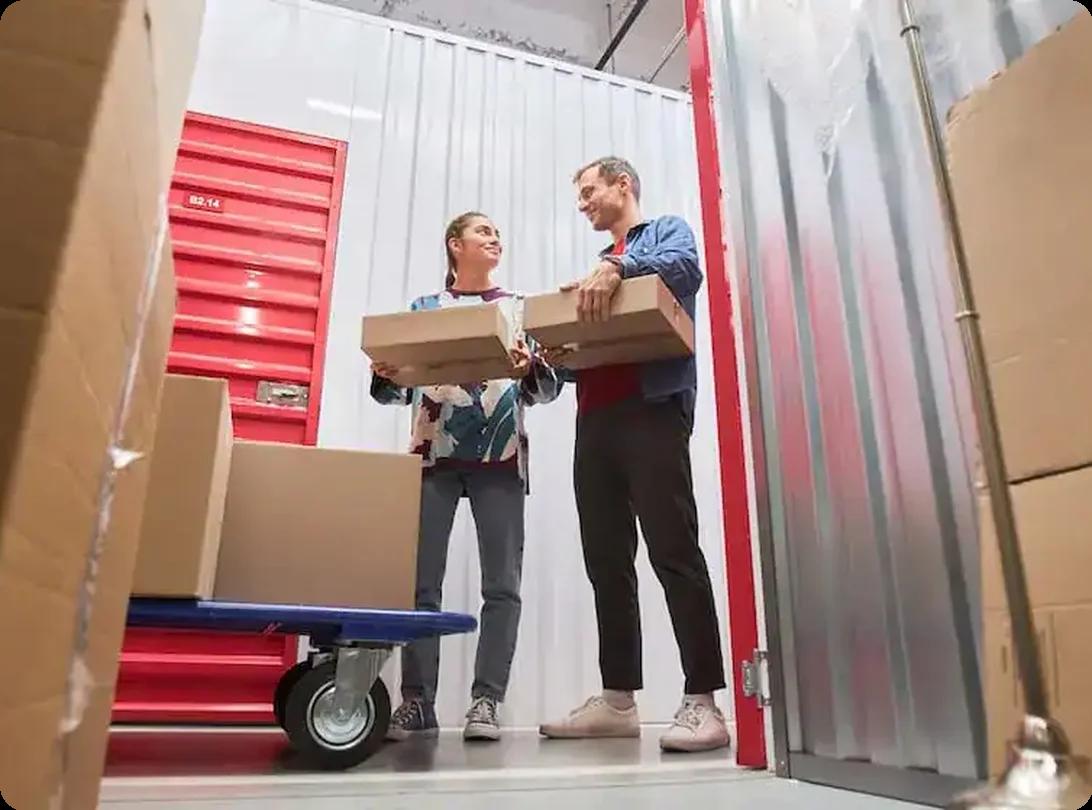
Couple organizing moving boxes inside a self-storage unit

How to Rent a Storage Unit

Storage Units

If you're looking to join the 18% of Americans who keep stuff in storage, it's important to know how to rent a storage unit that fits your belongings and budget.

While there are a few steps, the process usually... Read More