3. Protecting and Packing Your Mattress: Best Practices by Mattress Type
Not all mattresses are the same. They differ in weight, material, and structure — and each type needs different care to avoid damage during a move. In this section, we’ll cover how to pack innerspring, memory foam, Sleep Number, toppers, and box springs.
How to Pack an Innerspring Mattress
Innerspring mattresses require special handling to avoid damage to the springs inside. Follow these tips for moving one of these mattresses:
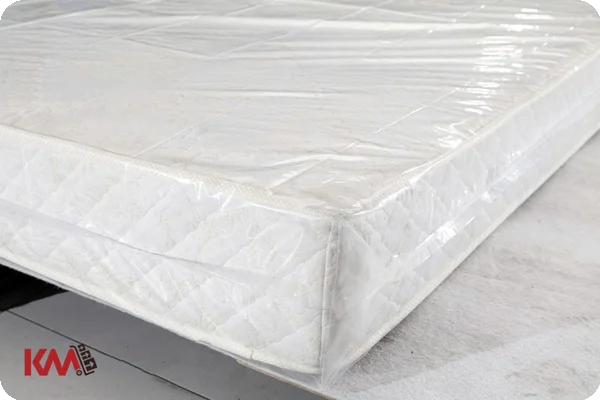
- Place in a bag or carton: Protect the mattress from dirt, pests, and moisture.
- Wrap the corners: Corners are especially prone to damage, and are the likeliest to knock into something else when moving. Use moving blankets or bubble wrap to protect them.
- Use a dolly or hand truck: Move the mattress through your home carefully, especially on stairs or uneven surfaces.
- Slide the mattress into the truck: Keep it flat if possible. A mattress on its side puts too much pressure in the middle, which could affect the springs.
- Secure the mattress with straps or rope: Tie the mattress in place and make sure it doesn’t jostle too much.
- Avoid stacking heavy items on top: Prevent damage by keeping weight off the mattress. Adding too much weight on top of it for too long could damage the springs.
How to Pack a Memory Foam Mattress
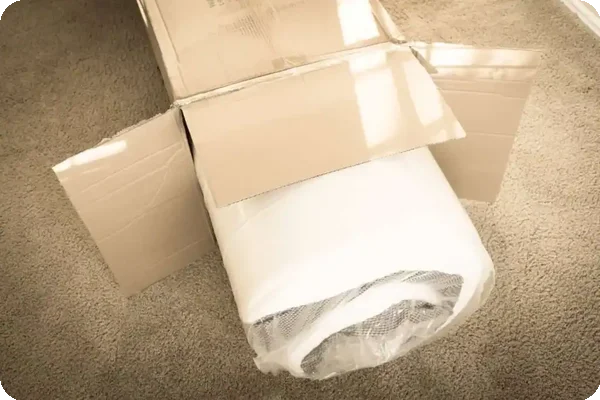
A memory foam mattress is easier to move than an innerspring — you can roll, fold, or even vacuum-seal it to save space. However, memory foam can tear if it snags on corners. Follow these steps to pack it safely:
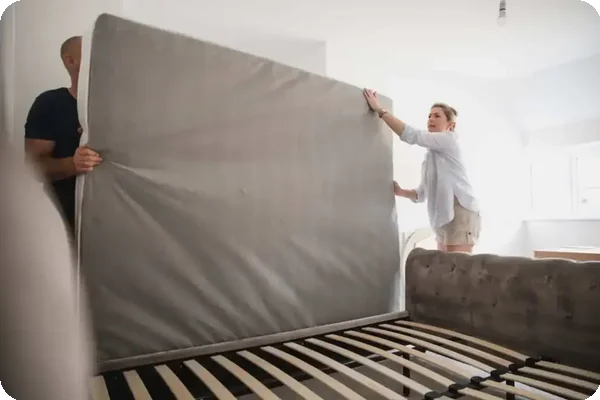
- Remove the mattress from your bed: A good time to do this is when you're disassembling furniture.
- Place the mattress in a bag: This protects the mattress from dust, moisture, and tears.
- Attach a vacuum hose to the bag: You can cut a small slit in a regular mattress bag or buy a bag made specifically for vacuum sealing.
- Suck the air out of the bag: Use a vacuum sealer or, if you cut a slit in the bag, tape it shut after removing the air to create the seal.
- Roll the mattress: Roll it up from one end to the other into a tube shape.
- Secure the roll: Use straps or rope to secure it. While not as heavy as other types of mattresses, it could still get damaged or break other items if it's not secure.
How to Pack a Sleep Number Mattress
Sleep Number mattresses have air chambers and a pump system, so they need careful handling. Models with adjustable bases are even heavier because of the motor. Here’s how to pack one safely without damage or injury:
- Deflate the mattress: Use your Sleep Number app or remote. Don’t try to deflate it in any other way besides the one outlined in your mattress’s manual.
- Disconnect the hoses: Once disconnected, cap the ends immediately to keep out dirt and dust.
- Remove the pump/control unit: Pack it in a separate box and label it so you know it goes to your mattress. If you’re using movers, this helps the movers treat the device with care, too.
- Separate components: Take apart the air chambers, topper, sidewalls, and center support. Much like the pump and control unit, bag and label these separately.
- Break down the base: If adjustable, don’t move it by yourself. It’s too heavy for a single person to manage.
- Keep air chambers dry: Make sure you put caps on pumps and keep your mattress in a bag to prevent damage from any humidity.
How to Pack a Mattress Topper
Mattress toppers are lighter than mattresses, making them easier to move. However, you still need to handle them properly so they don’t get damaged. Follow these steps to pack your mattress topper like a pro:
- Clean the topper if needed: Allow it to dry completely before you move to the next step.
- Roll it lightly from one end to the other: Don't fold the topper, or you might leave permanent creases.
- Slide the topper into a mattress bag: You can also cover it in shrink wrap.
- Keep the rolled topper secure: Use tape or straps to make sure everything stays in place.
- Place the topper in a box: This keeps it safe during transport, and toppers are better off in one than in a mattress bag.
How to Pack a Box Spring
A box spring has a wooden frame and coils, so it’s prone to damage. Its thin fabric covering also tears easily. Here’s how to protect it during a move:
- Vacuum the box spring: Remove dirt and debris so it doesn’t leave stains or scratches on the wood.
- Wrap or bag it: Use a mattress bag or plastic wrap for protection.
- Protect the corners: Much like a mattress, the corners are the parts most prone to damage. Make sure you cover them with bubble wrap or cardboard.
- Keep upright when moving: This helps maintain its shape and prevents pressure damage.
- Avoid stacking heavy items on top: To prevent tears and frame damage.

.png&w=96&q=75)

 Melanie MorrisJan 16, 2026
.png&w=64&q=75)