First Time Homeowners' Survival Guide: Do’s and Don’ts for Your Move

A couple carrying moving boxes walks happily into their new home

We get it—going from renting to owning a home is a major change. While your property manager was once responsible for general upkeep and maintenance (like fixing broken pipes or ensuring your appliances remained in working order), things change when your name is on the deed.

On top of juggling the important tasks involved with purchasing and closing on your home, you've got another big responsibility: figuring out how to get all your belongings to your new place safely and efficiently.

Trying to do it all can be daunting, but we're here to break it down into simple, actionable steps. We've helped countless people navigate moves, and here's what we've learned to do — and what to avoid — to streamline the process.

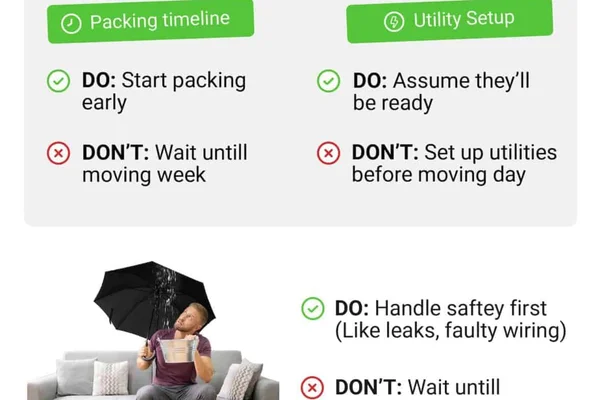
An illustration outlining the dos and donts for homeowners based on the information in the rest of the blog
Last updated: May 29, 20257 min read
Melanie Morris
Written byMelanie Morris

Key Takeaways

  • Budget for more than the mortgage — closing costs, moving expenses, immediate repairs, and a safety reserve catch first-timers off guard
  • Start packing early — homeowner moves are bigger than rental moves, and waiting until the last week is a recipe for chaos
  • Set up utilities before move-in — electric, gas, water, internet, and trash should all be active by day one
  • Handle home safety first — change all locks, test smoke and CO detectors, locate the main water shutoff and breaker panel, and walk the property
  • Hire pros where it matters — movers, electricians for old wiring, plumbers for unknown systems, HVAC checkups; don't overestimate your DIY skills early on
Thomas O'Sullivan
Author

Thomas O'Sullivan

Thomas O'Sullivan is the Senior Manager of Service Operations at Porch Moving Group, where he oversees the post-booking customer experience for HireAHelper. His expertise is the part of a move most people never see — the logistics, coordination, and accountability that turn a booking into a finished move.

Thomas has spent six years in the moving and relocation industry, starting in corporate relocation and long-distance logistics before stepping into his current role. He's supported more than 130,000 moves across local labor, full-service, commercial, and long-distance work — experience he draws on to make sure HireAHelper content reflects how moves actually go.

DO Budget for More Than Just the Mortgage, DON'T Overlook Moving Expenses

A couple sitting on the floor surrounded by moving boxes looks at a laptop. One of the pair is holding a credit card.

When buying a new home, you should consider the cost of your move too, not just the new mortgage. Even if you handle virtually every part of your move yourself, expenses still crop up. Moving costs can add up quickly, from supplies like boxes, tape, and shrink wrap to renting a truck or paying for labor. Due to rising operational costs and the current economy, moves in 2025 cost more than ever. However, there are ways to keep moving expenses within your budget.

Generally speaking, moving costs vary based on the type of move. If you're moving a long distance, costs tend to be higher than if you were relocating within the same city. But even when you move locally, moving expenses are affected by factors like the season or how much you're moving.

"Don't wait until the last minute to transfer utilities. We recommend starting the process at least two weeks before your closing date and request that the transfer take place on or just before moving day"

The type of services you need also impacts your final cost. As expected, the more you handle on your own, the less you'll end up paying. However, taking on heavy lifting, packing, and transportation isn't always doable. Fortunately, moving services help to alleviate these challenges and typically come in labor-only or full-service options.

  • Labor-only moving: With this option, you hire hourly labor, typically to move packed boxes on or off your rental truck or moving container. Then, you handle the transportation yourself. Some labor-only movers also provide other hourly-rate services like packing or furniture disassembly, but you'll have to check with the company to confirm this.
  • Full-service moving: If you want to let a team of pros handle the hard work, full-service moving companies have you covered. They come with their own truck, which they load and unload, and also handle the transportation. Like labor-only movers, they often offer add-on packages with additional tasks. While full-service movers cost more, they're also highly favored for their convenience.

Looking for thriftier ways to move? Try implementing these simple tips:

  • Get rid of anything you don't care about or use regularly. If you have less to move, you pay for less labor.
  • Check your local social media pages for neighbors giving away free moving boxes. If that fails, your local retailers may have boxes from inventory they'd be happy to give you.
  • Consider using old blankets, towels, or linens instead of moving blankets.
  • Gather friends or family members to help with packing or other heavy labor. Many may be willing to lend a helping hand if you provide the food and drinks while working.
  • Book your movers as far in advance as possible. You can often get better rates this way. If you can swing a weekday move without affecting your work schedule, you may also be able to reduce the cost further.
  • If you're booking labor or moving trucks, get several quotes before deciding on one. That way, you can compare the costs and make choices that best fit your budget.

DO Start Packing Early, DON'T Wait Until Moving Week

Two women work together to pack up a room into moving boxes

Many movers say they never realized how much they own when it's time to pack up all their belongings, and far too many make the mistake of underestimating how long it takes. So, whether you're moving from a small apartment or a larger rental house, don't leave packing until the last minute.

By taking a more gradual approach to packing, you'll have ample time to declutter, organize, and pack without the stress of frantically stuffing everything into boxes. Check out this low-stress packing timeline, and consider implementing it during your big move:

  • 8 to 6 weeks pre-move: Start decluttering. Figure out what you plan to keep, sell, donate, or dispose of. This is the perfect time to clear out items like clothes that no longer fit. If you want to hire help, start booking movers and transportation now.
  • 6 to 4 weeks pre-move: Begin packing items you won't need for the next month or so. Books, holiday decor, out-of-season clothing, or extra bedding can be packed up. Make sure you clearly label all boxes with contents and which rooms they should go into in your new home.
  • 4 to 2 weeks pre-move: Start packing the rest of your items, leaving only essentials for the kitchen, toiletries, and clothing.
  • 2 weeks pre-move: Confirm that any hired help or moving truck reservations are in place. Start deep-cleaning your home in preparation for your move.
  • 1 week pre-move: Set up a suitcase that you can live out of for a few days in your new home while you're unpacking. Ensure you have a couple of towels, essential toiletries, and some clean clothes while you get your items in order.

DO Set Up Utilities Before Moving Day, DON'T Assume They'll Be Ready

Don't wait until the last minute to transfer utilities. We recommend starting the process at least two weeks before your closing date and request that the transfer take place on or just before moving day. Some utility companies require time to process the transfer, so letting them know beforehand helps prevent outages. Keep in mind that some utilities may request a deposit for new customers.

At the same time, schedule the end of your utility services at your current address for one or two days after your intended move-out date. If you fall behind for any reason, you'll still have access to electricity and water.

Don't forget any of the key utilities during this process:

  • Electricity
  • Natural gas (if applicable)
  • Water/Sewer
  • Garbage/recycling
  • Telephone (if you use a landline)
  • Internet
  • Cable

DO Handle Home Safety First, DON'T Delay Basic Maintenance

A couple looks on a laptop set on a workbench that is also full of tools and paper.

Not all homes are purchased move-in ready. You don’t need to sweat it if you're the proud new owner of a fixer-upper, but don't move in before it's safe. Depending on the results of your home inspection, you might already have a list of items to handle.

As much fun as it is to work on the aesthetics (like new carpet or nice light fixtures) first, don't rush into it all at once. Instead, make a list of all necessary tasks related to safety and tackle those before anything else. After all, it doesn't matter what color tile you have in your bathroom if the tub leaks or the pipes clog.

"If you're booking labor or moving trucks, get several quotes before deciding on one. That way, you can compare the costs and make choices that best fit your budget."

From there, it's necessary to establish a list of any basic maintenance tasks that have to occur. As a first-time homebuyer, you're probably pretty used to landlords handling basic property maintenance, but now the torch—and responsibility—has passed to you.

In order of priority, handle tasks in this order:

  1. Safety-related tasks (faulty wiring, leaks, foundation issues, roof issues, etc.)
  2. Basic maintenance tasks (cleaning, changing lights or smoke alarms, yard work, etc.)
  3. Aesthetic changes (painting, changing flooring, replacing fixtures, etc.)

DO Hire Pros When You Need Help, Don't Overestimate Your DIY Skills

A woman chats happily with a contractor wearing a tool belt

Part of the fun of buying your first home is making it truly your own with personal touches like paint, cabinetry, or your favorite flooring. You've probably seen plenty of videos showcasing new homeowners performing all sorts of renovations on their own. What you don't see, however, is the number of failures.

Attempting a DIY project above your skill level can quickly become a household disaster. In a worst-case scenario, these failures cost you far more to fix than it would have been to pay a professional in the first place. It's totally understandable (and admirable!) that you want to put in the work on your home, but take it slow and build up your skills over time. If you've never built a bookshelf, for example, don't take on installing new cabinets right away.

Not sure where to draw the line? We strongly recommend leaving these common household renovations to the pros:

  • Anything involving your home's electrical system: Whether your home needs an electrical system upgrade or some minor fixes to an outlet, it's a good idea to leave the electrical work to the professionals. In fact, depending on where you live, it may even be required. Some places have regulations on electrical work, requiring permits and inspections. And even if it's not required, any electrical work can be dangerous if you're untrained.
  • Tile or backsplash installation: While tearing out tile usually isn't too difficult, installing it can be. All it takes is one little tile out of place to throw off the entire pattern.
  • Plumbing repairs: Messing up a plumbing job can quickly destroy your home. Leaky pipes can lead to significant water damage and expensive repairs.
  • Exterior painting: Painting a home isn't always as simple as applying a new coat. Plenty of time goes into prepping the exterior for paint. Plus, the pros know how to apply even coats without dripping. If you've never painted a home before, consider starting with the interior before attempting the exterior.

Final Thoughts

Purchasing your first home is a major milestone—one you should be proud of. It's also understandable to feel a bit out of your element as you navigate the tasks and responsibilities related to moving and homeownership. But don’t worry! Just keep what you've read here in mind, and don't be afraid to contact the pros for help if you need it.

Recent Articles

Cardboard moving boxes packed and ready in the bedroom of a new home

Preparing to Move: What You Need to Know Before You Start Packing

Move Planning

Preparing to move starts with planning: outlining your moving needs, setting a budget, and clearing out clutter before you pack a single box. Moving can be emotionally and logistically heavy, and while it’s normal... Read More

Older couple sorting framed photos and keepsakes while packing boxes during a downsizing move

How to Downsize Your Home: The Ultimate Step-by-Step Guide for Moving

Move Planning

If you’ve been wondering how to downsize your home, you’re not alone. With the average home equity around $250,000 for those aged 65 or older, it makes sense that retirees would want to tap into that value and... Read More

image of a checklist

Moving Checklist: A Step-by-Step Timeline for a Smooth Move

Move Planning

Moving an entire home is a major feat, even for the savviest of planners. It's easy to feel overwhelmed, which is why the best moving checklist is a timeline-based one that breaks your move into manageable steps... Read More

A person checking off items on a moving inventory clipboard next to a row of labeled cardboard boxes

How to Create a Moving Inventory List (and Why it Matters)

Move Planning

From missing boxes to unexpected damage, a disorganized move can cost you more than just your patience. That’s why making an inventory list is one of the smartest things you can do before moving day. It’s your... Read More

A couple sits on the steps of a house surrounded by moving boxes, looking into the distance and imagining changes and renovations to their home

Moving Soon? Experts Share the First DIY Upgrades to Tackle Before You Settle In

Move Planning

Moving into your newly purchased house is an occasion worth celebrating, and it's likely you've already identified ways to transform it into your own. The period immediately after closing, but before moving in, is... Read More

A homeowner using clever packing and unpacking life hacks like color-coded labels and reusable bins in a kitchen

Movehacks: How to Unpack and Organize Before, During and After You Open a Box

Move Planning

You've circled your moving date on the calendar, and now it's time to pack. But wrangling everything from your toaster to your toothbrush can be daunting. How do you pack up your home while making the most of every... Read More